
Parazoa: the basal animal group including sponges and placozoans
Parazoa is a small subkingdom of simple animals—chiefly sponges (Porifera) and placozoans—characterized by porous bodies, few cell types, absence of true tissues, and important ecological roles as filter feeders.
Overview
Parazoa is a term used in zoology to designate a small, basal assemblage of animals that are structurally simple and unlike most other metazoans. It chiefly comprises two phyla: Porifera, commonly known as sponges, and Placozoa, represented by very small, flat animals such as Trichoplax. Parazoans are multicellular organisms but retain a level of cellular organization that lacks true tissues and organs. Their simplicity and ancient origins make them important for understanding the early evolution of animals.
Image gallery
2 Images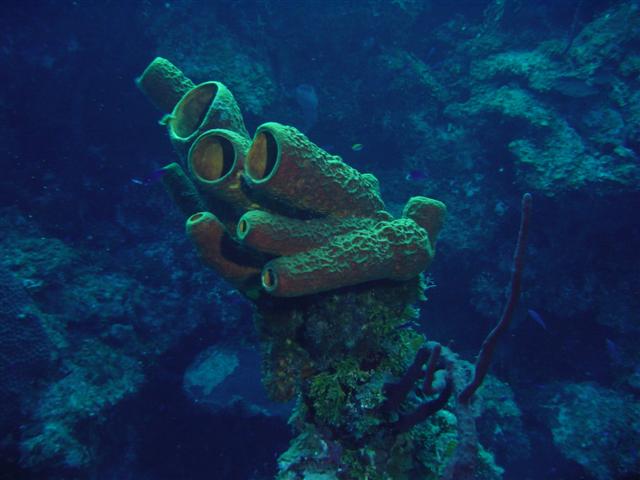

Key characteristics
Parazoans share several distinguishing features. They have relatively few specialized cell types compared with most animals, and many functions normally performed by organs in other animals are accomplished by independent cells or simple cell layers. Sponges possess a system of pores and channels through which water is driven, enabling filter feeding, respiration, and waste removal without discrete circulatory, respiratory, or digestive organs. Typical cell types include choanocytes (collar cells that generate water flow and trap particles), pinacocytes (surface cells), and amoeboid cells (which distribute nutrients and produce skeletal elements).
Major groups and body plans
The phylum Porifera contains the best-known parazoans. Sponges display a range of body architectures, from simple tubes to complex masses, structured to promote water circulation. Classic canal systems are described as asconoid, syconoid, and leuconoid, reflecting increasing complexity and surface area for feeding. Sponges are typically sessile and attach to hard substrates in marine and freshwater environments (aquatic habitats).
- Glass sponges: the siliceous-skeleton group often called Hexactinellida, noted for delicate, lattice-like frameworks.
- Calcareous sponges: members of Calcarea, which build calcium carbonate spicules and are usually small and coastal.
- Demosponges: the largest and most diverse class, commonly referred to as Demospongiae, including most reef and bathyal species.
Placozoans and extreme simplicity
Placozoa are represented by a handful of described species, the most famous being Trichoplax. These animals are tiny, flat, and transparent, composed of only a few cell types arranged in simple layers. Placozoans glide across substrates and feed by external digestion of microbial films. Their morphology is so minimal that they are often discussed as models for the minimal requirements of multicellularity and for reconstructing the earliest animal body plans.
Reproduction, life cycle and ecology
Parazoans employ a variety of reproductive strategies. Sponges reproduce asexually by budding or fragmentation and, in some freshwater taxa, by producing resistant internal structures called gemmules. Most sponges also reproduce sexually, releasing sperm into the water column and retaining or releasing eggs; larvae are usually motile before settling into a sessile adult form. Ecologically, parazoans are important filter feeders that influence water clarity, nutrient cycling, and microbial communities. Sponges provide habitat for many small animals, contribute to reef structures in some regions, and can be sources of bioactive compounds sought in biomedical research.
Evolutionary significance and notable facts
Fossil and molecular evidence indicate that parazoans—and sponges in particular—are among the earliest-branching animal lineages. Possible sponge-like fossils appear in late Precambrian deposits, and living parazoans preserve many features thought to reflect early stages in animal evolution. Unlike most animal phyla, many sponges lack regular symmetry, though some species display radial or cylindrical forms. Their combination of multicellularity with a lack of true tissues places Parazoa at a pivotal position for studies of how cellular cooperation and division of labor evolved in animals.
Because they bridge single-celled ancestors and more complex animals, parazoans are studied across disciplines: developmental biology, paleontology, ecology, and biotechnology. Their simple organization, diverse morphologies, and long evolutionary history make them a distinct and informative corner of the animal kingdom.
Related articles
Author
AlegsaOnline.com Parazoa: the basal animal group including sponges and placozoans Leandro Alegsa
URL: https://en.alegsaonline.com/art/74601