
PaRappa the Rapper
1996 rhythm video game by NanaOn-Sha and artist Rodney Greenblat. Known for its call-and-response mechanics, cutout-style art, English-language vocals, and the catchphrase “I gotta believe!”
Overview
PaRappa the Rapper is a rhythm video game created by Masaya Matsuura and his studio NanaOn-Sha with visual design by Rodney Greenblat. First released in the mid-1990s, the game stars PaRappa, a beanie-wearing paper‑cutout dog who aspires to impress his crush, Sunny Funny. The title is remembered for its bright, deliberately flat visual style, simple but engaging rhythm gameplay, and an upbeat personality summed up by the character’s catchphrase, “I gotta believe!”
Image gallery
3 Images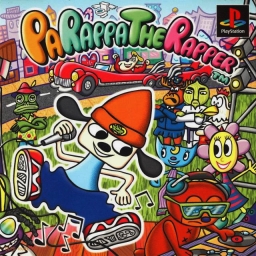
Gameplay and mechanics
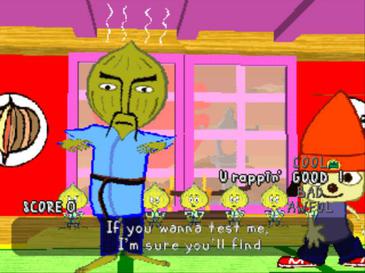
Gameplay follows a call-and-response structure: a teacher character performs a short phrase, and the player must reproduce it by pressing controller buttons in time with on-screen prompts. The game evaluates performance using qualitative ranks—typically shown as levels such as “Bad,” “Good,” and “Cool”—which reflect timing and accuracy. When players achieve the highest rank, the game may allow a more open, freestyle section in which the character can improvise, rewarding rhythmic continuity and creativity. Stages are short and focused, each introducing a new rhythmic motif and a quirky instructor character whose personality shapes the music of that level.
Visual style and audio
Rodney Greenblat’s illustrations give characters a flat, hand-drawn look that was presented as two-dimensional cutouts placed into three-dimensional stage environments. This contrast created a distinctive visual identity that stood apart from more photo-realistic contemporaries. Musically, the soundtrack blends hip-hop, funk and pop elements and is led by compositions and direction from Masaya Matsuura’s team. Although developed in Japan, the spoken lines and songs are performed in English across releases, an artistic choice that contributed to the game’s international accessibility.
Story and characters
The plot is light and comedic: PaRappa wants to win the heart of Sunny Funny and undertakes a series of tasks and musical lessons to prove his worth. Each stage features a teacher who adopts a distinct persona—such as a karate instructor or a supermarket clerk—and these characters provide both the musical cues and comic situations that drive the short vignettes. The humor and charm of the characters play a large part in the game’s enduring appeal.
History and releases
Originally released for home consoles in the mid-1990s, PaRappa the Rapper developed a devoted following and inspired additional projects from the same creative team. Notable follow-ups include a direct sequel and a guitar-oriented spin-off that expanded the franchise’s musical concepts. The original game has been reissued on later platforms; a portable version was published for a handheld platform in the 2000s, and the title has appeared in collections and digital re-releases in subsequent years. For official details and regional release information, consult developer and publisher sources linked below.
Sequels, spin-offs and adaptations
- PaRappa 2 continued the concept on a later console, expanding stage variety and musical styles.
- Um Jammer Lammy is a related spin-off that applies similar rhythm mechanics to a guitar-centered gameplay format.
- The franchise has also inspired animated adaptations and merchandise that extend the characters beyond the games.
Legacy and influence
While mechanically straightforward compared with later rhythm titles, PaRappa the Rapper is frequently cited as an early example of how music-driven interaction can be fun, stylish, and character-based. Its approachable controls, memorable soundtrack, and distinctive art direction showed that rhythm games could convey personality and narrative as well as challenge. The design influenced subsequent developers and helped broaden interest in music games outside niche markets.
Critical reception
Contemporary reviews praised the game’s originality, soundtrack, and visual design, though some critics noted the short playtime and modest difficulty curve. Over time the title has been featured in retrospectives highlighting influential and unusual games of its era, with many commentators pointing to its charm and design coherence rather than raw gameplay complexity.
Further reading and resources
- Official developer or publisher information
- Interviews and profiles of the creative team
- Details on ports and later releases
- Soundtrack listings and music analysis
- Fan communities, archives, and preservation projects
- Critical retrospectives and essays
PaRappa the Rapper remains a touchstone in the history of rhythm games: an experiment in combining simple input mechanics with strong visual identity and character-driven music that continues to be discussed by players, scholars, and designers interested in the relationship between gameplay and audio-visual style.
Questions and answers
Q: Who created PaRappa the Rapper?
A: PaRappa the Rapper was created by Rodney Greenblat, Masaya Matsuura, and his company NanaOn-Sha.
Q: What is the main character's name in PaRappa the Rapper?
A: The main character's name in PaRappa the Rapper is PaRappa.
Q: What is PaRappa's motto in the game?
A: PaRappa's motto in the game is "I gotta believe!".
Q: What is PaRappa trying to do in the game?
A: PaRappa is trying to win the heart of his crush, Sunny Funny, a flower.
Q: When was a PSP port of the original game released?
A: A PSP port of the original PaRappa the Rapper game was released in Japan in December 2006 and in North America and Europe in July 2007.
Q: What sets PaRappa the Rapper apart from other video games?
A: PaRappa the Rapper is remembered for its unique graphic design of 2D characters and 3D objects, its quirky soundtrack, and its bizarre plot.
Q: In what language are all of the game's songs and dialogue spoken?
A: Despite being made in Japan, all of the game's songs and dialogue are spoken in English in all versions.
Related articles
Author
AlegsaOnline.com PaRappa the Rapper Leandro Alegsa
URL: https://en.alegsaonline.com/art/74580