
Paper size
Standardized sets of paper dimensions used worldwide (A, B, C series, and North American formats). Covers characteristics, history, common uses and matching envelope sizes.
Overview
Paper size refers to the standardized dimensions of sheets used for printing, writing, and packaging. Different regions have established sets of sizes to simplify production, storage and communication. The two most widely encountered systems are the international ISO sizes (commonly called the A, B and C series) and the North American formats (often called Letter, Legal, Tabloid or ANSI sizes).
Image gallery
1 Image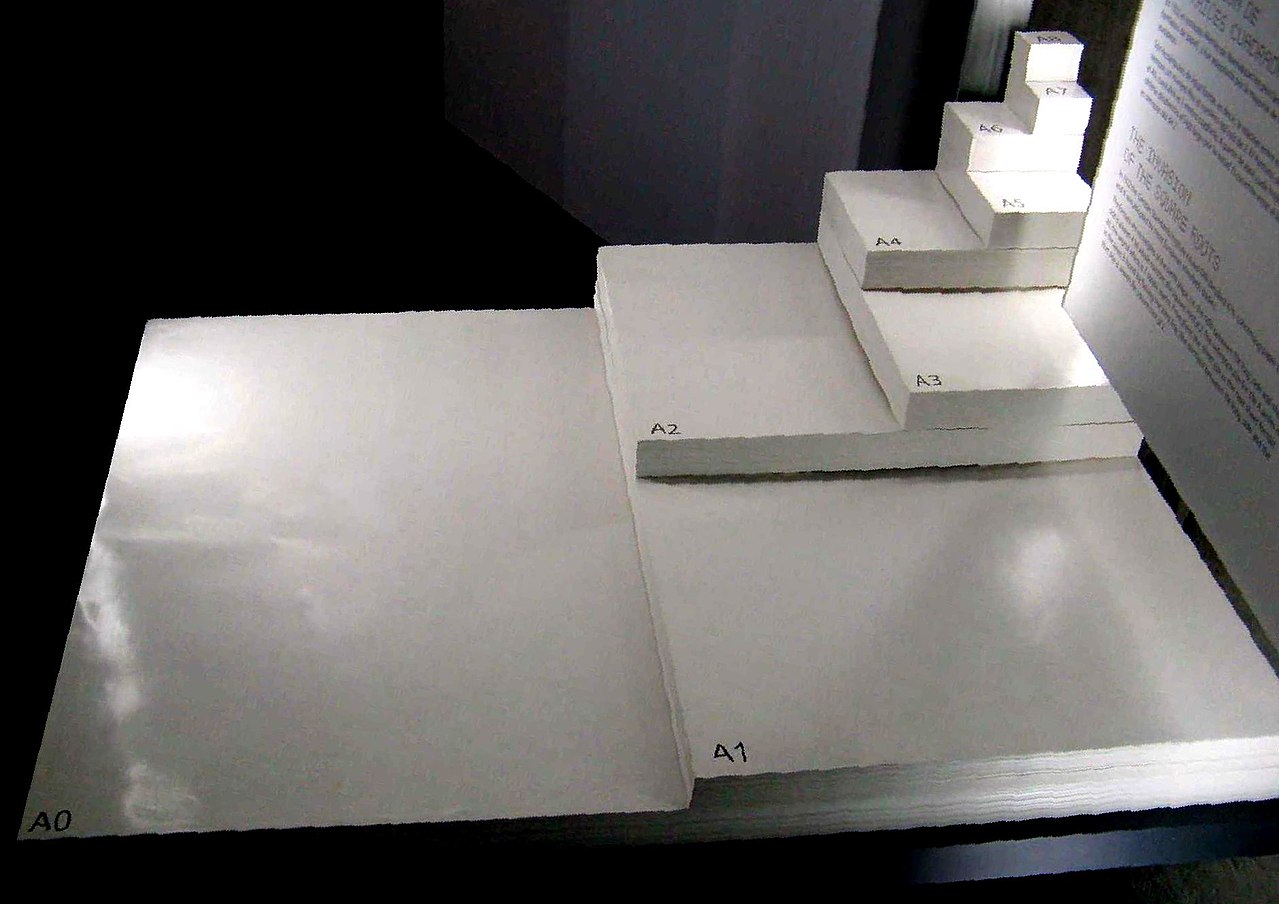
Characteristics and common formats
International sizes are based on a consistent aspect ratio and a simple halving rule: each size in the A series is half the area of the previous one when cut parallel to its shorter side. The most familiar size in daily life is A4, which is the standard for letters, office printers and many documents. The largest A-size, A0, is defined so that its area equals one square metre; successive sizes A1, A2, A3 and A4 follow by halving.
- A-series: A0, A1, A2, A3, A4, etc. Used widely for office stationery and publications.
- B-series: intermediate sizes used for posters and some publications.
- C-series: primarily used for envelopes matched to A-series sheets.
- North American: Letter (the common office sheet), Legal, Tabloid/Ledger and larger ANSI sizes used for plans and drawings.
History and standardization
The A/B/C series used in most countries comes from early 20th century European standards that were later adopted internationally as ISO 216. That standard formalized the aspect ratio and the halving rule, facilitating reprography and resizing without distortion. North American sizes developed separately and are governed by regional standards; those names and dimensions remain customary in the United States and Canada.
Uses and practical importance
Standard sizes matter for many practical reasons: printer and copier settings, paper handling machines, layout and graphic design, publishing, and legal documents. Because ISO sizes scale predictably, enlarging or reducing a page to fit another A-series sheet preserves layout proportions. North American formats persist where existing equipment and legal conventions rely on them.
Envelopes and related formats
Envelope sizes are designed to accommodate specific paper formats and folding methods. The ISO C-series envelopes are intended to hold A-series sheets—for example, a C4 envelope will accept an unfolded A4 sheet, while a C5 fits an A4 folded once. Other common envelope formats, such as the business-sized DL, are sized to take an A4 sheet folded into thirds. In North America, named envelopes match Letter and other local sheet sizes.
For further technical references on standard dimensions and comparisons between systems see paper sizes and manufacturer guidance on printers and envelopes at envelope sizes. Understanding the conventions for your region helps ensure documents print and fit as intended.
Related articles
Author
AlegsaOnline.com Paper size Leandro Alegsa
URL: https://en.alegsaonline.com/art/74446