
Aconoidasida — a class of blood-infecting apicomplexan parasites
A class of Apicomplexa comprising blood parasites such as Plasmodium, Babesia and Theileria. Characterized by a reduced conoid, complex vector-borne life cycles, and major medical and veterinary importance.
Overview
The Aconoidasida are a class of single-celled parasites in the phylum Apicomplexa. Members are primarily blood parasites of vertebrates and are notable for their medical and veterinary impact. The name Aconoidasida refers to the reduced or absent conoid, a structural element of the apical complex that in related groups is used during host cell invasion.
Image gallery
2 Images
Characteristics
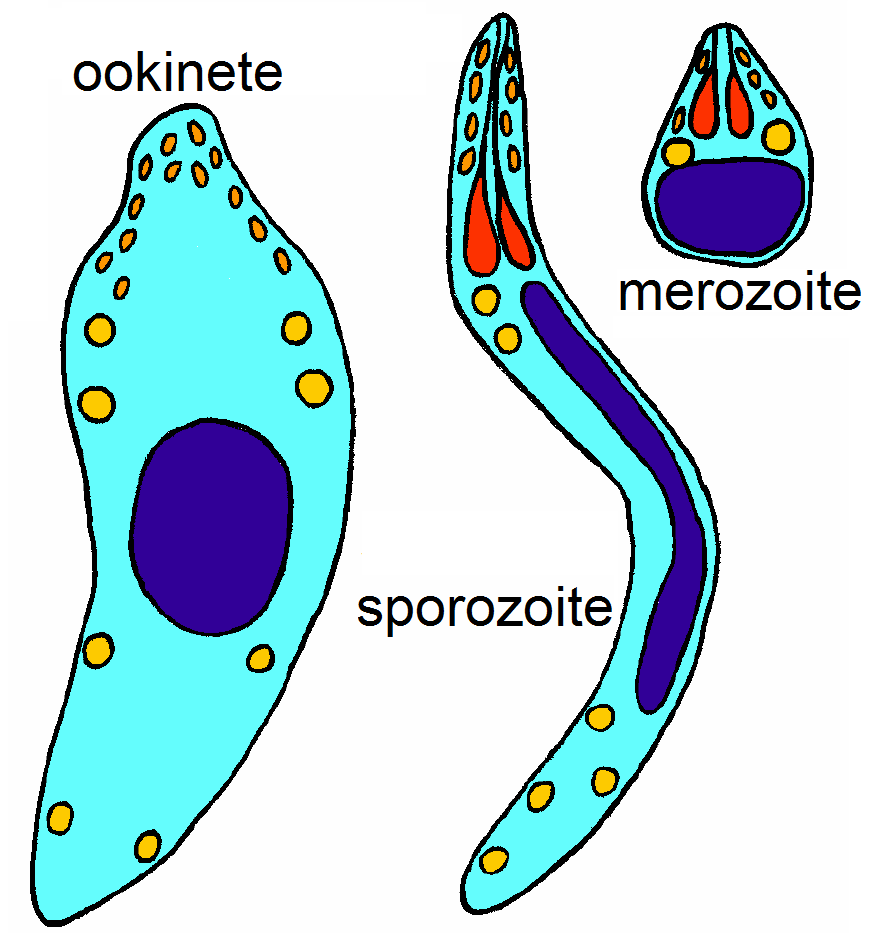
Aconoidasida share typical apicomplexan organelles such as rhoptries and micronemes but differ from Conoidasida by lacking a persistent conoid in motile stages. They invade and reproduce within erythrocytes or other blood cells, producing stages commonly called merozoites, gametocytes and sporozoites. Microscopy and molecular methods reveal their small, often pleomorphic cells adapted to intracellular life.
Major groups and examples
- Haemosporida (often spelled Haemosporinidae in older literature): includes Plasmodium species that cause malaria in humans and related parasites of birds and reptiles.
- Piroplasmida (sometimes referred to as Piroplasmorida): includes Babesia and Theileria, parasites transmitted by ticks that affect domestic animals and occasionally humans.
Life cycle and transmission
Life cycles typically alternate between a vertebrate host, where asexual multiplication occurs in blood cells, and an invertebrate vector, where sexual stages develop. Transmission routes depend on the group: mosquitoes for many Plasmodium species, ticks for Babesia and Theileria, and biting flies for some avian parasites. These complex cycles underlie seasonal and ecological patterns of infection.
Importance and control
Species in Aconoidasida are responsible for diseases ranging from human malaria to livestock theileriosis and babesiosis. Diagnosis relies on blood smears, serology and nucleic acid tests. Control strategies focus on vector management, chemotherapeutic agents for infected hosts, and preventive measures in veterinary settings. Research continues toward vaccines and improved diagnostics.
Taxonomy and notable facts
Classification has been refined with molecular data, but the two orders above remain practical groupings. Historically the group was recognized through microscopy and comparative life-cycle studies; modern genetics has clarified relationships within Apicomplexa. Because members share intracellular lifestyles and vector transmission, they are central to studies of host–parasite interaction and disease ecology.
Related articles
Author
AlegsaOnline.com Aconoidasida — a class of blood-infecting apicomplexan parasites Leandro Alegsa
URL: https://en.alegsaonline.com/art/739