
Acrididae — the short-horned grasshopper family
Acrididae is the largest family of short-horned grasshoppers, containing most Caelifera species including all locusts. They have short antennae, abdominal tympana, hemimetabolous development, and major agricultural impact.
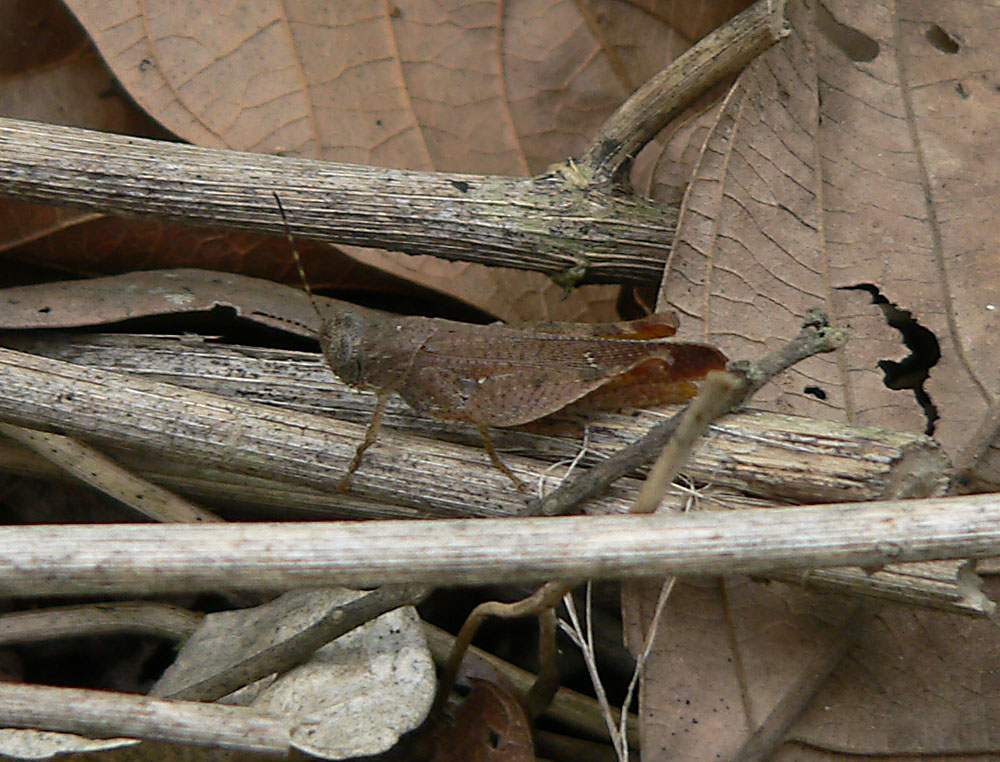
The Acrididae are the dominant family of short-horned grasshoppers within the suborder Caelifera. They include the great majority of grasshopper species worldwide and are best known because all true locusts—those grasshoppers capable of forming large, migratory swarms—belong to this family. Typical members vary widely in size, shape and color, but they share a common set of anatomical and behavioral traits.
Image gallery
10 Images




Characteristics
Acrididae are characterized by relatively short, stout antennae and the presence of tympanal hearing organs on the sides of the first abdominal segment. Their hind legs are powerfully built for jumping, and many species display wings suited for short flights or sustained migratory movement. Like other orthopterans in Caelifera, they undergo incomplete metamorphosis: eggs hatch into wingless nymphs (often called hoppers), which molt several times before reaching the adult form.
- Short, filiform antennae (contrast with long-horned orthopterans)
- Abdominal tympana for sound reception
- Powerful hind femora for leaping and escape
- Hemimetabolous life cycle: egg → nymph → adult
Classification and diversity
Within Orthoptera, the Acrididae are the principal family of Caelifera and comprise many subfamilies, such as band-winged, spur-throated and slant-faced groups. Together they represent roughly ten thousand described species of the approximately eleven thousand in Caelifera, making Acrididae the most speciose lineage of short-horned grasshoppers. Taxonomic treatment is complex and revised periodically as new molecular and morphological data appear.
Behavior, ecology and locusts
Most Acrididae are solitary herbivores that feed on grasses and forbs, but several species can shift from a solitary to a gregarious phase when population density rises. This phenomenon, called phase polyphenism, is responsible for the locust condition: crowded individuals change in behaviour, colouration and physiology and may form enormous migrating swarms that devastate crops. Prominent examples of swarming species are often cited in agricultural literature and pest-management guides.
Human relevance and distinctions
Many Acrididae species are important agricultural pests, causing periodic outbreaks that threaten food production. Control strategies range from monitoring and early intervention to integrated pest management; research into locust ecology and prevention remains a priority in affected regions. Morphologically, Acrididae differ from the long-horned orthopterans (Ensifera) by antenna length and by the position of auditory organs—features useful for identification in field guides and keys. For general information on grasshoppers see grasshoppers, for background on swarming species consult resources on locusts, and for comparative anatomy refer to materials about insect antennae such as antenna structure.
The family name derives from the Greek akris, meaning locust, reflecting the long-standing human awareness of these insects. Despite their reputation as pests, Acrididae are also important components of many ecosystems, serving as prey for birds, mammals and reptiles and contributing to nutrient cycling in grassland habitats.
Tags
Related articles
Author
AlegsaOnline.com Acrididae — the short-horned grasshopper family Leandro Alegsa
URL: https://en.alegsaonline.com/art/756