
Oval Office
The Oval Office is the official working office of the president of the United States, an elliptical room in the White House West Wing used for meetings, ceremonies, and major announcements.
The Oval Office serves as the chief workspace and ceremonial room for the President of the United States. It is located in the West Wing of the White House and is occupied by the sitting president — currently Joe Biden. The room’s distinctive oval shape and public profile make it one of the most recognizable symbols of the American presidency.
Image gallery
10 Images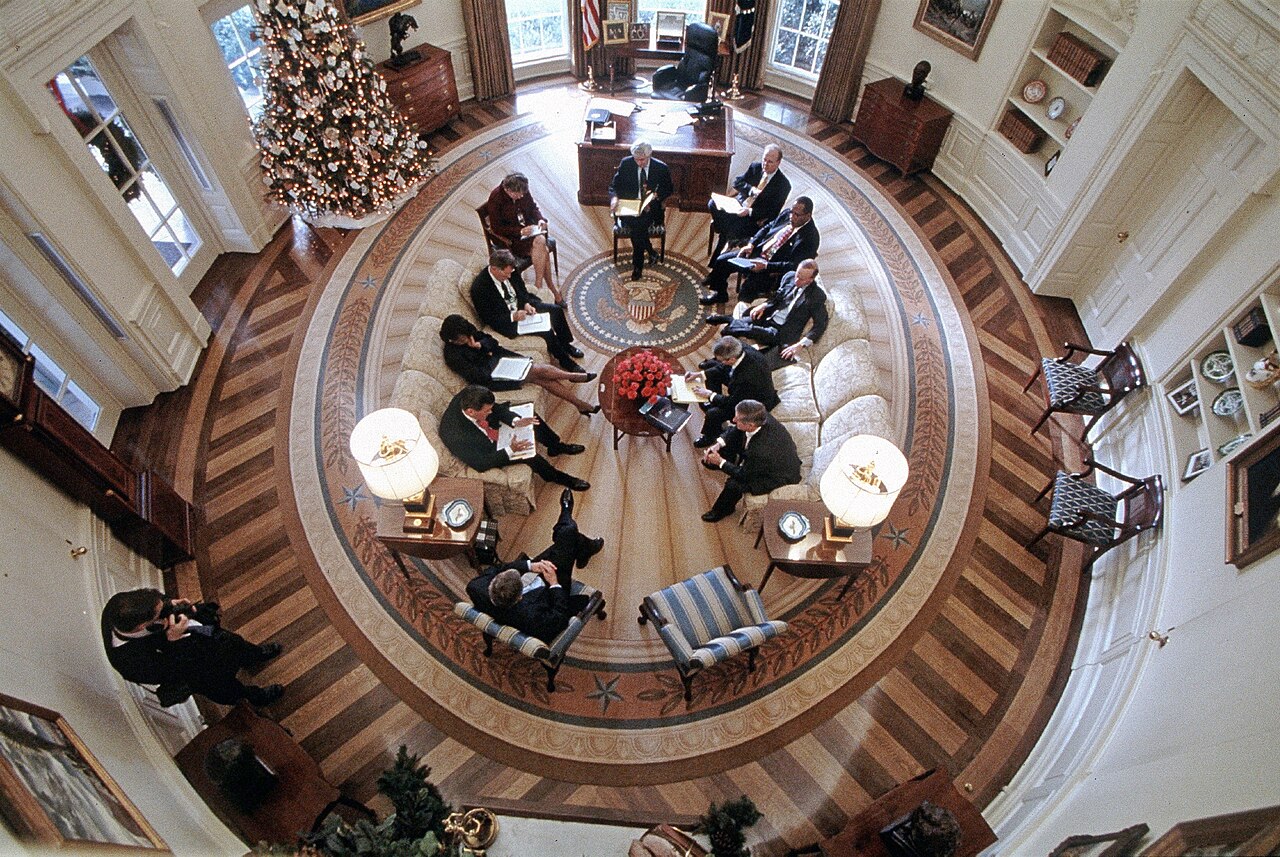



History and development
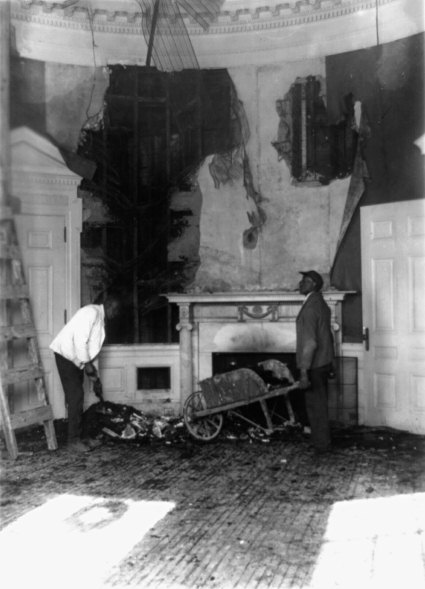
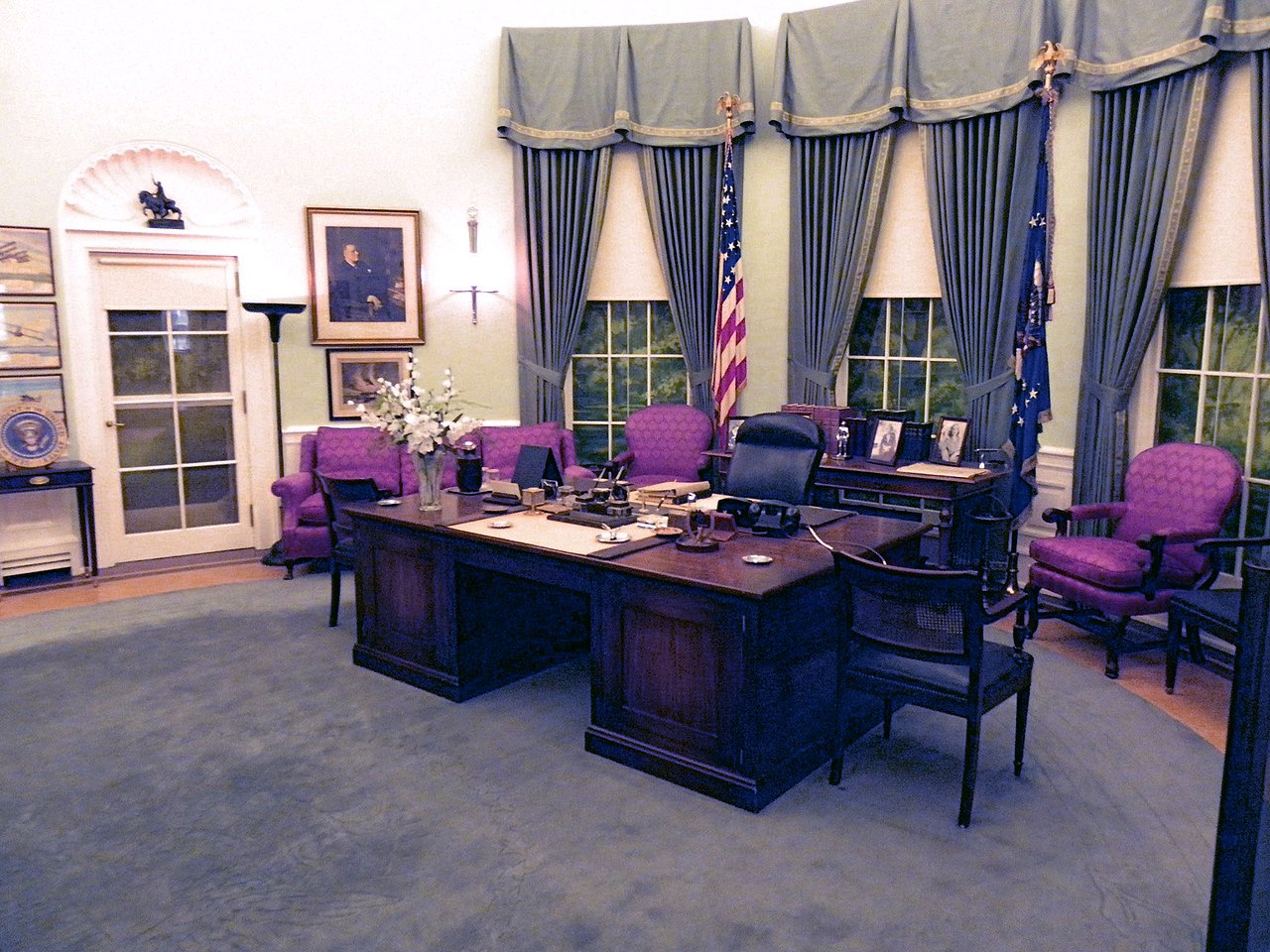
The first Oval Office in the West Wing was created during the administration of President Taft as part of early 20th-century changes to presidential workspaces; its construction began in 1909. Over the decades the office has been altered, redecorated and renovated to meet changing security, technical and aesthetic needs. Each president customizes furnishings, artwork and color schemes, so the room’s appearance evolves with each administration while its basic purpose remains constant.
Design and characteristic elements
The room’s oval geometry encourages conversation and formal gatherings. Typical elements found in the Oval Office include:
- The desk: A large presidential desk is a focal point and is often a named historic piece such as the Resolute Desk.
- Seating and tables: Comfortable chairs and small tables arranged for meetings and photo opportunities.
- Decor: Rugs, curtains, flags, presidential seals and period artwork that reflect the occupant’s tastes and national symbolism.
- Functional additions: Communications equipment, lighting and security features adapted for modern use.
The precise layout and decorative program are part practical, part symbolic: it is a working office but also a backdrop for diplomacy, lawmaking and public messaging.
Uses, traditions and significance
The Oval Office is used for daily executive work, private meetings with advisers, bilateral talks with foreign leaders, ceremonial bill signings and televised addresses. Photographs taken in the room are frequently used in official communications and historical records. Because the space is both operational and emblematic, changes to it sometimes attract public attention and discussion.
Beyond its practical role, the Oval Office functions as a powerful national and international emblem of presidential authority. Its long history, distinctive form and ritual uses make it a central site for understanding how the modern presidency operates.
Related articles
Author
AlegsaOnline.com Oval Office Leandro Alegsa
URL: https://en.alegsaonline.com/art/73689