
National Assembly of Pakistan: role, composition and functions
The National Assembly is the elected lower house of Pakistan's bicameral Parliament, responsible for making federal laws, overseeing the government, and representing the electorate in Islamabad.
The National Assembly is the elected lower chamber of the bicameral Parliament of Pakistan. It meets in the federal capital and serves as the primary legislative forum where laws affecting the federation are proposed, debated and passed. The assembly's membership and internal officers, including the Speaker and Deputy Speaker, organise proceedings and preserve parliamentary procedure.
Image gallery
4 Images


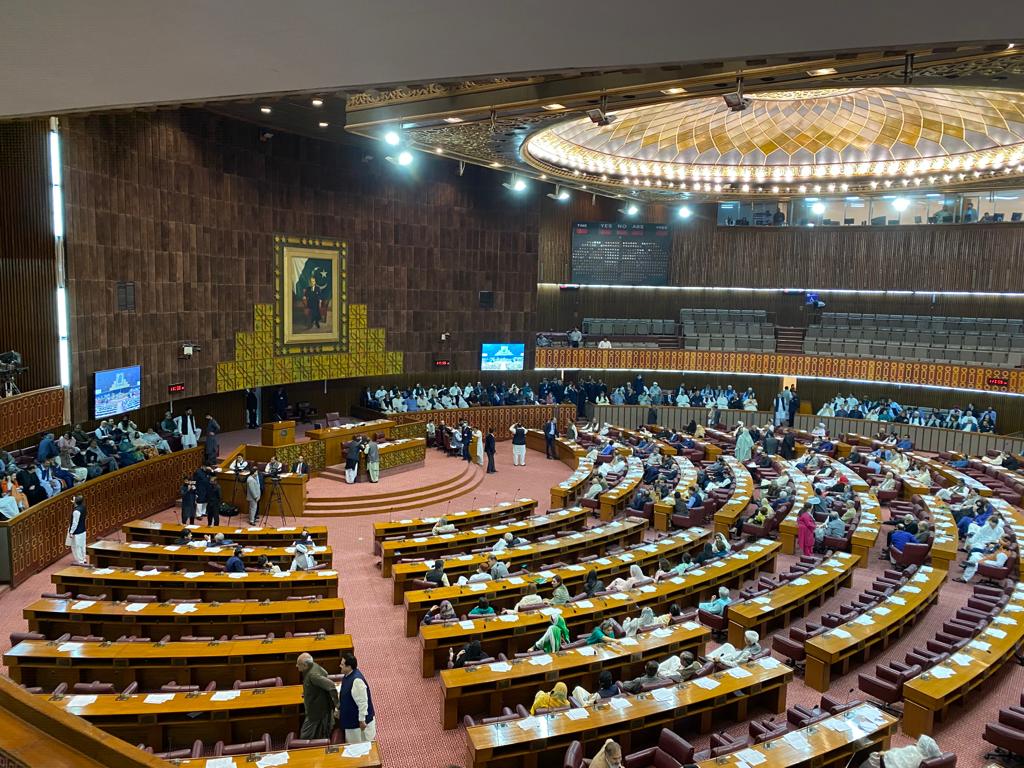
Composition and election
Members are chosen in general elections from territorial constituencies. In addition to directly elected seats, the assembly includes reserved seats for women and non-Muslim minorities that are allocated to parties in proportion to their share of general seats. Representatives usually serve for a fixed term unless early dissolution occurs under constitutional provisions. The Prime Minister is normally drawn from the party or coalition that commands the assembly's majority.
Powers and functions
- Legislation: initiating and passing federal laws and amendments.
- Budget and finance: approving the national budget and financial bills.
- Oversight: questioning ministers, examining government policy and holding votes of confidence or no confidence.
- Representation: articulating local and national interests and directing constituency concerns to the executive.
The assembly works in conjunction with the Senate, the upper house, to enact legislation and review major national matters. While the Senate represents provincial equality, the National Assembly represents population-based representation and party strength.
History and significance
Since independence, the role and powers of the National Assembly have evolved through constitutional changes, periods of martial rule and democratic restoration. It remains central to Pakistan's parliamentary system as the forum where executive authority is legitimated and public policy is shaped. Key national debates—on taxation, security, social policy and international agreements—are typically resolved through its proceedings.
For more procedural details, rules of procedure and recent composition, consult the official parliamentary resources and authoritative summaries available through parliamentary portals and reference guides such as the lower house pages maintained by the legislature.
Related articles
Author
AlegsaOnline.com National Assembly of Pakistan: role, composition and functions Leandro Alegsa
URL: https://en.alegsaonline.com/art/74068