
Augustin Buzura
Romanian novelist, short‑story writer, journalist and critic; member of the Romanian Academy and a leading cultural figure who directed cultural institutions and explored moral and social dilemmas in prose.
Overview
Augustin Buzura (September 22, 1937 – July 10, 2017) was a Romanian novelist, short‑story writer, journalist, essayist and literary critic. Over several decades he became a prominent voice in Romanian letters, known for fiction that probes ethical dilemmas, psychological conflict and the pressures exerted by social and political realities. He combined creative writing with public cultural roles and critical reflection on literature’s social function.
Image gallery
1 Image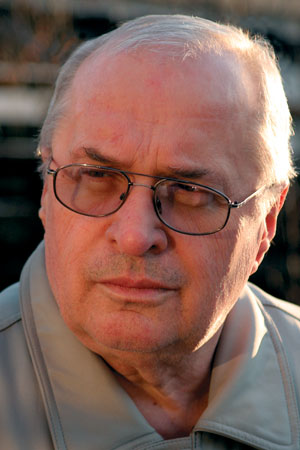
Life and career
Buzura published fiction and critical essays while also working as a journalist and editor. He held leadership positions in Romanian cultural institutions: in the early 1990s he became president of the Romanian Cultural Foundation, and later he served as president of the Romanian Cultural Institute between 2003 and 2004. He was elected a member of the Romanian Academy, a recognition of his standing in Romanian intellectual life. He died in Bucharest of a heart attack on July 10, 2017, aged 79; his death was noted both in Romania and by the international Romanian‑language community (Bucharest).
Literary themes and style
Buzura’s prose is often described as psychologically acute and ethically engaged. His narratives tend to focus on individuals confronting moral ambiguity, the compromises of everyday life, and the effects of institutional power on private conscience. He favored a realist approach grounded in close observation of character, combining clear, disciplined language with sustained interior inquiry. Critics have remarked on his capacity to render social contexts that inform — but do not overwhelm — personal drama.
Contributions and roles
- Novelist and short‑story writer addressing ethical and social questions.
- Essayist and literary critic who reflected on the role of literature in society.
- Journalist and editor active in shaping cultural conversation in Romania.
- Institutional leader — associated with the Romanian Cultural Foundation and the Romanian Cultural Institute — and member of the Romanian Academy (Romanian Academy).
Legacy
Buzura is remembered as a writer who combined narrative skill with moral seriousness and public engagement. His work continues to be read by those interested in postwar and late‑20th‑century Romanian literature, particularly by readers who seek novels and stories that examine conscience, responsibility and the tensions between individual autonomy and collective demands. Beyond his books, his work as a critic and cultural administrator helped shape debates about Romanian culture in the post‑communist period.
For readers unfamiliar with his work, Buzura stands as an example of an author whose fiction is inseparable from the intellectual and civic commitments of a writer active in both the literary and public spheres.
Related articles
Author
AlegsaOnline.com Augustin Buzura Leandro Alegsa
URL: https://en.alegsaonline.com/art/7340
Sources
- revista22online.ro : Academicianul Augustin Buzura a murit la vârsta de 79 de ani