
August Zaleski
Polish economist, diplomat and politician; twice served as Minister of Foreign Affairs and was President of the Polish government‑in‑exile from 1947 to 1972.
August Zaleski (13 September 1883 – 7 April 1972) was a prominent Polish economist, diplomat and public official who played a leading role in the politics of the Second Polish Republic and later in the Polish government‑in‑exile. He served twice as Minister of Foreign Affairs in interwar Poland and was elected President of the Polish government‑in‑exile on 9 June 1947, a position he held until his death on 7 April 1972.
Image gallery
1 Image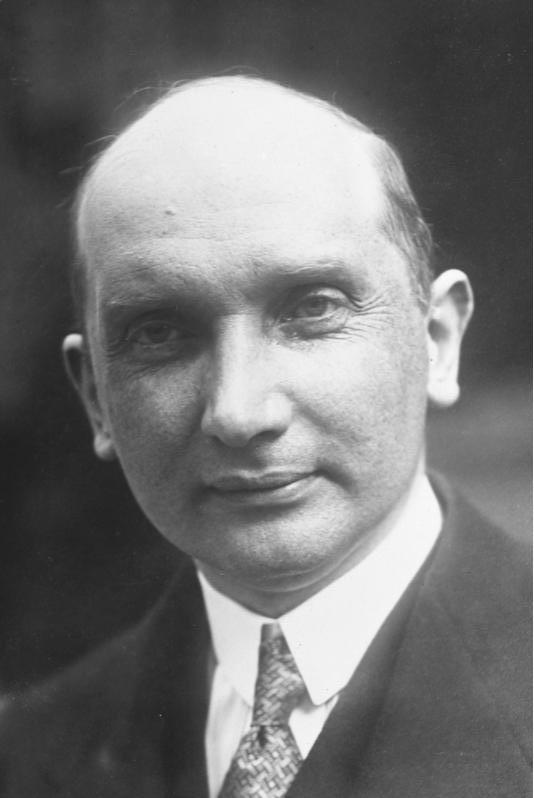
Early life and public career
Zaleski trained in economic and public affairs before entering government service in the newly independent Poland after World War I. During the interwar period he combined economic work with diplomacy and politics, gaining experience in the foreign service and in ministerial office. His background as an economist informed his approach to international and financial questions during a turbulent period for Poland and Europe.
Diplomatic and ministerial roles
In the Second Polish Republic Zaleski held senior diplomatic posts and twice served as Minister of Foreign Affairs. He was involved in crafting foreign policy at a time when Poland sought to secure its borders and international position amid shifting alliances and the rise of hostile powers. His career blended representation abroad with administration at home, and he was respected within émigré and governmental circles for his competence in external affairs.
President of the government‑in‑exile (1947–1972)
After World War II, the Polish government‑in‑exile—based in London—maintained a symbolic claim to the continuity of the prewar Republic of Poland. Zaleski was elected president of that government in June 1947. As president he presided over institutions of the émigré community, issued appointments and certificates, and acted as a focal point for Poles who refused to accept communist rule in Poland. His long tenure spanned the early Cold War and many changes in the émigré community.
Controversy and constitutional dispute
Zaleski's presidency was marked by a significant constitutional dispute. When his original term expired he did not step down, asserting his continued legitimacy. In 1954 a group of leading émigré politicians formed a collective body known as the Council of Three to act as a counter‑authority and to preserve what they saw as constitutional order. Supporters of Zaleski argued his extended leadership provided continuity and stability; critics viewed the extension as an overreach that fractured the exile community.
Legacy
Zaleski died in office on 7 April 1972. His long stewardship of the government‑in‑exile left a mixed legacy: he sustained institutions and the symbolic continuity of the prewar Republic for a generation, but his refusal to accept a time‑limited presidency produced internal divisions whose effects lingered in émigré politics. He was succeeded in the presidency of the government‑in‑exile by Stanisław Ostrowski. Historians evaluate Zaleski both for his diplomatic skill and for the controversies that accompanied his extended rule.
- Born: 13 September 1883
- Died: 7 April 1972
- Main roles: Economist, diplomat, twice Minister of Foreign Affairs, President of the Polish government‑in‑exile (1947–1972)
- Notable issue: Constitutional dispute and the formation of the Council of Three in 1954
Related articles
Author
AlegsaOnline.com August Zaleski Leandro Alegsa
URL: https://en.alegsaonline.com/art/7326