
Organic reactions: types, mechanisms, and applications
Overview of organic reactions, their main classes and mechanisms, historical development, and practical importance in synthesis, industry, and research.
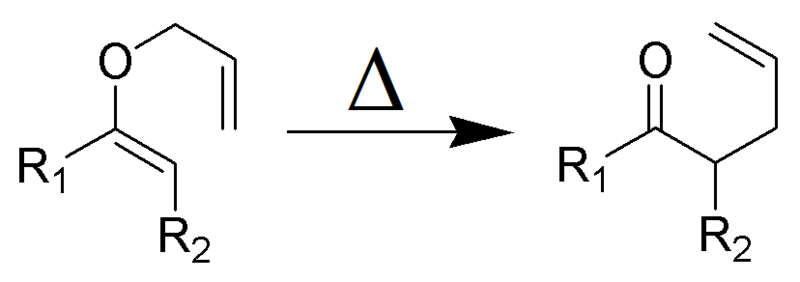
Organic reactions are chemical transformations that change the structure or connectivity of organic molecules. They are the foundation of organic chemistry and enable the construction, modification and degradation of carbon-based compounds. These processes are described by mechanisms that explain how bonds break and form, and they are governed by principles of reactivity, selectivity and energetics.
Common classes of reactions
Practitioners group organic reactions by the overall change that occurs. Major classes include additions, eliminations and substitutions, as well as pericyclic and rearrangement reactions. Redox and photochemical processes are also central in many contexts. Representative types are:
- Addition reactions — where atoms are added across multiple bonds, for example electrophilic addition to alkenes. addition reactions
- Elimination reactions — where elements are removed from a molecule to form a multiple bond. elimination reactions
- Substitution reactions — where one group replaces another, typified by SN1 and SN2 pathways. substitution reactions
- Pericyclic reactions — concerted, symmetry-controlled processes such as the Diels–Alder reaction. pericyclic reactions
- Rearrangements — intramolecular migrations that give constitutional isomers. rearrangement reactions
- Redox and photochemical — electron transfer and light-driven transformations that change oxidation states or enable new pathways.
Mechanisms, selectivity and control
Mechanistic categories commonly include ionic, radical and pericyclic pathways. Factors such as solvent, temperature, catalysts and substituent effects determine rate and outcome. Stereochemistry — the three-dimensional arrangement of atoms — is a critical concern: many organic reactions are designed to be stereoselective or stereospecific to produce desired isomers.
Historical and practical perspective
The development of organic reactions is closely tied to the growth of synthetic chemistry. Classic milestones such as early syntheses that showed organic substances could be prepared from inorganic precursors helped transform the field. Today, systematic methods and named reactions underpin the construction of pharmaceuticals, agrochemicals, polymers and materials.
Applications and examples
Organic reactions are used to build molecules with specific functions: forming carbon–carbon bonds to assemble complex frameworks, introducing functional groups for reactivity, and modifying molecules to improve properties like potency or solubility. Synthetic planning relies on a repertoire of reactions and common transformations applied stepwise in organic synthesis. organic synthesis turns these reactions into routes for new compounds.
Practical considerations and modern trends
Modern organic chemistry emphasizes efficiency, selectivity, and sustainability. Catalysis (both metal- and organocatalysis), green solvents, and flow chemistry are widely adopted to reduce waste and improve scalability. Analytical tools such as spectroscopy and kinetics guide optimization and elucidation of mechanisms.
Related topics
Related articles
Author
AlegsaOnline.com Organic reactions: types, mechanisms, and applications Leandro Alegsa
URL: https://en.alegsaonline.com/art/73094