
Open Door Policy (China, late 19th–early 20th century)
Diplomatic initiative led by the United States to preserve Chinese territorial integrity and equal commercial access for foreign powers through the Open Door Notes (1899–1900).
The Open Door Policy refers to a set of diplomatic principles aimed at preserving equal commercial opportunity in China and preventing the formal partition of Chinese territory by foreign powers. It is most closely associated with the ‘‘Open Door Notes’’ sent by U.S. Secretary of State John Hay around 1899–1900. The policy sought to keep China open to merchants of all nations and to protect its territorial and administrative integrity while allowing expanded foreign trade.
Image gallery
4 Images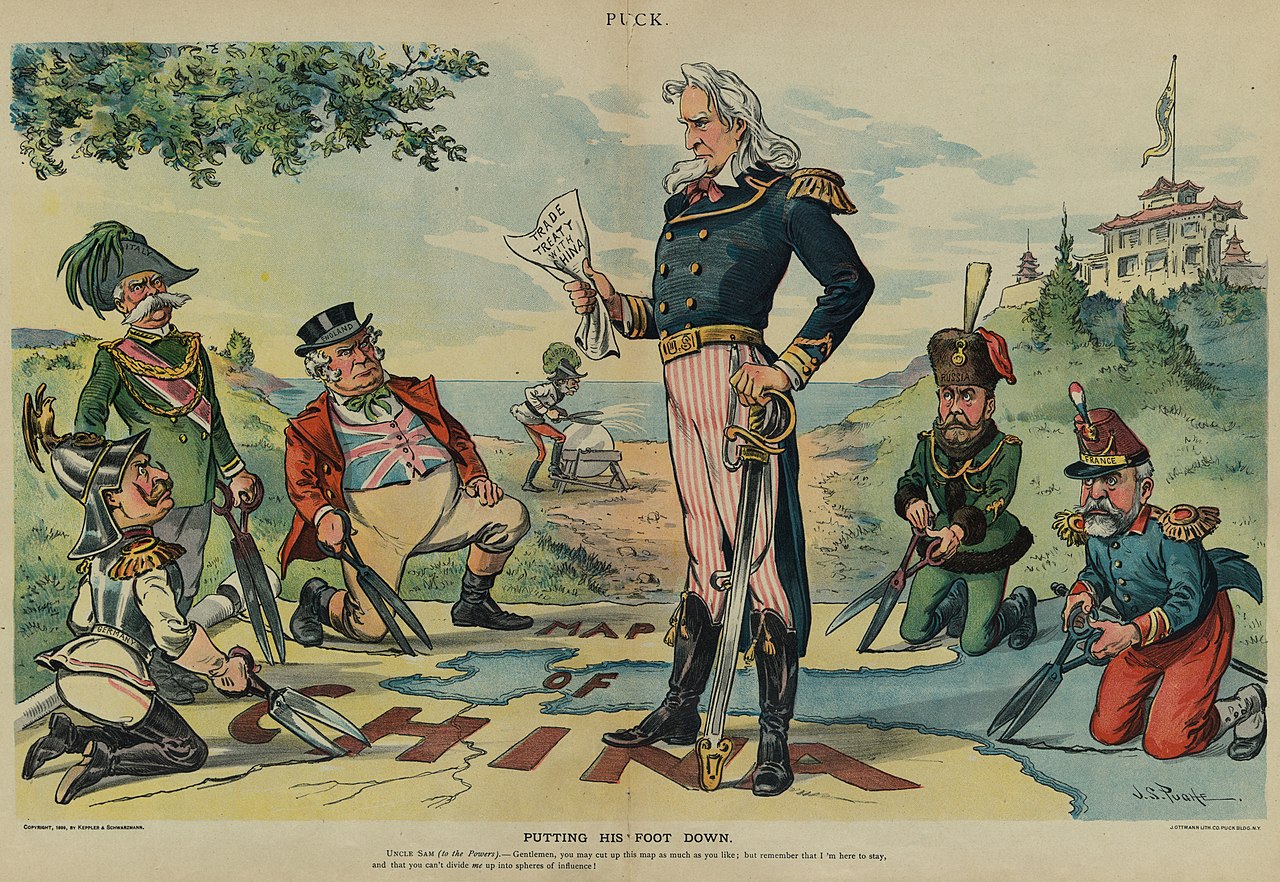


Origins and historical context
In the late 19th century several imperial governments — including Britain, France, Germany, Russia and Japan — established spheres of influence in China after military confrontations and unequal treaties. The United States, worried that Europeans and regional powers would monopolize markets, proposed a different approach. Through diplomatic notes rather than a formal treaty, the U.S. government urged other powers to guarantee equal commercial rights across China and to respect Chinese sovereignty.
Core principles and provisions
- Equal commercial access: no single power would exclude others from trading in any Chinese port or region.
- Maintenance of China's territorial and administrative integrity against outright annexation.
- Non-discrimination in tariffs and commercial regulations among foreign nations operating in China.
Implementation and significance
The policy was never established by a comprehensive multilateral treaty; instead it functioned as a diplomatic understanding that many powers accepted in varying degrees. The Open Door approach provided a framework that justified continued economic penetration without formal colonization. It also reflected a growing American interest in overseas markets and an alternative to direct territorial expansion.
Impact, criticisms and later relevance
Supporters argue the policy slowed the outright carve-up of Chinese territory and encouraged multilateral commerce. Critics contend it chiefly protected foreign commercial interests and American influence while failing to prevent intervention or internally imposed unequal agreements. Elements of the Open Door language resurfaced in later twentieth-century diplomacy when states invoked principles of equal access and national sovereignty. The policy illustrates how informal international norms can shape relations even without formal treaties.
Further reading
For background on the actors and documents involved see materials from the governments of the United States, contemporary diplomatic correspondence and studies of late Qing-era China and international law in the age of empires. Primary documents and detailed analyses remain the best way to explore the nuances of the Open Door Notes and their reception.
Related articles
Author
AlegsaOnline.com Open Door Policy (China, late 19th–early 20th century) Leandro Alegsa
URL: https://en.alegsaonline.com/art/72758