
Pakistan Movement (Tehrik-e-Pakistan)
Political movement in British India that sought a separate Muslim homeland and led to the creation of Pakistan in 1947; its origins, leadership, major events, and lasting effects.
Overview
The Pakistan Movement, often called Tehrik-e-Pakistan, was a political campaign during the first half of the 20th century that sought the creation of a separate state for Muslims of British India. It is generally characterized as both a political and social movement that combined elite negotiation, party organisation and popular mobilisation. Supporters argued that Muslims required distinct political arrangements to protect their religious and cultural rights within a subcontinent dominated by other communities and majorities. The movement culminated in the partition of British India and the creation of Pakistan in 1947.
Image gallery
10 Images


Historical background
British India was administered under the authority of the British Crown after the 19th century and contained a wide range of linguistic, religious and regional communities. With constitutional reforms, electoral politics and communal representation becoming more prominent, some Muslim leaders came to doubt whether minority safeguards would be sufficient in a majority-dominated legislature. These concerns about future political status and civil liberties were part of broader debates about identity, modernity and governance in the imperial context. The movement is commonly described as a political movement that emerged in these circumstances.
Ideology and aims
At the core of the campaign was the argument that Muslims of the subcontinent constituted a distinct community with particular political interests. This idea, often summarized as the "Two-Nation" concept by contemporaries and later commentators, provided an ideological basis for seeking a separate polity. Advocates framed the demand in terms of safeguarding communal rights, political autonomy and social distinctiveness. Many supporters feared they would lose their liberty and influence if constitutional arrangements after British withdrawal did not guarantee adequate protections, a concern frequently cited in public speeches and party resolutions about liberty.
Organization and leadership
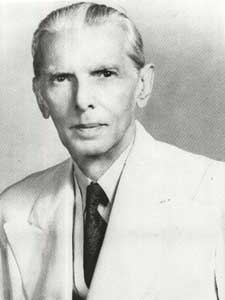
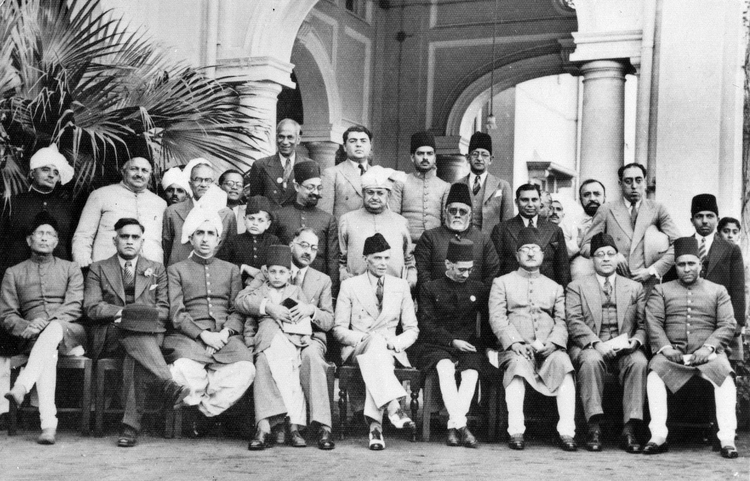
The movement was organised principally through the All-India Muslim League and allied provincial organisations. Its most prominent leader was Muhammad Ali Jinnah, popularly known by supporters as Quaid‑e‑Azam Muhammad Ali Jinnah, whose advocacy and legal-political skills shaped the League's strategy. Regional leaders brought provincial weight and local networks: prominent examples include Nawab Muhammad Ismail Khan Nawab Muhammad Ismail Khan, Raja Amir Ahmad Khan Raja Amir Ahmad Khan, Khawaja Nazimuddin Khawaja Nazimuddin and Huseyn Shaheed Suhrawardy Huseyn Shaheed Suhrawardy. Other organisers and negotiators such as Sardar Shaukat Hayat Khan Sardar Shaukat Hayat Khan, Chaudhry Khaliquzzaman Chaudhry Khaliquzzaman, Aurangzeb Khan Aurangzeb Khan and Qazi Muhammad Isa Qazi Muhammad Isa played important roles in mobilising constituencies across provinces.
Major events and turning points
Key milestones included periodic electoral contests under colonial reforms, formal resolutions adopted by the Muslim League, and high-profile public meetings. The Lahore session of the Muslim League in 1940 articulated the demand for geographically contiguous Muslim-majority areas to be grouped to constitute "independent states"—a formulation that was central to later negotiations. World War II, changing British priorities, and communal tensions in the mid-1940s accelerated political crisis and negotiation. The process culminated in a settlement that partitioned the subcontinent and ended direct imperial rule in the region, involving administrative transfer and the creation of separate dominions within the former British Empire.
Negotiations and transfer of power
Negotiations involved multiple parties: the British government, the Indian National Congress, the All-India Muslim League and princely states. As the end of British rule approached, discussions about boundaries, governance arrangements and minority protections intensified. The final months of 1946–47 saw rapid political developments, communal violence in several regions, and expedited arrangements for the transfer of authority. The eventual partition produced a new map of states and required administrative decisions about borders, federal structure and citizenship.
Consequences and population movements
The immediate human consequences of partition included large-scale population movements as people crossed borders to join the newly formed states; these movements were accompanied by episodes of communal violence and deep social disruption. Administrative challenges, contests over territory, and disputes involving princely states left a legacy of contentious relations between the successor states. The Pakistan Movement therefore did not only shape the creation of a new country but also set the terms for long-standing regional and bilateral issues.
Legacy and historiography
The Pakistan Movement is remembered and interpreted in different ways. In Pakistan it is commemorated as the struggle for a homeland and national founding. Historians and political scientists analyse it through lenses of communal identity, colonial policy, elite strategy and mass politics. Debates continue about the relative weight of ideological conviction, political bargaining and social forces in producing partition. The movement's legacy remains central in discussions of national identity, minority rights, federal governance and regional security in South Asia.
Further study
Readers seeking detailed accounts can consult collections of primary documents, contemporary newspapers and scholarly studies that trace regional experiences, negotiations and biographies of participants. These resources illuminate how constitutional debates, electoral politics and imperial decisions combined to produce one of the major state‑formation events of the 20th century. For introductions and specific biographies see materials associated with the movement leaders and institutional records first half of the 20th century, British India, and archival compendia cited in specialist bibliographies partition.
Questions and answers
Q: What was the Pakistan Movement?
A: The Pakistan Movement (also called Tehrik-e-Pakistan, Urdu: تحریکِ پاکستان) was a political movement which was active during the first half of the 20th century. It aimed to create a separate state for Muslims in British India who feared they would lose their liberty when the English left.
Q: Who led the movement?
A: The movement was led by Quaid-e-Azam Muhammad Ali Jinnah and other important leaders included Nawab Muhammad Ismail Khan, Raja Amir Ahmed Khan of Mahmudabad, Sir Sikandar Hayat Khan, Nawabzada Liaquat Ali Khan, Fatimah Jinnah, Amjadi Bano Begum, Sir Abdullah Haroon, Khawaja Nazimuddin, Huseyn Shaheed Suhrawardy, Sardar Shaukat Hayat Khan, Chaudhry Khaliquzzaman, A.K. Fazlul Huq , Aurangzeb Khan , Qazi Muhammad Isa and Abdur Rab Nishtar .
Q: Why did people want to create a separate state?
A: People wanted to create a separate state because they feared they would lose their liberty when the English left British India which had mostly Hindu and Muslim populations at that time.
Q: What party organised this struggle?
A: This struggle was organised by the All India Muslim League party.
Q: What resulted from this movement?
A: This movement resulted in the partition of the British Empire in India.
Q: Who were some of the other important leaders involved in this movement apart from Quaid-e-Azam Muhammad Ali Jinnah ?
A: Some of the other important leaders involved in this movement apart from Quaid-e-Azam Muhammad Ali Jinnah were Nawab Muhammad Ismail Khan , Raja Amir Ahmed Khan of Mahmudabad , Sir Sikandar Hayat Khan , Nawabzada Liaquat Ali Khan , Fatimah Jinnah , Amjadi Bano Begum , Sir Abdullah Haroon , Khawaja Nazimuddin , Huseyn Shaheed Suhrawardy , Sardar Shaukat Hayat Khan , Chaudhry Khaliquzzaman , A.K. Fazlul Huq , Aurangzeb Khan , Qazi Muhammad Isa and Abdur Rab Nishtar .
Related articles
Author
AlegsaOnline.com Pakistan Movement (Tehrik-e-Pakistan) Leandro Alegsa
URL: https://en.alegsaonline.com/art/74067
Sources
- en.wikisource.org : Now or Never; Are We to Live or Perish Forever?