
Đồng Hới
Đồng Hới is the capital city of Quảng Bình Province in central Vietnam, a coastal prefectural city noted for its wartime history, coastal setting, and role as gateway to Phong Nha–Kẻ Bàng and regional transport links.

Đồng Hới is the administrative center of Quảng Bình Province in Vietnam's North Central Coast region. The city sits on a coastal plain between the mountains of the Annamite Range and the South China Sea, and has served as a regional hub for government, commerce and transport. It is often described as a gateway to the limestone caves and karst landscape of the nearby Phong Nha–Kẻ Bàng area.
Image gallery
7 Images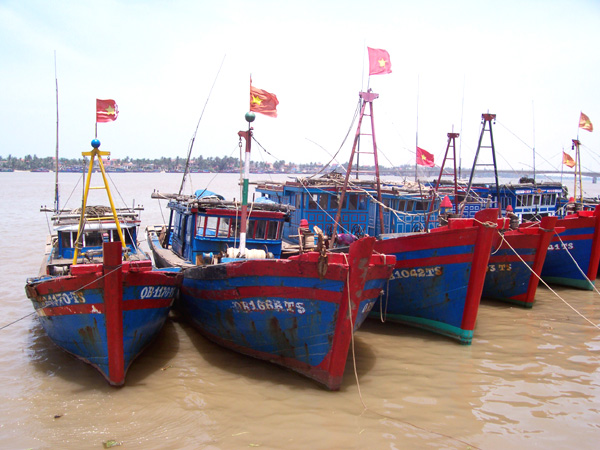


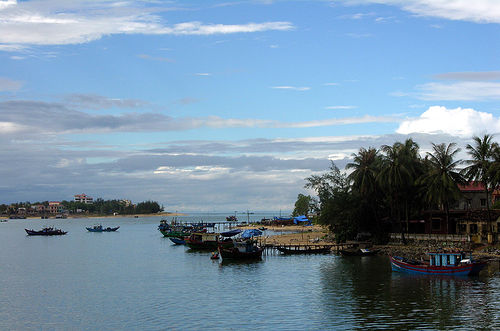
Geography and location
Đồng Hới lies within a coastal corridor that connects major Vietnamese cities: it is several hundred kilometres south of Hà Nội, north of Hồ Chí Minh City and north of Đà Nẵng. The city faces the South China Sea to the east and borders inland provinces and the border region toward Laos to the west. Its municipal area covers both urban districts and surrounding lowland communes, making it a local centre for services and logistics.
History and wartime legacy
Đồng Hới experienced significant disruption during the 20th century. During the period of division it was within what was known as North Vietnam. Because of its strategic location near the former military demarcation line and key coastal routes, the city played a role in supply and movement and was affected during the Vietnam War. Large-scale aerial bombardment by the US Air Force and other forces caused widespread damage to infrastructure and historic buildings; some ruins were retained as memorials.
Notable sites and landmarks
Among the city's visible reminders of that era is the shell of the Tam Toa Church, a bombed cathedral that remains partially ruined and is visited by people reflecting on the wartime past. Other local points of interest include riverside promenades, provincial museums, and nearby natural attractions such as the cave systems and protected forests of the Phong Nha area, which attract both researchers and tourists.
Transport and economy
Đồng Hới functions as a transport node for Quảng Bình. It is served by a regional airport to the north, Dong Hoi Airport, as well as national road and rail connections that link coastal and inland provinces. The local economy mixes administration, services, fishing, agriculture and growing tourism activity. Small-scale industry and commerce are concentrated near the urban core.
Visiting and context
Today Đồng Hới is a city balancing reconstruction and remembrance with economic development. Visitors typically use it as a base to explore nearby natural and cultural sites, or as a stop on north–south journeys along Vietnam's coast. For those researching Vietnam's recent history, its preserved ruins and museums offer accessible insights into the wartime experience and the region's subsequent recovery. For provincial information see Quảng Bình Province.
- Regional links and transport: Hà Nội, Hồ Chí Minh City, Dong Hoi Airport
- Geographic neighbours and seas: Laos, South China Sea
- Historical references: North Vietnam, Vietnam War, US Air Force, Tam Toa Church
Questions and answers
Q: What is the capital city of Quảng Bình Province?
A: The capital city of Quảng Bình Province is Đồng Hới.
Q: How large is the city's area?
A: The city's area is 155.54 km² (60 square miles).
Q: How many people lived in Đồng Hới in 2005?
A: In 2005, 103,005 people lived in Đồng Hới.
Q: How far away from Hà Nội (Hanoi) is it located?
A: It is around 500 km (310 mi) south of Hà Nội (Hanoi).
Q: What are its borders?
A: It borders Laos on the west, the South China Sea on the east, Hà Tĩnh province on the north, and Quảng Ninh in the south.
Q: Where is Dong Hoi Airport located?
A: Dong Hoi Airport is 6 km north of Dong Hoi.
Q: What happened to Tam Toa Church during the Vietnam War?
A: Tam Toa Church was bombed during the Vietnam War and remains ruined today as a reminder of the bombing of North Vietnam.
Related articles
Author
AlegsaOnline.com Đồng Hới Leandro Alegsa
URL: https://en.alegsaonline.com/art/72633