
China's One‑Child Policy: Origins, Implementation, Effects, and Reversal
A comprehensive overview of China’s one‑child policy: why it was introduced, how it was enforced, its social and demographic consequences, exceptions, and later shift to two‑ and three‑child policies.
The one‑child policy was a national population control program implemented in the People's Republic of China beginning around 1979–1980. Designed to slow rapid postwar population growth and reduce pressure on food supplies, housing and public services, it limited the number of children most urban couples could legally have. The measure was a prominent feature of China’s family planning system for more than three decades and was accompanied by state propaganda, incentives for compliance and a range of administrative penalties for violations. The policy’s stated aim was to improve economic development and living standards by managing population size; its practical effects went far beyond birthrates, influencing family structure, gender ratios and the age composition of the population. For background on the formal program announcement see policy records and for its national context see China’s demographic history.
Image gallery
9 Images
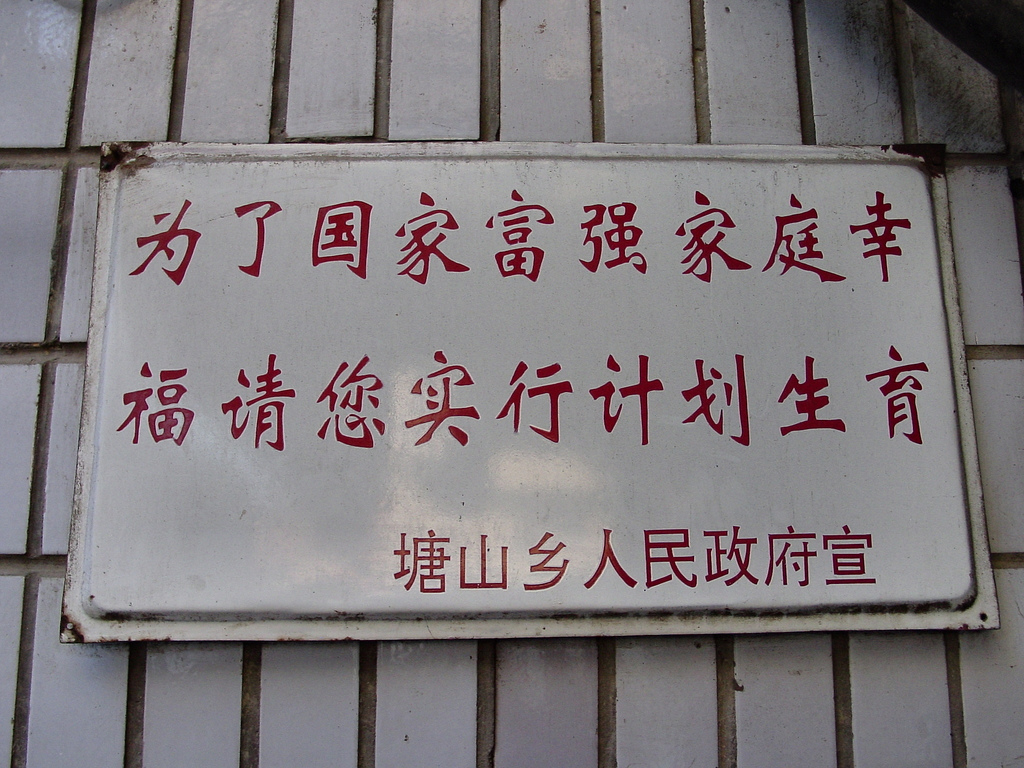


How the policy worked: rules, exceptions and enforcement
The basic rule restricted most urban couples to a single child, but many detailed exceptions and local variations existed. Ethnic minorities often received exemptions; rural households were in some areas allowed a second child if the first child was a daughter or disabled; only children themselves sometimes gained special allowances when forming families; and officials occasionally granted permits or waivers. Implementation relied on local family planning offices, household registration (hukou) systems and workplace monitoring. Penalties for unauthorized births commonly included fines—often called "social maintenance fees"—loss of employment benefits, demotions for public employees and denial of public housing. In some cases the policy was enforced through coercive measures, including compulsory abortions and sterilizations, which became a central source of international human rights criticism. Discussions of population growth leading to the policy often refer to earlier leaders such as Mao Zedong and to government efforts to manage population expansion. Allegations about forced termination of pregnancies are documented in many sources and are discussed under the broader topic of reproductive rights.
History and policy evolution
China's fertility control measures predate the one‑child limit: campaigns encouraging family planning, birth spacing and later marriage began in the 1950s and 1960s. The one‑child restriction became the most visible and controversial phase after 1979 as the leadership reacted to projections of unsustainable population growth. Over the decades the policy was modified repeatedly: pilot programs, local exceptions and targeted incentives were used to manage social responses and economic needs. Geographic exceptions existed too; the national policy did not apply uniformly in regions such as Hong Kong, Macau or in some autonomous areas including parts of Tibet, where local laws and ethnic policies operated differently.
Consequences and notable demographic effects
- Fertility decline: The policy contributed to a sharp fall in birth rates and to sustained low fertility in many parts of China, which policymakers initially regarded as a success.
- Ageing population: By reducing the number of births for decades, the policy accelerated population ageing and created a growing dependency ratio—fewer young workers supporting a larger elderly cohort.
- Gender imbalance: A cultural preference for sons combined with new reproductive technology produced a skewed sex ratio at birth in some regions, prompting long‑term social concerns about marriage markets and gender relations.
- Human rights and social costs: Reports of forced sterilizations and abortions, constraints on reproductive freedom, psychological effects on single children and discrimination against families who violated quotas generated substantial domestic and international criticism.
Reversal and later policy changes
By the 2010s the government recognized the economic and social problems linked to low fertility and population ageing. In October 2015 authorities announced the end of the one‑child limit and formally allowed most couples to have two children beginning in January 2016. The intention was to expand the workforce and rebalance age structures—measures that were accompanied by new campaigns to encourage childbirth and to improve family support policies. Persistently low fertility led to further loosening: in 2021 the policy was adjusted to permit up to three children per couple. These changes reflect the shift from a population control priority to active demographic management and family support, but they have not automatically reversed declining birth rates, which are affected by economic, social and cultural factors as well as by the legacy of previous decades.
Legacy, debates and current considerations
The one‑child era left complex and enduring legacies. Economically, it helped reduce the size of cohorts entering the labor market in some decades, which may have aided per‑capita growth; demographically, it created imbalances that policymakers now aim to mitigate. Ethically and legally, the policy stimulated debate about state authority over reproductive decisions and about accountability for coercive practices. Contemporary Chinese government efforts have shifted toward incentives for families—such as expanded parental leave, childcare services and housing support—to raise fertility voluntarily rather than by compulsion. Scholars continue to assess the policy’s net effects: estimates of the number of births averted vary and are contested, and many analysts emphasize that fertility behavior depends on employment, housing costs, gender equality and social norms as much as formal pronatalist or antinatalist rules. For further reading and official background consult the linked resources above and a range of demographic studies available through academic and policy outlets.
Related articles
Author
AlegsaOnline.com China's One‑Child Policy: Origins, Implementation, Effects, and Reversal Leandro Alegsa
URL: https://en.alegsaonline.com/art/72564
Sources
- lifenews.com : lifenews.com/2013/09/25/chinas-one-child-policy-turns-33-as-forced-abortions-female-infan…
- news.bbc.co.uk : BBC: China steps up "one-child policy".
- www2.chinadaily.com.cn : "Most people free to have more child"