
Audio feedback: causes, control, and uses
Audio feedback is the howl or tone created when an amplified sound is re‑picked and re‑amplified, producing an oscillation loop; it can be mitigated by placement, gain control, equalization, and acoustic treatment.
Overview
Audio feedback is the typically unwanted howl, squeal or tone that appears when sound from an amplified source re-enters a pickup device and is amplified again, creating a self-sustaining loop. In casual terms it is often described as an unwanted noise that arises within an audio system when the system oscillates at one or more frequencies.
Image gallery
3 Images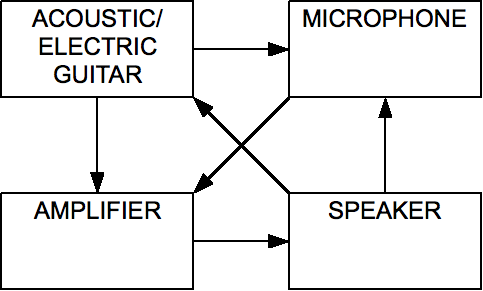

Causes and characteristics
Feedback occurs when a microphone or pickup hears sound from a loudspeaker and the system gain and phase conditions favor reinforcement rather than attenuation. Typical signs are a sharp, ringing tone at particular frequencies; those tones correspond to frequencies where the loop gain exceeds unity and the overall phase shift is an integer multiple of 360°. Directional microphones and the relative angle to the speaker can strongly affect whether feedback happens. The effect is commonly associated with nearby loudspeakers and reflective rooms.
Prevention and control
Reducing feedback combines ergonomic, acoustic and electronic methods. Practical measures include:
- Lowering overall gain and using gain structure correctly.
- Moving microphones farther from speakers and using directional mics to minimize pickup of speaker output.
- Acoustic treatment to reduce reflections and the room's echo.
- Applying equalization—notch filters or parametric EQs—to attenuate problematic frequencies.
- Deploying automatic feedback suppressors or phase/limiters in live sound chains.
History and artistic use
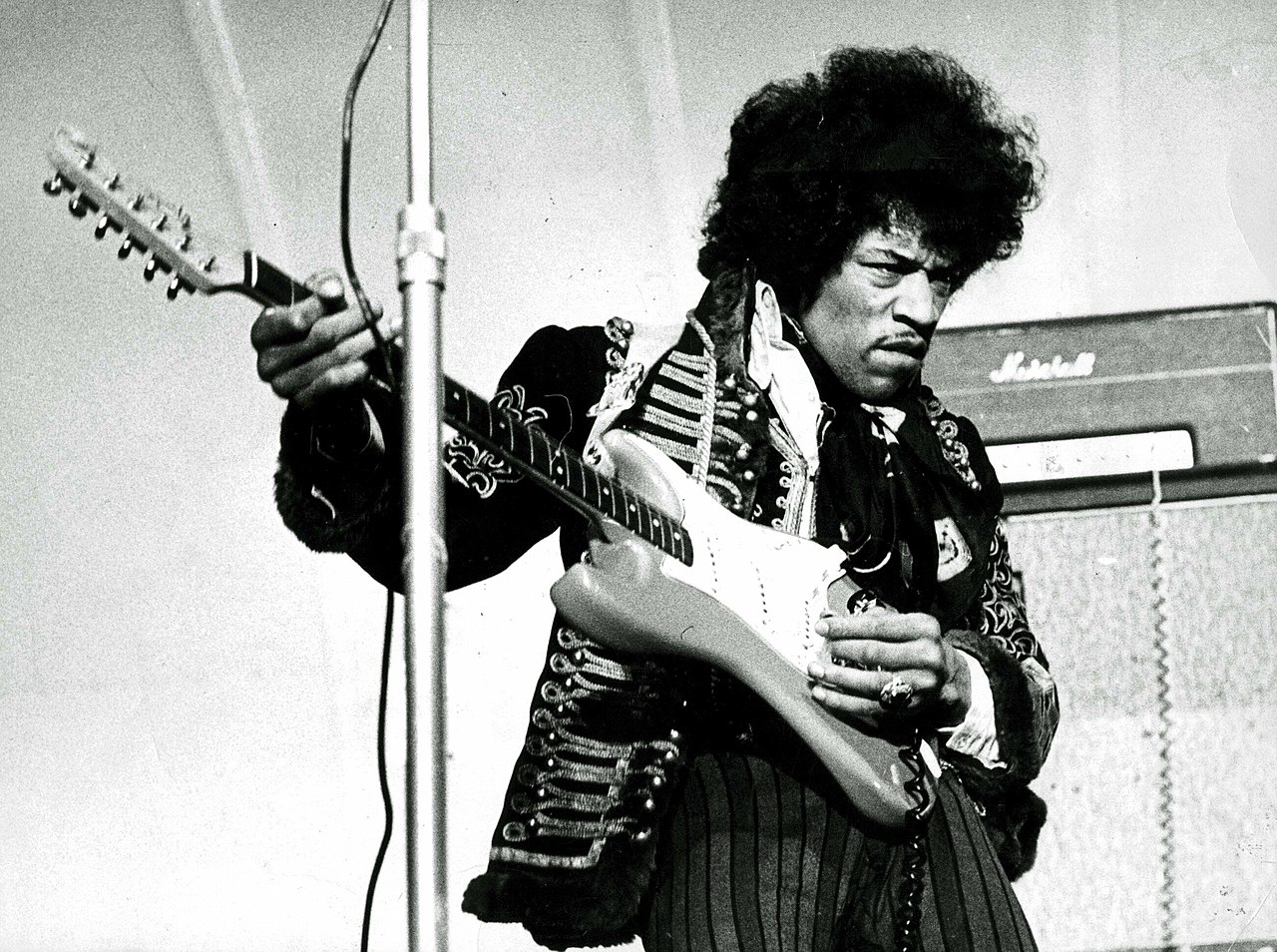
The phenomenon has been observed since early public-address and radio systems and is sometimes called the Larsen effect after researchers who studied it. While usually a nuisance, controlled feedback has been embraced as a musical effect by electric guitarists and experimental artists, who exploit sustained tones and harmonics for creative expression.
Practical examples and distinctions
In live performance, engineers monitor spectrum and use equalizers to notch out narrow bands before feedback builds. Feedback is different from simple echo or reverb: echo is a time-delayed reflection, whereas feedback is a looped amplification process that can self-oscillate. For troubleshooting, sound technicians will check mic placement, speaker orientation and room acoustics, and may employ tools such as real-time analyzers and isolation shields to limit coupling between source and pickup.
For further reading on equipment, best practices and technical explanations, see resources on system design and live sound operation: basic noise concepts, signal chains, oscillation theory, microphone types, speaker placement, equalization methods and acoustic treatment including room control.
Related articles
Author
AlegsaOnline.com Audio feedback: causes, control, and uses Leandro Alegsa
URL: https://en.alegsaonline.com/art/7246