
Automated Teller Machine (ATM): Functions, History, Security, and Uses
Overview of automated teller machines (ATMs): how they work, common services, history and deployment, hardware and networks, security risks and safeguards, and evolving trends in cash access.
An automated teller machine (ATM) is an electronic banking outlet that enables customers to perform basic financial transactions without the direct assistance of a branch representative. Most commonly used to withdraw cash, ATMs also offer services such as deposits, balance inquiries, fund transfers, and bill payments depending on the device and the network it connects to. The machines are operated with a bank card and a personal identification number (PIN).
Image gallery
10 Images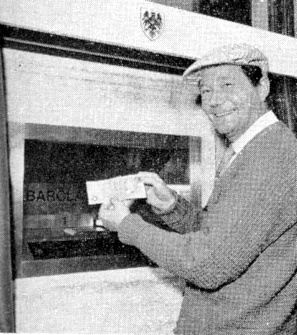


How ATMs work and main components
At a technical level, an ATM is a secure terminal connected to a bank or payment network that authenticates a card, verifies the PIN, checks account balances, and authorizes transactions. Key physical and logical parts include:
- Card reader: reads magnetic stripe or chip data from debit and credit cards. Manufacturers and service providers publish technical information and support at manufacturer pages.
- PIN pad: secure input for the PIN that often uses encryption to protect the code while it is entered.
- Cash dispenser: stored cassettes and mechanical systems that count and release banknotes.
- Deposit acceptor or envelope slot: for machines that accept cash or checks.
- Network interface and software: connects the terminal to banking switches and authorization systems.
History and distribution
The first recognizable ATMs appeared in the latter half of the 20th century as banks sought ways to offer customers 24-hour access to cash and account services. Over subsequent decades networks of ATMs expanded into branches, convenience locations, retail shops, and transport hubs. Regional terminology varies—"cash machine," "cashpoint," or colloquially "hole in the wall"—and deployment strategies often reflect local banking arrangements and regulation. Information about location choice and placement is discussed by industry resources such as deployment studies.
Services, access and examples
Beyond cash withdrawal, many ATMs provide multiple services. Common offerings include:
- Balance checks and mini-statements.
- Cash and check deposits with or without envelopes.
- Inter-account transfers and bill payments.
- Top-ups for mobile phones and the purchase of transit or prepaid services.
ATMs are found in diverse settings: bank branches, shopping centres, convenience stores, restaurants and bars, and at temporary venues such as events or fundraisers. Retailers and venue operators frequently work with banks or independent deployers; for industry guidance see merchant integration and event services.
Security, fraud risks and precautions
Because ATMs handle sensitive financial information, they are a target for several types of fraud. Common threats include:
- Shoulder surfing: observing a user entering their PIN.
- Card skimming: illicit devices placed over card slots to copy data.
- Hidden cameras: small cameras positioned to record PIN entry.
- Card trapping and cloning: retaining cards or reproducing magnetic data.
Banks, manufacturers and law enforcement publish guidance on reducing risk. Basic precautions are to shield the PIN pad when entering codes, use ATMs in well-lit or covered locations, inspect card slots for tampering and report suspicious devices. For personal security tools and recommended card controls, consult resources on cards and PIN management at card safety and credit controls at credit card security. To learn about camera-based attacks and countermeasures see surveillance threats.
Notable distinctions and future trends
ATMs vary from bank-owned machines to independent deployers that charge usage fees. Some are full-service, offering deposits and envelope-free check processing, while others are basic cash dispensers. In many countries the growth of electronic payments, mobile banking and contactless technology has changed ATM usage patterns; operators respond by upgrading software, adding cardless access (mobile authentication) and improving physical security. Despite these shifts, ATMs continue to be important for cash access, especially where cash remains widely used or for individuals who rely on cash-based transactions.
Questions and answers
Q: What is an ATM?
A: An ATM is an Automated Teller Machine that allows people to withdraw cash from their bank accounts.
Q: What are some other names for ATMs in the UK?
A: In the UK, ATMs are often called cash machines, cashpoints, or the hole in the wall.
Q: What other transactions can people do with some ATMs?
A: Some ATMs allow people to put in money or check how much money is in their bank account.
Q: Where can ATMs be found?
A: ATMs may be found in stores, shopping malls, bars, restaurants, and at special events like fundraisers.
Q: What do people need in order to use an ATM?
A: People need a debit card or credit card and a Personal Identification Number (PIN) to use an ATM.
Q: What are some common scams associated with ATMs?
A: Some common scams associated with ATMs include shoulder surfing, where con artists look over the victim's shoulder to find their PIN, and installing a video camera to get PIN numbers that way.
Q: How do con artists use the PIN and account number to access someone's account?
A: Con artists can use the PIN number and account number to create fake cards and use that person's account.
Tags
Related articles
Author
AlegsaOnline.com Automated Teller Machine (ATM): Functions, History, Security, and Uses Leandro Alegsa
URL: https://en.alegsaonline.com/art/7612