
Oil refining
Industrial processes and plant systems that transform crude oil into fuels and petrochemical feedstocks, covering key processes, refinery layout, products, history, and environmental considerations.
Oil refining is the collective set of industrial processes that convert crude petroleum into a range of usable products such as fuels, lubricants and chemical feedstocks. These transformations take place in facilities called petroleum refineries, which combine many interlinked units to separate, convert and treat hydrocarbons so they meet specifications for performance, safety and emissions.
Image gallery
5 Images


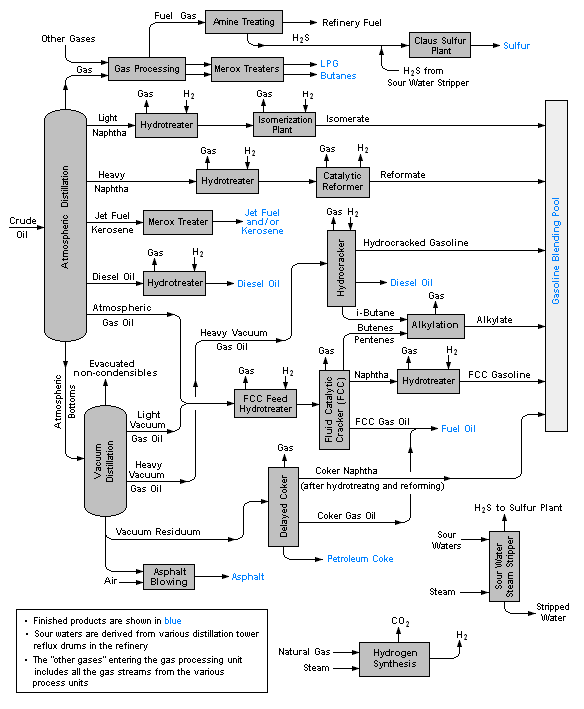

Core processes and units
Refineries rely on a mixture of physical and chemical operations. The most fundamental step is atmospheric and vacuum distillation, which separates crude into fractions by boiling point. Conversion units change heavy fractions into lighter, more valuable streams; notable examples include catalytic cracking, hydrocracking and coking. Treatment and finishing steps remove contaminants (for example desulfurization or hydrotreating), adjust octane or cetane ratings (reforming and alkylation) and recover valuable byproducts. Storage tanks, heat exchangers, pipelines and utilities (steam, power, wastewater) support the process network.
Typical product slate
Refinery output covers a wide range of materials used in transportation, industry and petrochemicals. Common products include fuel oils, liquefied petroleum gas (LPG), gasoline, kerosene and diesel fuel. Other outputs include jet fuel, naphtha for petrochemical plants, lubricants, asphalt and hydrogen used internally or sold externally. The exact mix depends on crude quality and market demand.
History and development
The modern refinery evolved from simple boiling and blending practices in the 19th century into complex integrated plants during the 20th century as demand for automotive fuels and petrochemicals grew. Technological advances — such as catalytic processes, high-pressure hydrogenation and improved materials and controls — increased conversion capability and product quality. Over time environmental regulations and changing energy patterns have also reshaped refinery designs.
Design factors and variations
Each refinery is unique. Its configuration reflects the type of crude it processes (light versus heavy, sweet versus sour), desired products, regional fuel specifications, capital costs and proximity to markets or feedstock consumers. Large complexes can process hundreds of thousands of barrels per day; some of the largest modern refineries handle on the order of 800,000–900,000 barrels per day. Modular, smaller refineries serve regional needs where market or logistics constraints apply.
Economic, safety and environmental aspects
Refining is capital- and energy-intensive. Economics depend on crude prices, product spreads and operating efficiency. Safety and environmental management are critical: refineries implement flare systems, emissions controls, wastewater treatment and hazardous-material safeguards. Contemporary trends include deeper desulfurization, increased hydrogen use, co-processing with bio-feedstocks, energy efficiency improvements and integration with petrochemical production to improve value and lower environmental footprint.
Notable distinctions
- Complexity: refineries are often rated by a complexity index that reflects conversion capability and flexibility.
- Feedstock sensitivity: heavy sour crudes require more intensive treatment than light sweet crudes.
- Product regulations: fuel specifications (sulfur limits, octane/cetane levels) strongly influence unit selection and operating practices.
Understanding oil refining involves both the technical details of unit operations and the broader economic and regulatory forces that determine which products are made and how plants are operated. For further reading on particular processes and equipment, follow product and process links above or consult technical resources on refinery engineering and petroleum technology.
Related articles
Author
AlegsaOnline.com Oil refining Leandro Alegsa
URL: https://en.alegsaonline.com/art/72148