
Ohm (unit of electrical resistance)
The ohm (Ω) is the SI derived unit of electrical resistance, defined by R = V/I, named for Georg Ohm; it links voltage, current and material properties and appears in circuits, measurements and AC impedance.
Overview
The ohm, symbolized by the Greek letter Ω, is the standard unit of electrical resistance in the International System of Units (SI). It quantifies how strongly a material or device opposes the flow of electric current. In its simplest form the relationship between resistance (R), voltage (V) and current (I) is given by Ohm's law: R = V / I. This relation is central to circuit analysis and provides a practical way to measure resistance using voltage and current.
Image gallery
2 Images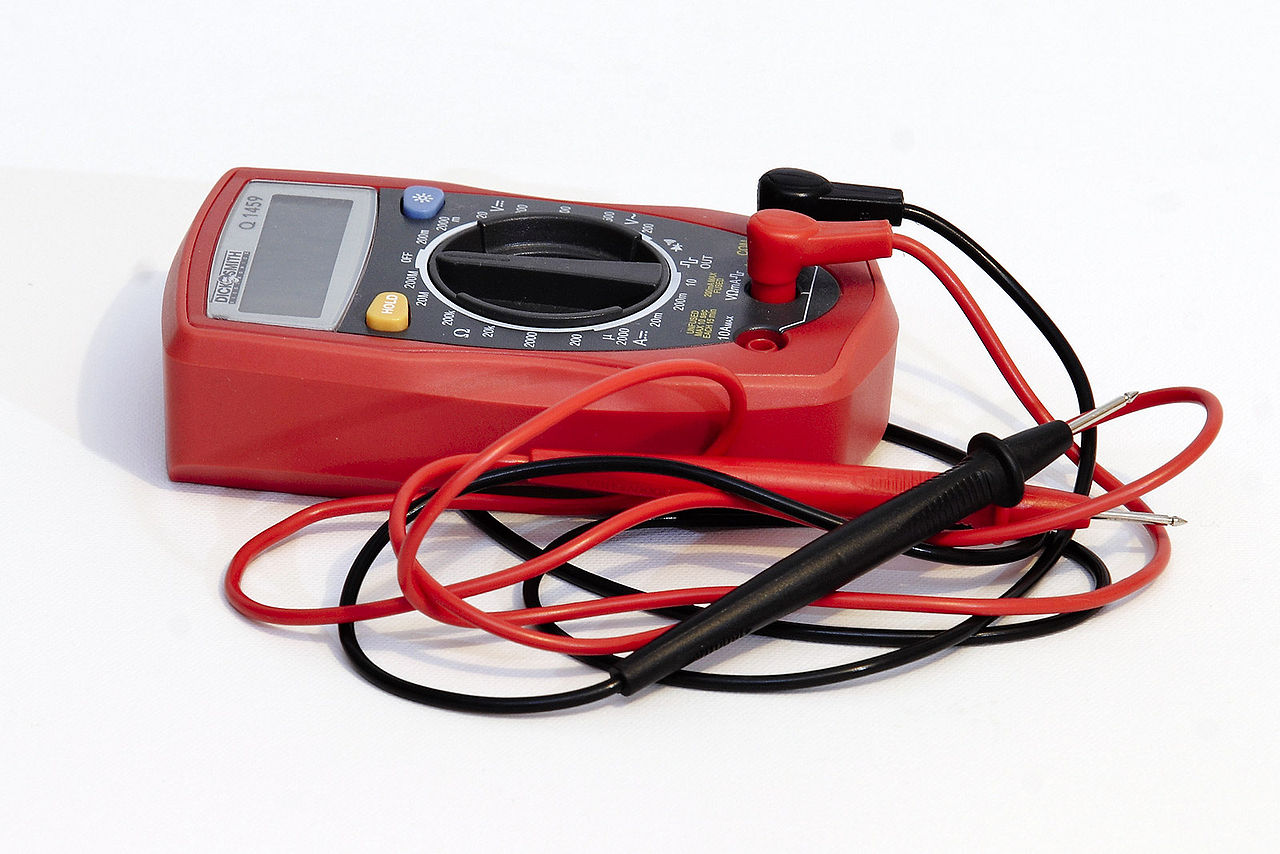
Definition and related quantities
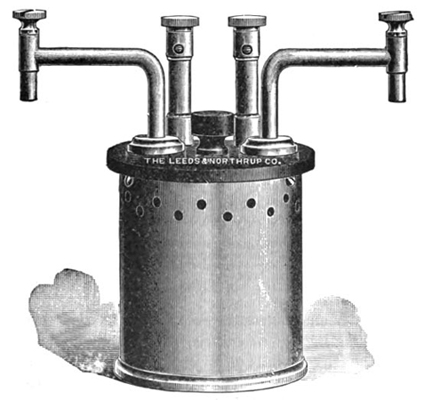
By definition, one ohm is the resistance that allows one unit of electric current to flow when subjected to one unit of electric potential difference (one volt per ampere). Resistance depends on geometry and material: for a uniform conductor R = ρ L / A, where ρ is the material's resistivity, L is length and A is cross-sectional area. The reciprocal of resistance is conductance, measured in siemens (S).
Materials and temperature effects
Different substances exhibit different resistive behaviors. Metals such as copper or iron have relatively low resistance and are good conductors; insulators have very high resistance. Certain materials like graphite and many alloys are intentionally resistive and used in resistors and heating elements. Temperature alters resistance: for most metals resistance increases with temperature, while many semiconductors show decreasing resistance as temperature rises. Some materials become superconducting below a critical temperature, exhibiting essentially zero resistance.
AC, impedance and practical circuits
In direct current (DC) circuits resistance alone determines voltage/current ratios. In alternating current (AC) circuits the concept generalizes to impedance, a complex quantity combining resistance and reactance (from capacitors and inductors). Impedance is represented with complex numbers and phase relationships become important for power and signal behavior in circuits.
Measurement and units
Resistance is commonly measured with an ohmmeter or a multimeter. In practice engineers use multiples and submultiples of the ohm: milliohms (mΩ) for very low resistances, kiloohms (kΩ) and megaohms (MΩ) for larger resistances. Careful measurement accounts for contact resistance, temperature, and instrument calibration.
History and name
The unit is named after the German physicist Georg Ohm (1789–1854), whose experimental and theoretical work established the proportional relationship between voltage and current now known as Ohm's law. The name "ohm" was adopted in the development of electrical units during the 19th century and later incorporated into the modern SI system.
Key points and resources
- Resistance quantifies opposition to current flow and depends on material and geometry.
- Conductors and insulators differ primarily by their characteristic resistivity and resulting resistance in use.
- Ohm's law, R = V / I, ties together voltage and current; practical measurements use voltage and current meters.
The ohm remains a foundational concept in electrical engineering, materials science and everyday electronics, linking microscopic properties of matter to measurable circuit behavior.
Related articles
Author
AlegsaOnline.com Ohm (unit of electrical resistance) Leandro Alegsa
URL: https://en.alegsaonline.com/art/72133
Sources
- max-iskram.rhcloud.com : Resistors Basics