
Office of Strategic Services (OSS) — U.S. World War II Intelligence Agency
The Office of Strategic Services (OSS) was the United States' World War II intelligence and special-operations organization. It conducted espionage, analysis, covert action and shaped postwar American intelligence.
Overview
The Office of Strategic Services (OSS) was created during World War II as the United States' centralized wartime intelligence agency. Established by presidential authority and led by William J. Donovan, the OSS combined espionage, covert action and analytical work to support Allied military campaigns and resistance movements. Its activities spanned Europe, Asia, the Mediterranean and other theaters, and it is widely regarded as the institutional predecessor of the modern Central Intelligence Agency.
Image gallery
10 Images


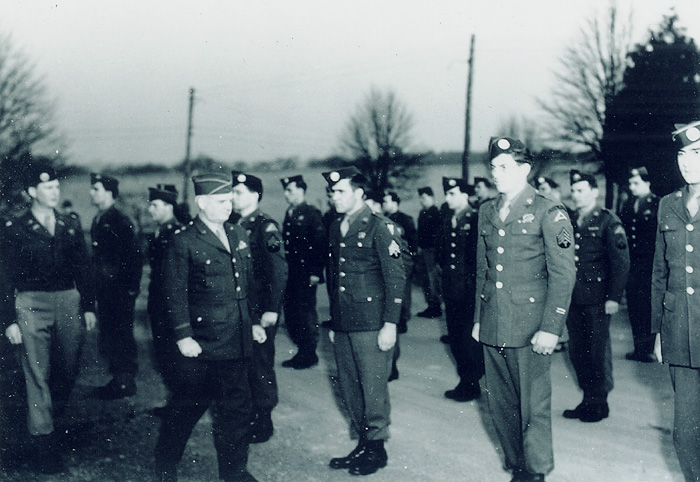
Organization and roles
The OSS brought together diverse functions under one umbrella. Major components included analytical research, clandestine intelligence, special operations and technical research. A characteristic feature was collaboration between career military personnel, diplomats, academics and specialists from industry.
- Research and Analysis (R&A) — produced country studies, political and economic reports and assessments used by policymakers.
- Secret Intelligence (SI) — ran espionage networks, informants and surveillance missions.
- Special Operations (SO) — trained and inserted paramilitary teams for sabotage and resistance support.
- Counterintelligence (X‑2) — focused on detecting enemy espionage and securing OSS operations.
Activities and examples
The OSS supported resistance movements, organized sabotage campaigns, gathered human intelligence and conducted covert propaganda. It trained operatives in parachuting, radio tradecraft and survival, and it developed specialized equipment at research laboratories. Notable theaters included support for the French Resistance, operations in the Balkans and clandestine work in China and Southeast Asia.
Personnel and notable figures
OSS ranks included both military officers and civilians. William J. Donovan served as its director; operatives such as Virginia Hall and officers who later rose to prominence in peacetime intelligence illustrate the OSS legacy. The organization recruited linguists, regional experts and scientists, reflecting its broad mission.
Legacy and dissolution
After the war the OSS was disbanded and many of its functions and personnel were transferred to successor organizations. In the wake of postwar debates about peacetime intelligence structures, the experience and institutional memory of the OSS contributed directly to the formation of centralized U.S. intelligence bodies. For further historical context see resources on the agency and on World War II-era U.S. institutions: United States, World War II.
The OSS is remembered for professionalizing wartime intelligence, pioneering analytic methods and demonstrating the usefulness—and limits—of covert action in modern conflict. Its methods and controversies continue to inform debates about intelligence oversight and ethics.
Related articles
Author
AlegsaOnline.com Office of Strategic Services (OSS) — U.S. World War II Intelligence Agency Leandro Alegsa
URL: https://en.alegsaonline.com/art/72045