
Denver, Colorado
Denver is the capital and largest city of Colorado, nicknamed the Mile High City. Located at the foot of the Rocky Mountains, it is a regional center for government, culture, transportation and outdoor recreation.
Overview
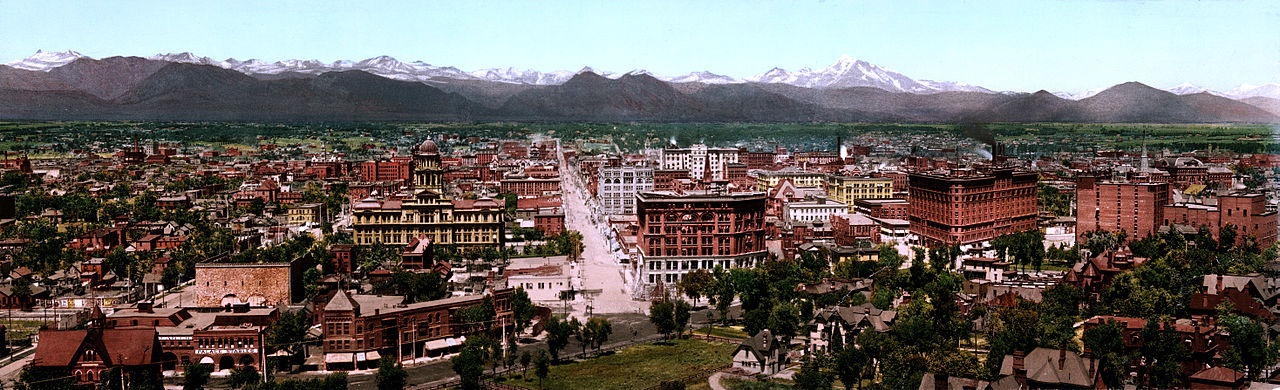
Denver is the capital and largest city in the U.S. state of Colorado. It sits along the South Platte River at the eastern edge of the Rocky Mountains and serves as the seat of Denver County. Commonly called the "Mile High City," one point on the steps of the state capitol is exactly 5,280 feet above sea level; the building's dome is gilded, a feature noted across the city and visible from many vantage points (capitol dome).
Image gallery
6 Images



History and development
Founded in 1858 during the Pikes Peak Gold Rush, Denver grew from a frontier trading post into a regional commercial and transportation hub. Its early growth was tied to mining, railroads and the agricultural trade of the surrounding plains. Over the twentieth and twenty-first centuries Denver diversified into government services, finance, energy and technology while retaining distinct historic neighborhoods and a concentrated downtown core.
Government, landmarks and built character
As the state capital, Denver hosts major government institutions and public buildings. The capitol building, with its gold-covered dome, is an architectural focal point. Downtown neighborhoods such as LoDo (Lower Downtown) feature restored warehouses and brick streets, while the 16th Street pedestrian mall and nearby cultural institutions anchor the central business district. Many civic museums, theaters and university campuses contribute to an active urban fabric.
Culture, economy and sport
Denver's economy is diverse, with strengths in government, health care, energy, technology and professional services. The city is also known for an active cultural scene: museums, live music venues, craft breweries and annual festivals attract residents and visitors. Denver supports several major professional sports teams, including the Broncos (NFL), Nuggets (NBA), Rockies (MLB) and Avalanche (NHL), which play a significant role in local life and identity.
Outdoors and climate
The city's location at the foot of the Rockies makes outdoor recreation a daily possibility: hiking, biking, skiing and climbing are an hour or less away, drawing both commuters and tourists. Denver has a semi-arid climate with four distinct seasons and abundant sunshine; altitude affects weather, cooking times and athletic performance, a notable consideration for newcomers and visitors.
Transport, neighborhoods and notable facts
Denver is served by a major international airport and regional rail connections that link the city to the rest of the country. Neighborhoods range from historic districts to rapidly developing residential and business corridors. Notable facts include:
- Official status as the state capital and the county seat of Denver County.
- Its commonly cited elevation of one mile at a point in the state capitol, which lends the city its nickname.
- A mix of outdoor lifestyle amenities and urban cultural institutions that make Denver a regional anchor for the central Rocky Mountain West.
For more detailed civic information, historic timelines and visitor resources, refer to official city, state and regional guides (Denver information, Colorado resources).
Questions and answers
Q: What is the capital city of Colorado?
A: The capital city of Colorado is Denver.
Q: What is the population size of Denver?
A: The text did not provide any information on the population size of Denver.
Q: Why is Denver referred to as The Mile High City?
A: Denver is referred to as The Mile High City because it is at an elevation of at least 5,280 feet (or 1,609 meters) above sea level.
Q: Where is Denver located in relation to the Rocky Mountains?
A: Denver is located at the foot of the Rocky Mountains.
Q: What is the name of the river that runs through Denver?
A: The river that runs through Denver is called the South Platte River.
Q: When was Denver founded?
A: Denver was founded in 1858.
Q: Why is the dome at the top of Denver's capitol building significant?
A: The dome at the top of Denver's capitol building is covered in gold.
Related articles
Author
AlegsaOnline.com Denver, Colorado Leandro Alegsa
URL: https://en.alegsaonline.com/art/26662
Sources
- simple.wiktionary.org : simple.wiktionary.org/wiki/Special:Search/Denver
- commons.wikimedia.org : commons.wikimedia.org/wiki/Category:Denver,_Colorado
- en.wikisource.org : en.wikisource.org/wiki/Special:Search/Denver
- en.wikivoyage.org : en.wikivoyage.org/wiki/Denver
- milehighcity.com : "Colorado State Capitol Building in Denver"
- denvergov.org : "Denver: The Rocky Mountain metropolis time line"
- colorado.gov : "State Government History"
- colorado.gov : "Colorado Municipal Incorporations"
- denvergov.org : "Denver History: The Golden Gamble"
- denverpost.com : denverpost.com/
- rockymountainnews.com : rockymountainnews.com/