
Nuclear Non‑Proliferation Treaty (NPT)
Overview of the NPT: purpose, core obligations, history, membership, verification mechanisms, challenges, and contemporary debates about strengthening the non‑proliferation regime.
Overview: The Nuclear Non‑Proliferation Treaty (commonly called the NPT) is an international agreement designed to prevent the spread of nuclear weapons, to promote the peaceful uses of nuclear energy under safeguards, and to advance the goal of nuclear disarmament. The treaty established a legal and political framework that distinguishes nuclear‑weapon states from non‑nuclear‑weapon states and sets reciprocal obligations for each group. The treaty text and related documents remain primary references for states and international institutions concerned with nuclear policy and arms control; see treaty documents and background for the original text and explanatory materials.
Image gallery
3 Images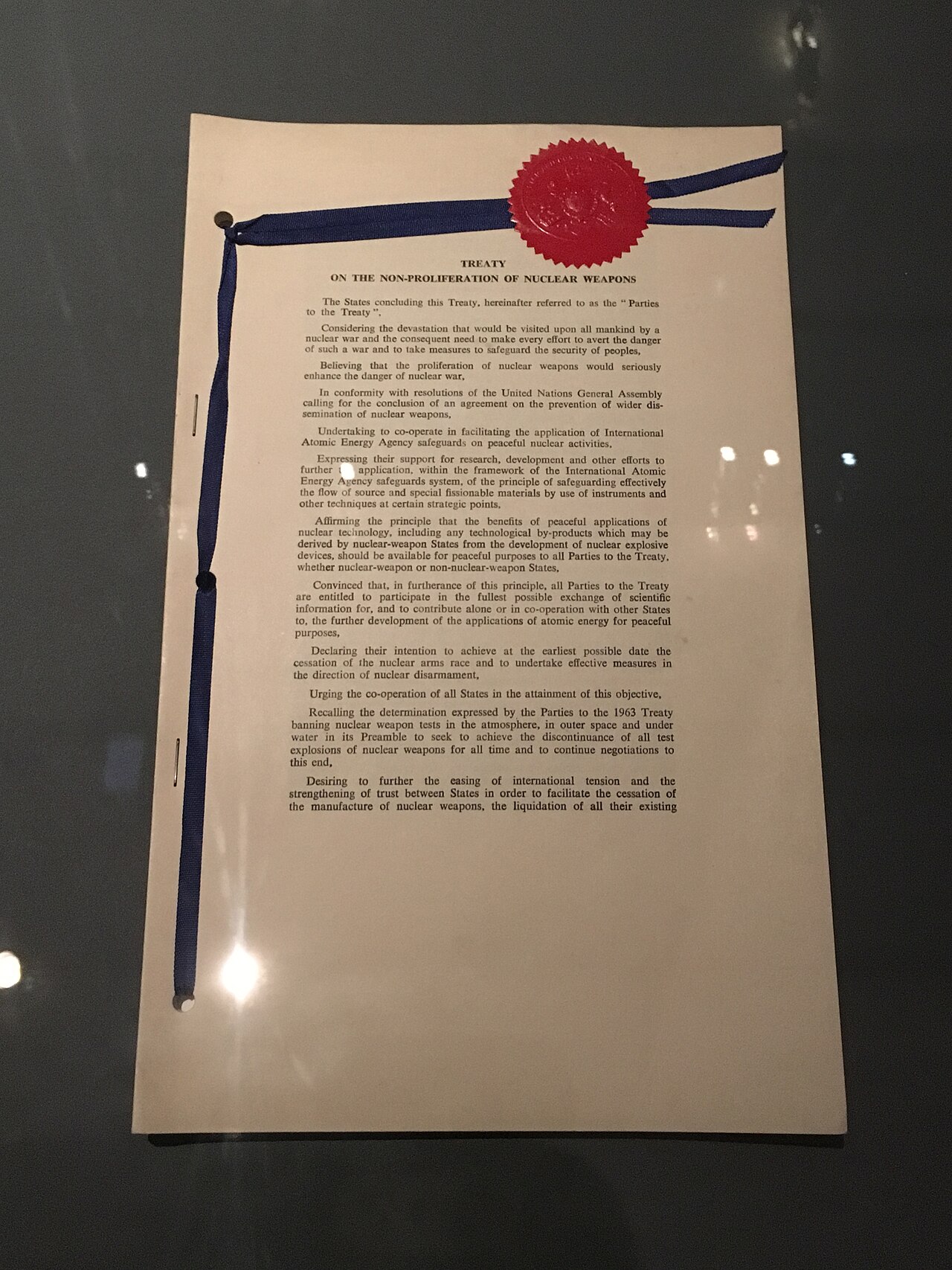


Core structure and obligations
The NPT rests on three mutually reinforcing pillars: non‑proliferation, peaceful uses of nuclear energy, and disarmament. Key obligations include:
- Non‑nuclear‑weapon states: agree not to acquire nuclear weapons and to accept International Atomic Energy Agency (IAEA) safeguards on relevant nuclear activities.
- Nuclear‑weapon states: the treaty recognizes five states as nuclear‑weapon states (the United States, Russia as successor to the Soviet Union, the United Kingdom, France, and China) and obliges them to pursue negotiations in good faith on measures related to nuclear disarmament.
- All parties: commit to facilitate cooperation in the peaceful uses of nuclear energy under safeguarded arrangements and to refrain from transferring nuclear weapons or assisting others to acquire them.
History and entry into force
The NPT was negotiated in the 1960s as a response to concerns about the spread of nuclear weapons and was opened for signature in 1968; see materials on the opening for signature here. It entered into force in 1970, establishing a long‑term framework for preventing horizontal proliferation and for integrating civilian nuclear cooperation with safeguards and oversight; authoritative records on entry into force are available here.
Membership, non‑parties and withdrawals
Membership in the NPT is nearly universal. Most UN member states are parties to the treaty, while a small number remain outside it. Notable states that never joined include India, Israel and Pakistan, and some newly independent states such as South Sudan have not acceded. The Democratic People’s Republic of Korea (North Korea) announced a withdrawal in the early 2000s and later stated it possessed nuclear weapons; that case highlights limits and ambiguities in withdrawal procedures and in international responses.
Verification, compliance and enforcement
Verification under the treaty depends heavily on the IAEA safeguards system, which involves state declarations, routine and ad hoc inspections, monitoring, and reporting. The NPT itself does not include punitive enforcement mechanisms; compliance concerns are typically addressed through diplomatic efforts, IAEA reports, and, where necessary, United Nations Security Council measures or multilateral pressure. Efforts to strengthen verification have focused on universal adoption of comprehensive safeguards agreements and additional protocols that expand inspection access.
Challenges and criticisms
Key challenges to the effectiveness of the NPT include clandestine or clandestinely supported nuclear programs, regional security dynamics that create incentives for nuclear acquisition, and dissatisfaction with the pace and transparency of disarmament by nuclear‑armed states. Critics also argue that the treaty creates a two‑tier system between nuclear and non‑nuclear states and that greater progress on disarmament and equitable access to peaceful nuclear technology is needed to sustain support for the regime.
Reform, review process and future prospects
The NPT includes review conferences, normally held every five years, which provide a forum for states parties to assess implementation, adopt action plans, and negotiate measures to bolster the regime. Debate continues about practical reforms: enhancing verification technologies, clarifying withdrawal rules, strengthening responses to non‑compliance, and finding balanced steps toward disarmament that address security concerns of all parties. The treaty remains central to international efforts to limit the spread of nuclear weapons and to manage the peaceful uses of nuclear energy.
Related articles
Author
AlegsaOnline.com Nuclear Non‑Proliferation Treaty (NPT) Leandro Alegsa
URL: https://en.alegsaonline.com/art/71366