
Oblique order (military tactic)
A battlefield maneuver that concentrates combat power on one enemy flank while fixing the remainder of the line; historically linked to 18th‑century European practice and continued in maneuver doctrine.
Overview
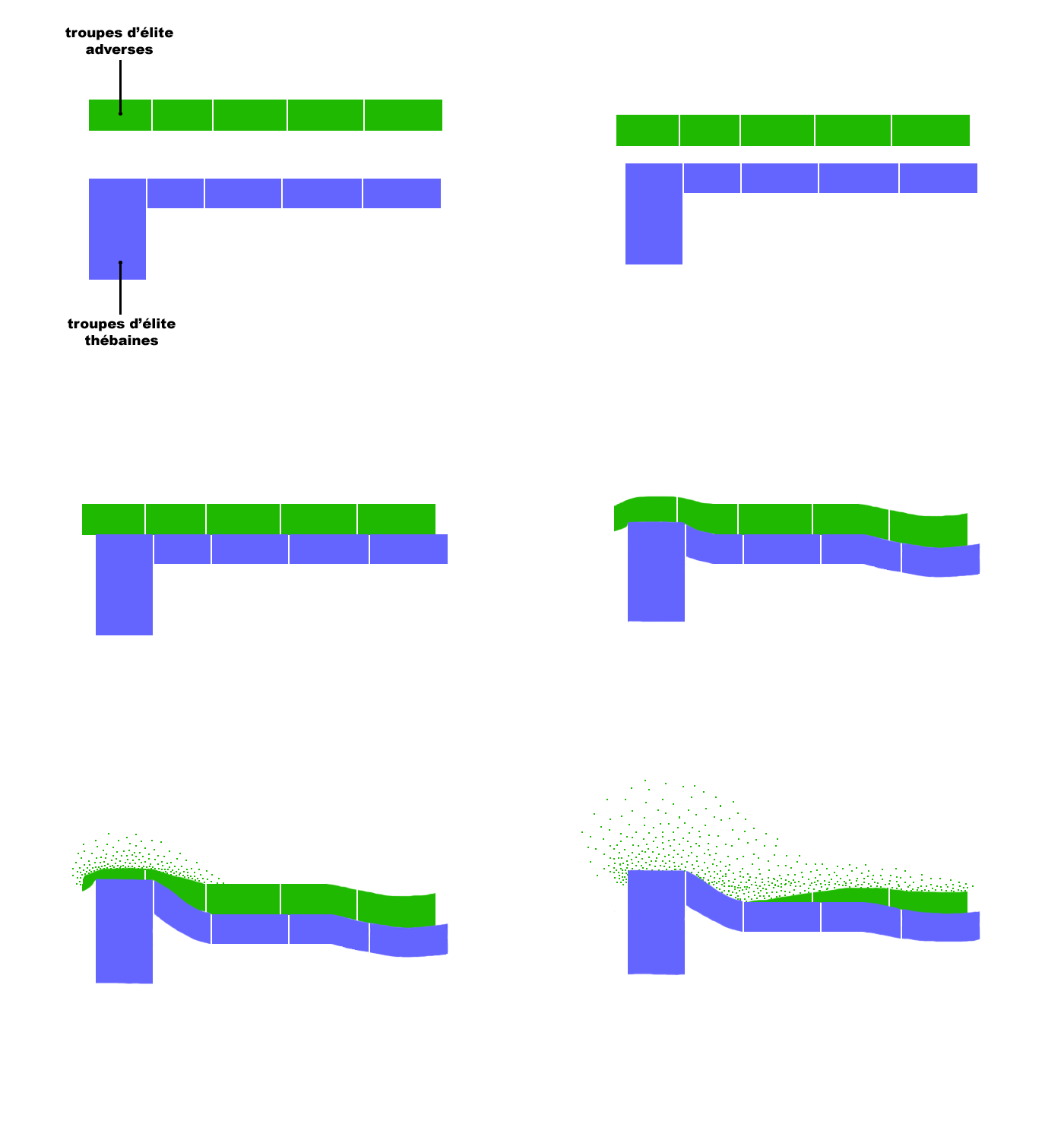
The oblique order is a battlefield maneuver in which a commander directs the main weight of the attacking force at an angle to strike one flank or a local vulnerability of the opposing line while holding or fixing the rest of the enemy front. Rather than attempting a simultaneous breakthrough across the whole front, the attacker seeks local superiority by advancing on a diagonal axis to create a decisive local advantage. In doctrinal terms it is one of many military tactics that aim to concentrate effects at a chosen point.
Image gallery
2 Images
Characteristics and components
- Concentration: massing troops, firepower or resources on a single sector to overwhelm that point;
- Angle of approach: advancing obliquely rather than directly across the front, which can expose the attacker to different lines of fire and requires careful maneuver (angle considerations inform movement and deployment);
- Fixing or demonstration: maintaining pressure elsewhere so the enemy cannot easily shift reserves to the threatened flank (enemy line is held in place);
- Timing and coordination: synchronized movement, artillery support and reserves to exploit a rupture without becoming overextended.
History and development
The term traces to Middle English oblike and Latin oblīquus (slanted). In the 18th century the oblique order became prominently associated with Prussian practice under Frederick II (Frederick the Great), who refined methods of concentrating against an enemy flank while keeping the main line occupied. Historians note that the technique evolved from older maneuver traditions and combined developments in drill, staff organization and firepower. References to these practices appear frequently in studies of linear and early maneuver warfare (Frederick’s reforms are often discussed in that context).
Tactical employment
Successful employment depends on reconnaissance, terrain suitability, troop training and command control. Ideal conditions include ground that permits angled movement without exposing the attacking flank, a reliable communications system to coordinate shifts in weight, and units capable of executing complex formations under fire. Where these conditions exist, commanders use the oblique order to roll up an enemy flank, force piecemeal engagement, or create an entry for envelopment. In practice doctrine texts may illustrate an oblique axis with a nominal 45 degree example, but actual angles vary by circumstance.
Risks and limitations
The main hazards are overextension, isolation of the assaulting force, and vulnerability of the attacker's lines of communication. If the enemy recognizes the maneuver, they may counterattack the advancing wing or withdraw to shorten their front. The tactic is less effective against highly mobile defenders or when terrain prevents the attacker from sustaining the angled advance. Commanders must weigh the benefits of local superiority against the risk of exposing other sectors.
Variants and related concepts
The oblique order is related to, but distinct from, full envelopment, echelon attacks and angled penetrations. Unlike a complete encirclement, the oblique order aims initially to break or collapse one sector decisively rather than immediately surround the opponent. Modern concepts of maneuver warfare carry the same underlying idea: concentrate effects at a decisive time and place, whether through ground maneuver, fires, electronic warfare or joint enablers. Analysts sometimes compare classic oblique actions with modern joint schemes that seek enemy paralysis and disruption of flanks through multi-domain pressure.
Legacy and modern relevance
While linear formations and massed infantry have largely disappeared, the principle of concentrating combat power locally remains central to contemporary tactics and operational art. Commanders apply the same logic when allocating strike packages, coordinating combined arms, or sequencing effects across domains. Professional military education treats the oblique order as a historical example of achieving local superiority, useful for understanding how maneuver and timing can compensate for overall numerical parity.
Further reading and study
Readers interested in detailed case studies and doctrinal treatment will find material in military histories and professional manuals. Examinations of 18th‑ and 19th‑century campaigns show practical limits and adaptations of the oblique approach, and modern analyses place the concept within broader discussions of maneuver, concentration and combined arms operations. For general context consult sources on military tactics, etymology and usage (language, roots), and tactical geometry (angles, approaches), as well as studies comparing historical practice (Frederick’s practice) and opposing reactions (line tactics).
Questions and answers
Q: What is the oblique order or oblique attack military tactic?
A: The oblique order or oblique attack military tactic is a strategy to bring a larger force against one of the enemy's flanks while distracting and keeping the enemy line in place.
Q: When is the oblique order effective?
A: The oblique order is effective when the attacking force is larger in size.
Q: Who is credited with inventing the oblique order?
A: Frederick the Great is credited with inventing the oblique order.
Q: How did Frederick the Great use the oblique order?
A: Frederick the Great would use a large number of troops on one of the flanks to destroy that section, then drive into the enemy from two directions.
Q: What is the origin of the word oblique?
A: The word oblique comes from the Middle English word oblike, which comes from the Latin word oblīquus meaning "slanted".
Q: What does the term oblique mean in military usage?
A: In military usage, oblique usually means at an angle, often 45 degrees.
Q: What is the purpose of distracting and keeping the enemy line in place in the oblique order military tactic?
A: The purpose of distracting and keeping the enemy line in place in the oblique order military tactic is to prevent the enemy from reinforcing their flank that is being attacked.
Related articles
Author
AlegsaOnline.com Oblique order (military tactic) Leandro Alegsa
URL: https://en.alegsaonline.com/art/71787
Sources
- warfarehistorynetwork.com : "Frederick the Great at Leuthen: The Oblique Order"
- theartofbattle.com : "Tactics Tutorial"
- dictionary.com : "oblique"
- bevinalexander.com : "Frederick the Great's "Oblique Order" of Attack"