
Northern United States
The Northern United States is a geographic and historical region including states along the Canada–U.S. border and northern coastal and inland areas, noted for diverse climates, industry, and cultural ties to Canada.
Overview
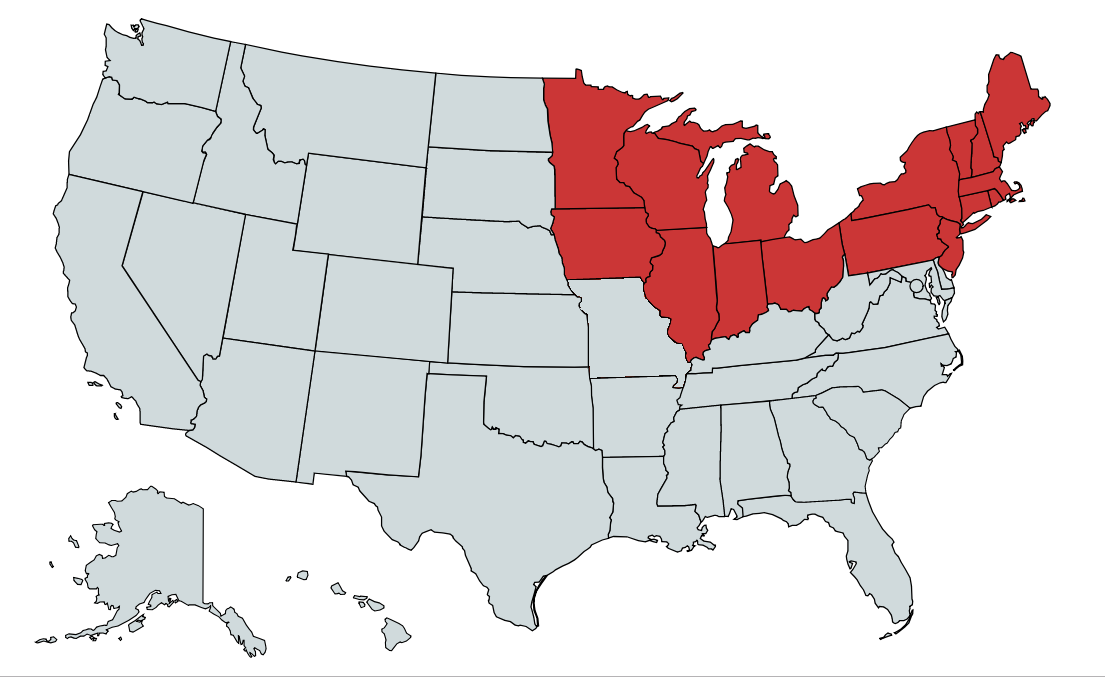
The Northern United States, often called the American North or simply the North, is a broad geographic and historical designation for the states and subregions that occupy the upper portion of the country. Depending on context it can mean the areas adjacent to Canada, the northern portions of multi-state regions, or the states that historically formed the Union during the American Civil War. For practical lists and maps, see regional compilations and state groupings: states commonly included in the North and broader northern regions and divisions.
Image gallery
2 Images
Geography and climate
Physically the North spans a range of landscapes: Atlantic coastline and rocky shores in New England, the industrialized Great Lakes basin, the rolling prairies of the northern Plains, and forested mountain areas farther west. Climate ranges from humid continental—cold winters and warm summers—to maritime and subarctic in some far-northern locales. Much of the North lies on or near the international boundary with Canada, producing shared environment and economic ties across the border: Canada–United States border regions.
Common characteristics
- Seasonal extremes with significant winter snowfall in many areas.
- Concentrations of manufacturing and transportation hubs historically linked to Great Lakes and coastal ports.
- High urbanization in corridor zones and varied rural economies including dairy, grain, and forestry.
Historically the Northern United States played a central role in early European settlement, the Industrial Revolution in America, and in shaping national policy during the 19th century. Large waves of immigration in the 19th and early 20th centuries fueled growth of cities and factories. Over time many northern cities transitioned toward diversified service, education, and technology sectors.
Today the term remains useful but imprecise. It denotes climatic and geographic position, certain historical identities, and common economic patterns, yet the North is not uniform: politics, culture, and livelihoods differ from coastal to inland and from region to region. Cross-border commerce, shared environmental concerns, and distinct regional cultures—such as New England, the Great Lakes area, and the northern Plains—continue to define the diversity of the American North.
Related articles
Author
AlegsaOnline.com Northern United States Leandro Alegsa
URL: https://en.alegsaonline.com/art/71061
Sources
- census.gov : "Census Regions and Divisions of the United States"
- britannica.com : "the North (region, United States)"