
Northwest Italy (Nord-Ovest) — geography, regions and economy
Northwest Italy is a statistical NUTS1 area of Italy including Lombardy, Piedmont, Liguria and Aosta Valley; noted for the Alps, the Po Valley, major cities and an advanced industrial economy.
Northwest Italy is a commonly used designation for the northwestern portion of the Italian peninsula. In Italian this area is often called Italia nord‑occidentale or Nord‑Ovest. It is defined for statistical purposes as one of Italy's five NUTS1 regions and is used by national authorities when collecting data and organizing some electoral constituencies. The classification is recognized and maintained by the country’s central statistics office, ISTAT.
Image gallery
4 Images

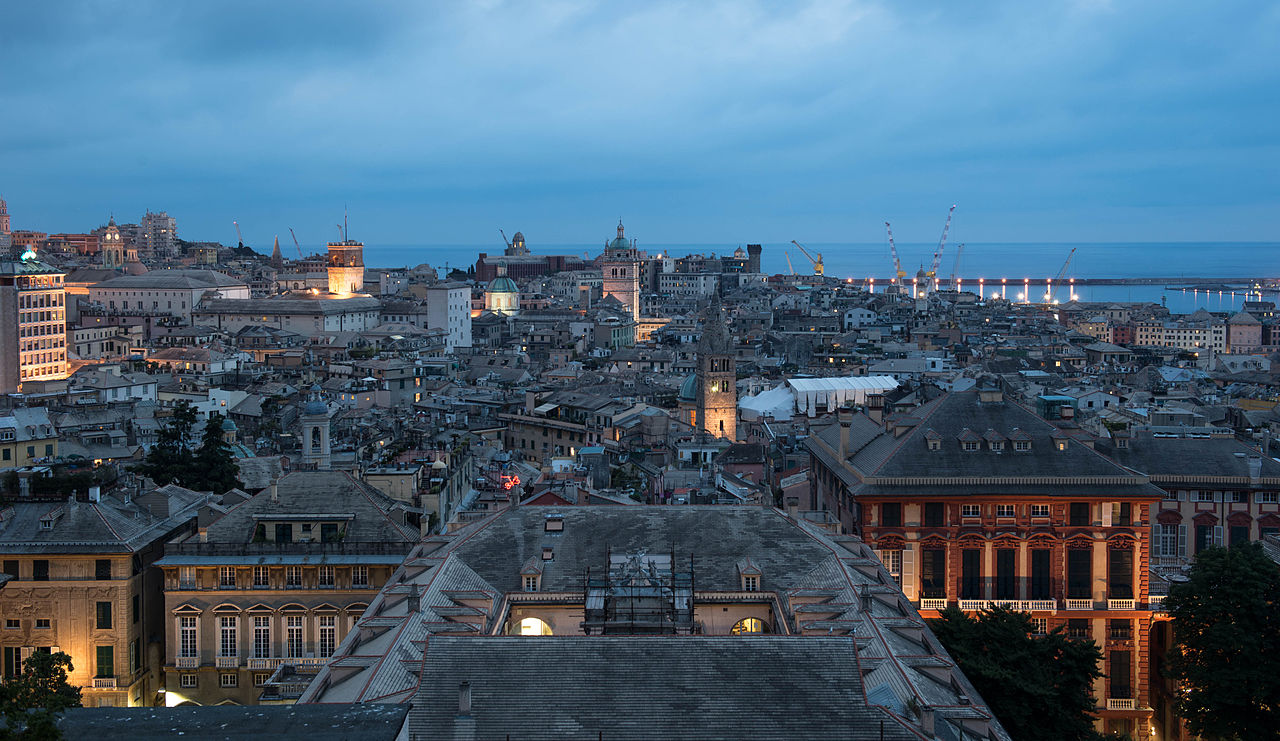

Geography and environment
The territory spans mountain ranges, a major river plain and a short coastal strip. The western Alps form an international frontier with France and Switzerland and contain many of Italy's highest passes and valleys. South of the mountains lies the broad Po Valley, an important agricultural and industrial corridor. The coastal strip along the Ligurian Sea is narrow but includes important ports and highly scenic stretches of coastline.
Constituent regions
- Piedmont (capital: Turin)
- Aosta Valley (regional capital: Aosta)
- Liguria (capital: Genoa)
- Lombardy (capital: Milan)
These four administrative regions compose the statistical area, each with its own regional government and local institutions. Major urban centers such as Milan and Turin serve as commercial, financial and industrial hubs for both the region and the nation.
Economy, transport and uses
Northwest Italy is among the country's most economically dynamic areas. Industry, finance, manufacturing (including the historic automobile industry around Turin), services and intensive agriculture in the Po Valley all contribute to economic output. Milan is a national center for finance and fashion, while Genoa is a key maritime port. Dense transport networks of rail, high‑capacity roads and airports link cities within the area and with the rest of Europe.
The NUTS1 label is primarily administrative: authorities and researchers refer to Northwest Italy when publishing statistics or organizing national programs (NUTS1). The region's boundaries are not an additional layer of government but a practical division applied for planning and comparison (statistical region).
History and cultural notes
The area has a layered history: from Alpine and Roman-era settlement through medieval and early modern states such as the Duchy of Savoy and the Duchy of Milan, to a key role in Italy's industrialization and the Risorgimento. Local languages and dialects—Lombard, Piedmontese, Ligurian and Franco‑Provençal in the Aosta Valley—coexist with standard Italian in daily life. Tourism is important, with attractions ranging from Alpine resorts and glacial lakes to historic urban centers and coastal sites.
Because the designation is designed for data and electoral organization, readers should note that statistical and electoral uses may differ from historical or cultural notions of the northwest. The term offers a convenient way to discuss geography, economy and demography without implying any extra governmental tier.
Questions and answers
Q: What is Northwest Italy?
A: Northwest Italy is one of the five official statistical regions of Italy used by the National Institute of Statistics (ISTAT), a NUTS1 level region.
Q: How is Northwest Italy defined?
A: Northwest Italy is defined only for statistical and for some elections.
Q: Who uses the definition of Northwest Italy?
A: The National Institute of Statistics (ISTAT) uses the definition of Northwest Italy.
Q: What type of region is Northwest Italy?
A: Northwest Italy is a NUTS1 level region.
Q: Is there an Italian name for Northwest Italy?
A: Yes, in Italian it is referred to as Italia nord-occidentale or just Nord-Ovest.
Q: What does ISTAT stand for?
A: ISTAT stands for the National Institute of Statistics.
Q: For what purposes are statistics collected about Northwest Italy?
A:Statistics are collected about Northwest Italy for statistical and election purposes.
Related articles
Author
AlegsaOnline.com Northwest Italy (Nord-Ovest) — geography, regions and economy Leandro Alegsa
URL: https://en.alegsaonline.com/art/71084
Sources
- demo.istat.it : demo.istat.it
- epp.eurostat.ec.europa.eu : epp.eurostat.ec.europa.eu
- peakbagger.com : "Mont Blanc, France/Italy"
- tuttitalia.it : "Regioni italiane"
- tools.wmflabs.org : 45°30′N 9°00′E / 45.500°N 9.000°E / 45.500; 9.000