
Republic of North Ossetia–Alania: Russian federal subject in the North Caucasus
Republic of North Ossetia–Alania, a Russian federal subject in the North Caucasus centered on Vladikavkaz; bilingual (Russian, Ossetian) with Alania heritage, a complex history and strategic border position.


The Republic of North Ossetia–Alania is a federal subject of the Russian Federation located on the northern slopes of the Caucasus. It lies in the southern part of Russia and is commonly known simply as North Ossetia. The region's population speaks Russian (Russian) alongside the Ossetian language, and its capital is Vladikavkaz.
Image gallery
10 Images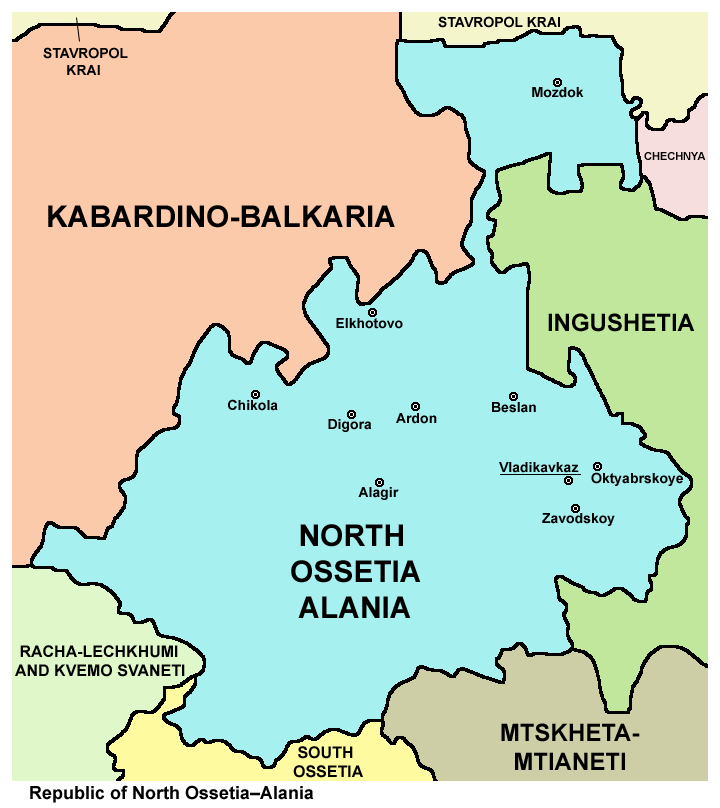




Historic background
The territory corresponds in part to the medieval kingdom known as Alania, which was prominent in the Middle Ages. From the late 18th and early 19th centuries the area came under the influence and eventual control of the Russian state, a process that is usually dated to the early 1800s (around 1804).
Under Soviet rule North Ossetia was organised as an autonomous republic within the USSR. During the dissolution of the Soviet Union in the early 1990s there was a renewed emphasis on local identity. In November 1994 the republic formally added "Alania" to its official name, becoming the Republic of North Ossetia–Alania.
Modern issues and population movements
The republic has been affected by instability in the wider North Caucasus. Conflicts in neighbouring territories generated significant displacement: many people arrived in North Ossetia as refugees fleeing the wars in Chechnya and in South Ossetia. These movements have influenced local demographics and placed strains on social and housing services.
Government and society
- Political status: a republic within the Russian Federation with its own constitution and government institutions.
- Official languages: Russian and Ossetian (used in cultural and educational contexts alongside Russian).
- Cultural identity: the name "Alania" reflects the historical Ossetian heritage of the region.
Located at a crossroads of the Caucasus, North Ossetia–Alania remains an area where historical ties, ethnic identity, and contemporary geopolitics intersect. Its proximity to volatile borders means regional developments continue to shape everyday life in the republic.
Related articles
Author
AlegsaOnline.com Republic of North Ossetia–Alania: Russian federal subject in the North Caucasus Leandro Alegsa
URL: https://en.alegsaonline.com/art/70925