
North Queensland
Northern portion of the Australian state of Queensland: tropical landscapes, coastal reefs and savannas, centred on Townsville with a distinct regional identity shaped by geography, economy and history.
North Queensland refers to the northern section of the Australian state of Queensland, lying toward the tropical belt of Australia. It has no single, formally defined border: definitions vary with administrative, historical and economic uses. Broadly speaking it sits south of Far North Queensland and north of the state’s central districts, and is characterised by a mix of coastal plains, river systems and inland savanna.
Image gallery
5 Images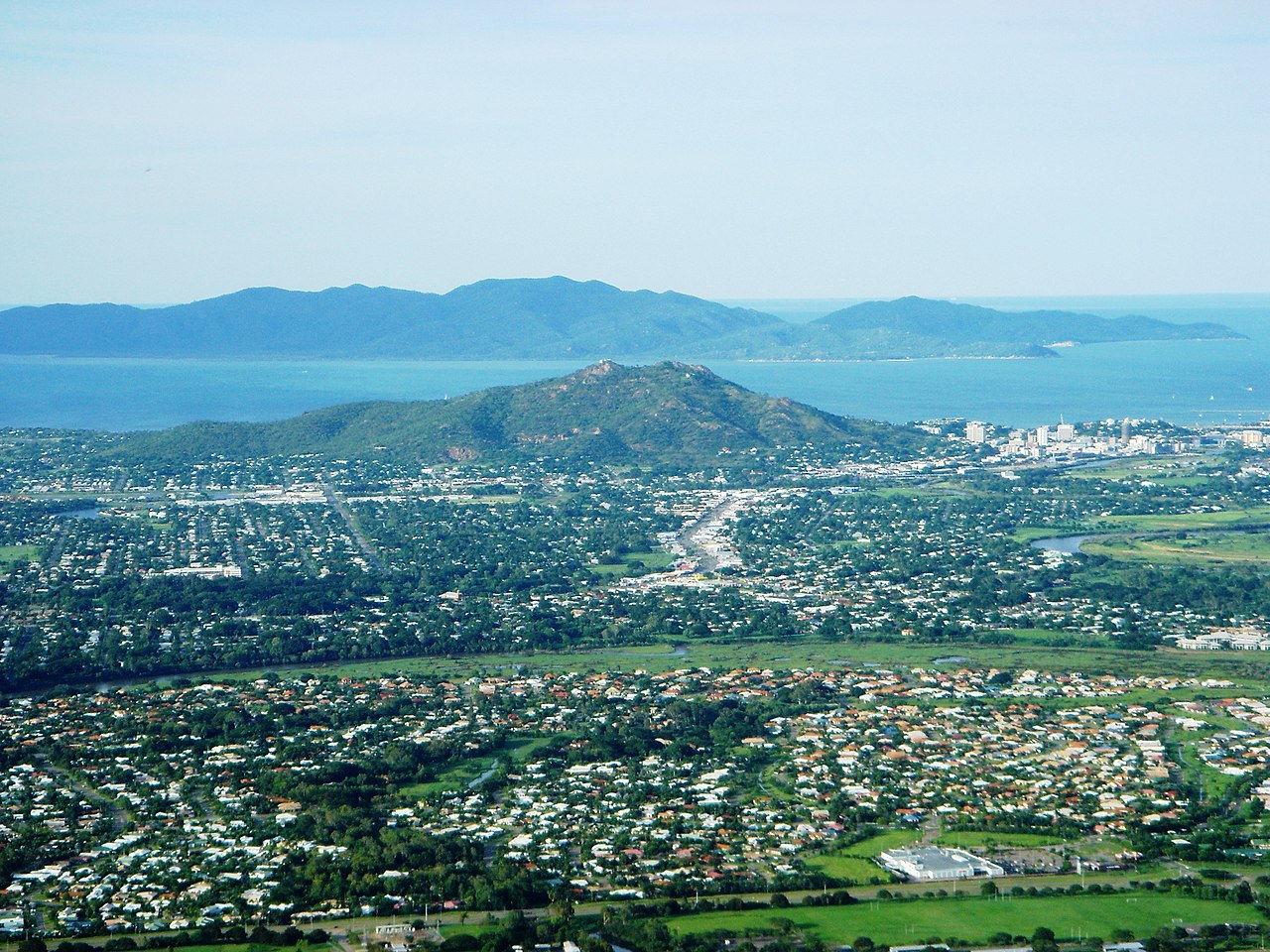


Geography and environment
The region encompasses tropical and sub‑tropical climates, extensive coastal corridors and hinterland ranges. Warm monsoonal wet seasons alternate with drier periods. Notable natural features associated with the region include parts of the Great Barrier Reef off the coast, river catchments such as the Burdekin, and pockets of rainforest and eucalyptus woodlands. The area commonly described as North Queensland covers tens of thousands of square kilometres, containing a combination of agricultural land, mining fields and protected environments.
History and regional identity
Long inhabited by Aboriginal peoples, the coastal and riverine areas later attracted European settlers for pastoralism, sugar cultivation and ports. Remoteness from the state capital helped foster a distinct regional culture and sense of autonomy. Over time the economy diversified and towns developed as local service centres; town identities and disputes about where "North" begins or ends remain part of local civic life.
Population and urban centres
Townsville is the principal urban centre and is widely regarded as the region’s unofficial capital; it functions as a hub for administration, health, education and transport (Townsville). Other important towns and shires are spread along the coast and inland. The region’s population is concentrated in a few coastal cities and towns while much of the territory remains sparsely settled.
Economy and transport
- Primary industries: sugar cane, cattle grazing and horticulture are long‑established activities.
- Mining and resources: mineral extraction contributes substantially to local employment and export trade.
- Tourism and services: reef tours, nature tourism and regional services support local economies.
- Transport: a network of highways, regional rail links and ports connect coastal centres to national and international markets.
Environmental management, economic development and debates over regional boundaries and infrastructure investment are ongoing concerns. The ecological significance of nearby marine and terrestrial systems, including the Great Barrier Reef, shapes policy and community priorities in North Queensland today.
Questions and answers
Q: Where is North Queensland located?
A: North Queensland is located in the northern part of the state of Queensland in Australia.
Q: What is the size of Queensland compared to other countries?
A: Queensland is larger than many countries.
Q: What is the historical development of the northern part of Queensland?
A: The northern part of Queensland has been historically remote and undeveloped.
Q: How has the historical development of the region affected its character and identity?
A: The historical development of the region has resulted in a regional character and identity that is quite different to the rest of the state.
Q: What is the largest community in North Queensland?
A: Townsville is the largest community in North Queensland and is regarded as an unofficial capital.
Q: What is the population of North Queensland?
A: The population of North Queensland is 231,628.
Q: What is the size of North Queensland in square kilometers?
A: North Queensland covers 80,041.5 km².
Related articles
Author
AlegsaOnline.com North Queensland Leandro Alegsa
URL: https://en.alegsaonline.com/art/70935
Sources
- ausstats.abs.gov.au : "National Regional Profile: Northern"
- crwflags.com : "North Queensland State Flag proposals"
- tools.wmflabs.org : 20°15′40″S 146°01′12″E / 20.26111°S 146.02000°E / -20.26111; 146.02000