
ATP synthase: the rotary enzyme that makes cellular ATP
ATP synthase is a membrane enzyme complex that produces ATP from ADP and phosphate using a proton (or ion) gradient; it functions as a rotary motor and is essential to cellular energy conversion.
Overview
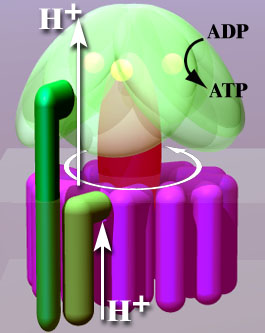
ATP synthase is a large enzyme complex embedded in biological membranes that catalyzes the synthesis of adenosine triphosphate (ATP) from adenosine diphosphate (ADP) and inorganic phosphate. It harnesses transmembrane electrochemical gradients—usually a proton gradient—generated by respiration or photosynthesis to drive ATP production, making it central to cellular energy metabolism.
Image gallery
8 Images




Structure and mechanism
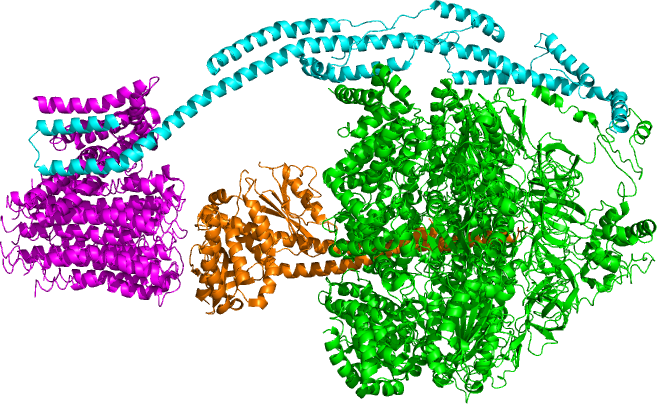
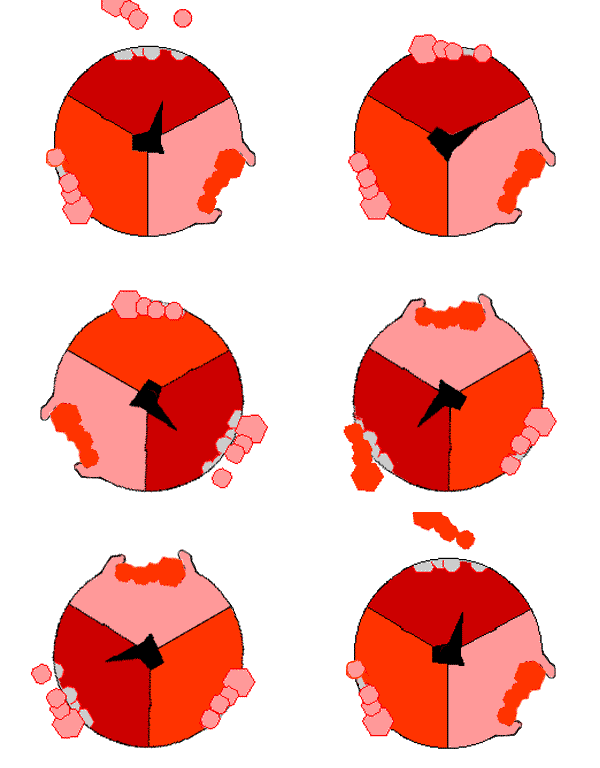
The enzyme consists of two functional sectors: a membrane-embedded proton-conducting portion (commonly called F0 in bacteria and mitochondria) and a soluble catalytic portion (F1) that faces the aqueous compartment. The F0 portion forms a channel through which protons (or in some organisms other ions) move, while the F1 portion contains the catalytic sites where ATP is formed. A central stalk connects the two sectors and rotates relative to a surrounding stator as ions flow through F0. This mechanical rotation is coupled to conformational changes in the catalytic subunits of F1 and thereby drives the chemical step of ATP formation.
Historical and experimental highlights
Understanding of ATP synthase emerged from biochemical, structural and single‑molecule studies. A key conceptual advance was the binding‑change model, which explains how conformational changes can drive ATP synthesis. In the late 20th century, high‑resolution structures and single‑molecule experiments directly demonstrated rotary motion and clarified how ion flow is converted into mechanical rotation and chemical work. These discoveries established ATP synthase as a paradigm for energy transduction in biology.
Variants and cellular locations
- F-type: found in bacterial plasma membranes, mitochondrial inner membranes and chloroplast thylakoids; primarily synthesizes ATP using a proton motive force.
- V-type: present in vacuoles and endomembranes of eukaryotic cells; usually functions to hydrolyze ATP to pump protons and acidify compartments.
- A-type: archaeal homologues adapted to diverse ionic conditions.
Biological importance and applications
ATP synthase is essential because ATP is the universal energy currency for most cellular processes. Dysfunction or genetic changes in components of mitochondrial ATP synthase are associated with metabolic and neuromuscular disorders. The enzyme is also targeted by natural inhibitors—used experimentally and sometimes as antibiotics—and is a subject of interest in bioenergetics, synthetic biology and nanotechnology because of its efficient conversion of ion gradients into mechanical and chemical energy.
Further reading
For introductions and reviews on ATP synthase structure and function see general overviews and experimental summaries at specialized resources. These sources provide accessible pathways to the primary literature and current perspectives on how this molecular rotary machine underpins life’s energy economy.
Related articles
Author
AlegsaOnline.com ATP synthase: the rotary enzyme that makes cellular ATP Leandro Alegsa
URL: https://en.alegsaonline.com/art/7063