
Night of the Ghouls — 1959 horror film by Ed Wood
Low-budget 1959 horror film by Ed Wood about a fraudulent medium who encounters real spirits. Shot in black-and-white and long-unreleased, it later gained cult interest as part of Wood's filmography.
Night of the Ghouls is a low-budget black-and-white horror film written, produced and directed by Ed Wood. Shot in 1959, it functions as a loose sequel to Wood's earlier picture Bride of the Monster and reuses several actors and motifs from his other projects. The narrative centers on a phony medium and his fraudulent séance business, but Wood adds a supernatural twist when the characters unexpectedly encounter real spirits.
Image gallery
1 Image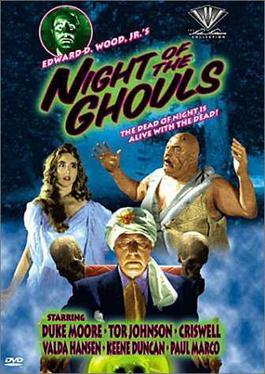
Overview and plot
The film follows Dr. Karl Acula, a charismatic swindler who stages séances and charges grieving clients to communicate with the dead. Posing as an occult expert, he employs trickery and assistants to dupe visitors. When a group of apparently genuine ghosts materializes, events spin out of control and the conman faces consequences he did not anticipate. Subplots involve a police investigation, a loyal patrolman, and a subplot of love and deception that is typical of Wood's compact storytelling.
Production and delayed release
Made on a shoestring budget, the picture relies on simple sets, sparse special effects and the stock company of actors who frequently worked with Wood. Despite being completed in 1959, the film was not widely distributed for many years. Financial and logistical problems surrounding post-production and prints kept it from reaching mainstream release, and it only found broader circulation decades later when collectors and specialty distributors revived interest in Ed Wood's work.
Cast and characters
The cast includes Kenne Duncan as the conniving Dr. Karl Acula, Duke Moore as Lt. Dan Bradford, Tor Johnson in the role of Lobo, Valda Hansen as Sheila, Paul Marco as Patrolman Kelton, and the eccentric psychic Criswell appearing in a narratorial capacity. Each of these performers was linked to Wood's informal repertory company, and many names recur across his other films: Ed Wood often relied on familiar collaborators.
Legacy and reception
Critics and viewers have long debated Wood's films; Night of the Ghouls is often discussed alongside Bride of the Monster and Plan 9 from Outer Space as part of his idiosyncratic output. While amateurish in many technical respects, the movie has attracted a cult audience who appreciate its earnestness, memorable characters and offbeat charm. Film historians note its value as a record of independent filmmaking practices in mid-20th-century America.
Notable facts
- The protagonist's name, Dr. Karl Acula, is a playful pun on the classic vampire name.
- Criswell, who features as himself, was a well-known showman and occasional Wood collaborator; his presence lends the film a stagey, prophetic tone.
- Several regulars from Wood's troupe, including Tor Johnson and Paul Marco, return to familiar character types.
- The film's long obscurity and eventual revival helped cement its status among collectors and scholars of cult cinema.
For further reading on Ed Wood and the film's place in his oeuvre, see resources on Wood's biography and career that collect production anecdotes, contemporary reviews and restoration efforts. The picture remains a useful example of resourceful low-budget filmmaking and of the peculiar aesthetic that has made Wood a lasting subject of popular and academic interest. Additional references include biographies of the director and retrospectives that place Kenne Duncan, Tor Johnson and Paul Marco within his recurring cast, and interviews with Criswell about his on-screen persona.
Related articles
Author
AlegsaOnline.com Night of the Ghouls — 1959 horror film by Ed Wood Leandro Alegsa
URL: https://en.alegsaonline.com/art/70133