
Night of the Living Dead (1968 film)
1968 low-budget horror film by George A. Romero that popularized modern zombies; controversial on release, later celebrated for influence, social themes, and its public-domain status.
Night of the Living Dead is a 1968 American horror film directed by George A. Romero. Made outside the studio system on a small budget, it follows a group of people who take refuge in a rural Pennsylvania farmhouse as savage, reanimated corpses attack. The picture is widely credited with establishing many conventions of the modern zombie genre and has been the subject of sustained critical and academic attention for its tone, imagery and perceived social commentary.
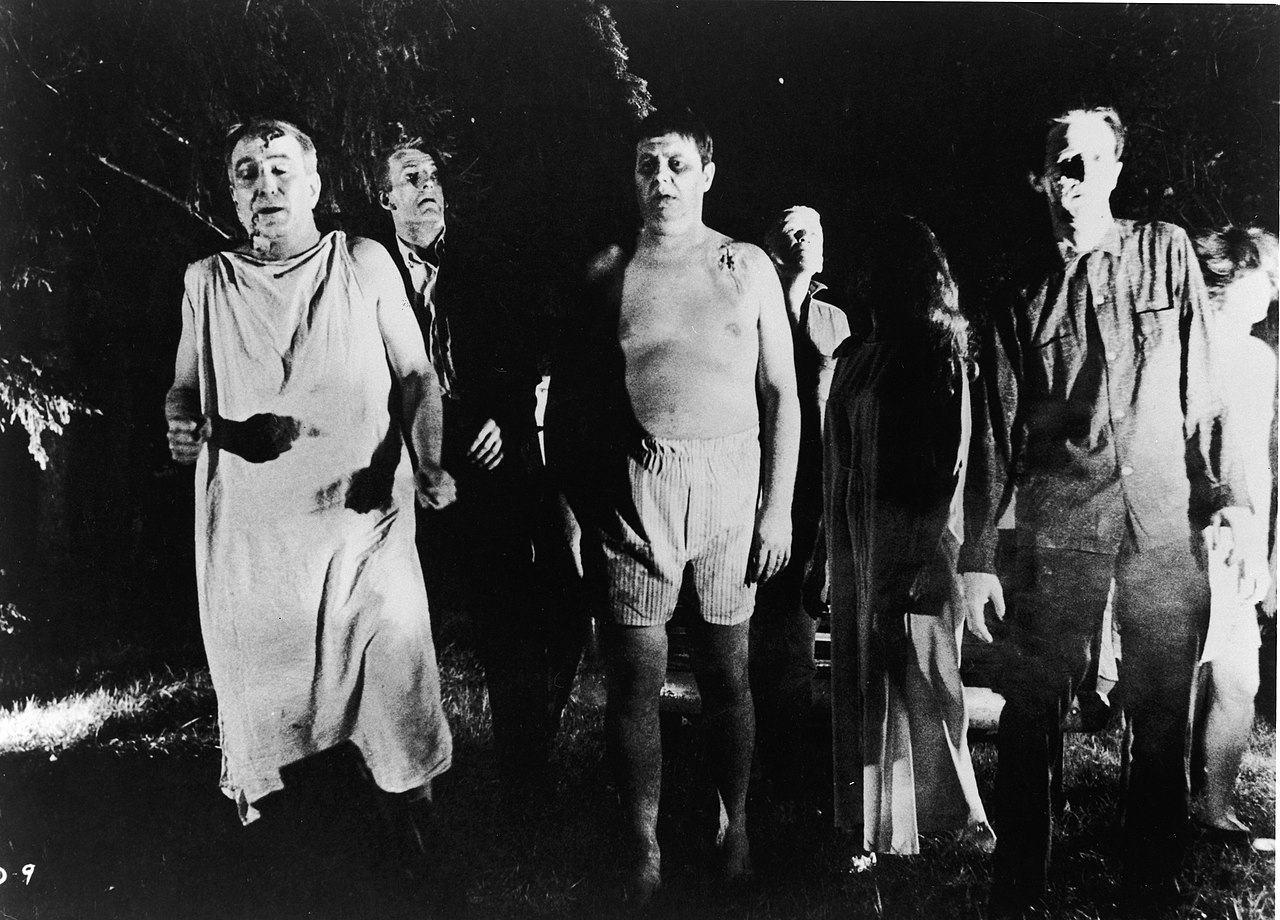
The drama centers on Ben (Duane Jones), Barbra (Judith O'Dea) and several others who shelter together while the world outside collapses. Trapped in a remote house, the characters face both the external threat of the so-called "living dead" and growing internal tensions. Romero staged action in confined spaces and used stark black-and-white cinematography to heighten dread and claustrophobia, helping define the film’s eerie atmosphere and lasting look.
Production was inexpensive by feature-film standards: principal photography and post-production were completed rapidly on a modest budget. Despite its limited means, the film earned substantial box-office returns, making it one of the most profitable independent pictures of its time. A distribution oversight placed the film into the public domain, which altered its commercial life and allowed countless inexpensive prints and television broadcasts to spread its influence.
On release the film provoked controversy for its explicit depictions of violence and gore, and for the stark final scenes that many found unsettling. Critical opinion shifted over time; by the 21st century it had been recognized as culturally and historically significant and selected for preservation by the Library of Congress. Scholars and critics have also noted the casting and character dynamics as fertile ground for interpretations involving race, media, and social unrest, though such readings vary and are debated.
Image gallery
10 Images





Characteristics and legacy
- Genre influence: The film popularized flesh-eating, reanimated corpses as horror antagonists and set visual and narrative templates later adopted by numerous filmmakers.
- Style: Low-budget black-and-white cinematography, practical effects, and tense ensemble drama in confined settings.
- Continuations: The director returned to the subject in later, separate films that expanded zombie themes and social satire; other filmmakers produced remakes, reworkings, and countless homages.
- Availability: Public-domain status means many editions and transfers circulate; restoration projects and curated prints seek to preserve the most faithful versions.
Night of the Living Dead remains taught in film courses, referenced in popular culture, and discussed in studies of horror, independent film, and American cinema of the late 1960s. Its combination of economical filmmaking and provocative subject matter has kept it a touchstone for genre-makers and historians alike. For overviews, analyses and archival material, see the links below.
Further reading and resources
- General film overview and credits
- Release history and promotional materials
- Production notes and technical details
- George A. Romero: director profile
- Budget and financing background
- Box-office and distribution records
- Library of Congress selection information
- National Film Registry entry
- Public-domain status and legal notes
- Character guide and cast list
- Filming locations and setting
Questions and answers
Q: When was Night of the Living Dead released?
A: Night of the Living Dead was premiered on October 1, 1968.
Q: Who directed Night of the Living Dead?
A: Night of the Living Dead was directed by George A. Romero.
Q: Who starred in Night of the Living Dead?
A: Night of the Living Dead starred Duane Jones, Judith O'Dea, and Karl Hardman.
Q: Was Night of the Living Dead a financial success?
A: Yes, Night of the Living Dead was a financial success, grossing $12 million domestically and $18 million worldwide.
Q: Why was Night of the Living Dead heavily criticized?
A: Night of the Living Dead was heavily criticized because of its explicit content.
Q: Was Night of the Living Dead eventually critically acclaimed?
A: Yes, Night of the Living Dead eventually gained critical acclaim.
Q: What is the story of Night of the Living Dead?
A: Night of the Living Dead follows characters Ben, Barbra, and five others trapped in a farmhouse in Pennsylvania which is attacked by "living dead" monsters, who became known in popular culture as zombies.
Related articles
Author
AlegsaOnline.com Night of the Living Dead (1968 film) Leandro Alegsa
URL: https://en.alegsaonline.com/art/70135
Sources
- popmatters.com : "The Zombification Family Tree: Legacy of the Living Dead"
- books.google.com : "Introduction: Generation Z, the Age of Apocalypse"