
Bride of the Monster — 1950s science-fiction horror film by Ed Wood
A low-budget 1950s sci-fi horror film written, produced and directed by Ed Wood, noted for Bela Lugosi's late-career role and its enduring cult reputation; originally titled Bride of the Atom.
Bride of the Monster is a mid-1950s American science-fiction horror picture produced, written and directed by Ed Wood. Shot on a shoestring budget and featuring one of Bela Lugosi's final screen appearances, the film has become emblematic of Wood's idiosyncratic style and of the era's inexpensive independent genre cinema. For basic film credits and cast lists see film page.
Image gallery
3 Images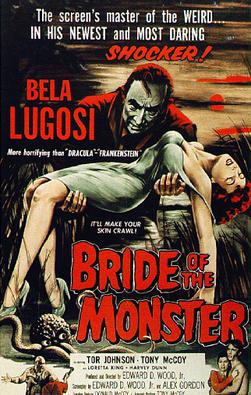


Plot and principal performers
The story follows a deranged scientist who conducts experiments aimed at creating a powerful servant and reshaping the world, with investigations and local characters becoming caught in the drama. The cast includes Bela Lugosi and wrestler-actor Tor Johnson in prominent roles, supported by Loretta King and character players frequently employed by Wood. A concise cast and crew overview is available at production notes.
Production, title and release history
Made as an independent feature, the project reflects common techniques of low-budget 1950s filmmaking: use of nonprofessional locations, economical camera setups and visible practical effects. The film was originally promoted under the working title Bride of the Atom, and saw limited regional release in the mid-1950s. More on Wood's involvement and production context can be read in his filmography and biographies at Ed Wood resources and details on the debut run at original release notes.
Reception and legacy
Contemporary reviews were mixed to negative, but the picture achieved a posthumous cult following as tastes for "so-bad-it's-good" films grew. Interest in Wood's output and in Lugosi's late career revived through film preservation, retrospectives and popular portrayals — notably in later cinema and biography. The director completed a follow-up, often called Night of the Ghouls, which was finished in 1959 but not distributed until decades later; read more about the sequel at sequel background and archival notes at release history.
Notable facts
- The movie is often cited in discussions of cult cinema and low-budget science-fiction of the 1950s.
- Bela Lugosi's participation is one of the elements that keeps the film in historical discussions of genre and star legacy.
- Familiar cast members and recurring collaborators from Wood's circle appear throughout, giving the film a distinctive ensemble feel.
Together these points help explain why Bride of the Monster continues to be studied and screened: as both a product of its time and a touchstone for fans of outsider filmmaking. For additional reading and archival references consult the linked resources above.
Related articles
Author
AlegsaOnline.com Bride of the Monster — 1950s science-fiction horror film by Ed Wood Leandro Alegsa
URL: https://en.alegsaonline.com/art/14055