
Ninotchka (1939 film)
1939 romantic comedy directed by Ernst Lubitsch, starring Greta Garbo and Melvyn Douglas. A satirical love story about a stern Soviet envoy in Paris, nominated for four Academy Awards and later remade as Silk Stockings.
Overview
Ninotchka is a 1939 American romantic comedy directed by Ernst Lubitsch and notable for pairing the director's elegant wit with one of Greta Garbo's few comic screen performances. The picture stars Greta Garbo alongside Melvyn Douglas, supported by Ina Claire, Felix Bressart, Gregory Gaye and Bela Lugosi, and was distributed by Metro-Goldwyn-Mayer. The film earned four Academy Award nominations in 1940 and remains a touchstone for sophisticated comedy that mixes satire with romance.
Image gallery
4 Images

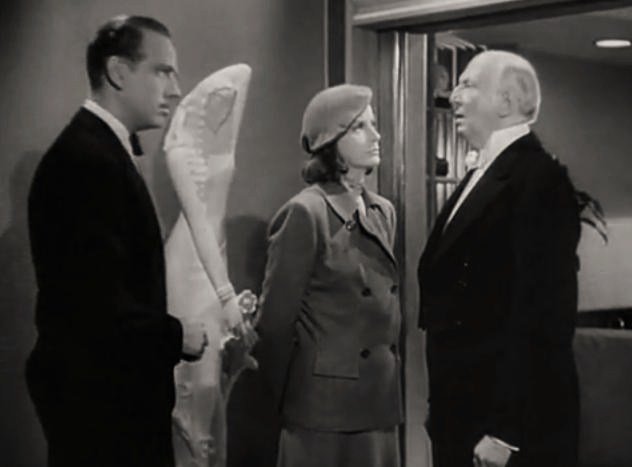

Plot and themes
The story follows a stern Soviet envoy sent to Paris on official business who encounters the pleasures and social freedoms of the French capital. The collision between ideological discipline and the charms of Parisian life becomes the engine of both comedy and romance. Rather than broad farce, Ninotchka leans on conversational wit and civilized flirtation to explore tensions between political conviction and personal desire.
Production and style
Ernst Lubitsch, celebrated for the so-called "Lubitsch touch," directed the film with subtle irony and a light visual style that lets verbal repartee and polite innuendo carry much of the humor. Greta Garbo, long associated with dramatic roles, surprised audiences with a restrained but decisive turn in comedy; studio advertising famously highlighted the novelty of her laughter. The screenplay and performances emphasize timing, understatement and cultural contrast rather than slapstick.
Reception and awards
Contemporary critics praised the film for its sophisticated balance of satire and romance, and Garbo's performance was widely remarked upon as a departure from her earlier image. The film received four Academy Award nominations the following year, reflecting both popular and critical recognition. Over time Ninotchka has been cited in studies of Hollywood comedy and star image for its deft handling of political subject matter without sacrificing romantic convention.
Legacy and remake
Ninotchka influenced later romantic comedies that combined social commentary with love stories. Its blend of urbanity and ideological satire made it memorable enough to inspire a 1957 musical remake, Silk Stockings, which translated the tale into song and dance. Film historians often point to Ninotchka as a landmark in both Lubitsch's oeuvre and Greta Garbo's screen persona.
Principal cast and notable facts
- Greta Garbo — leading role that foregrounded her comic abilities
- Melvyn Douglas — romantic counterpart
- Supporting players: Ina Claire, Felix Bressart, Gregory Gaye, Bela Lugosi
- Distributor: Metro-Goldwyn-Mayer
- Remade as the musical Silk Stockings (1957)
Questions and answers
Q: When was Ninotchka released?
A: Ninotchka was released in 1939.
Q: Who directed Ninotchka?
A: Ernst Lubitsch directed Ninotchka.
Q: Who starred in Ninotchka?
A: Greta Garbo, Melvyn Douglas, Ina Claire, Felix Bressart, Bela Lugosi, and Gregory Gaye starred in Ninotchka.
Q: How many Academy Awards was Ninotchka nominated for?
A: Ninotchka was nominated for 4 Academy Awards in 1940.
Q: Who distributed Ninotchka?
A: Ninotchka was distributed by Metro-Goldwyn-Mayer.
Q: What is the 1957 remake of Ninotchka called?
A: The 1957 remake of Ninotchka is called Silk Stockings.
Q: What genre is Ninotchka?
A: Ninotchka is a romantic comedy movie.
Related articles
Author
AlegsaOnline.com Ninotchka (1939 film) Leandro Alegsa
URL: https://en.alegsaonline.com/art/70281