
Niðavellir: the dark fields of Norse myth
Niðavellir, often translated “dark fields,” is a realm in Norse mythology associated with the dwarves and subterranean craft. It appears in the Poetic Edda and is linked to Svartálfaheimr and smithing traditions.
Niðavellir is a name from Old Norse myth usually rendered as “dark fields” or “nether fields.” In the surviving poetic tradition it is presented as one of the world-places of the Norse cosmos and as the dwelling of the dwarves. The site is commonly imagined as an underground domain of halls, forges and stone caverns where skilled craftsmen fashion the magical objects that appear throughout the sagas.
Image gallery
2 Images
Etymology and meaning
The compound Old Norse name combines elements often understood as níð- (relating to darkness, depths, or hostility) and -vellir (fields or plains). Translations therefore emphasize contrast with the open light of the Aesir realms: Niðavellir evokes a low, shaded terrain rather than a sunlit plain. The exact nuance is debated among scholars, and related names such as Svartálfaheimr overlap in meaning.
Medieval sources and interpretation
Niðavellir is explicitly named in the Poetic Edda’s cosmological listings and is implied elsewhere by descriptions of subterranean smiths and halls. Later prose tradition, notably Snorri Sturluson’s accounts, often uses the term Svartálfaheimr (the home of the "black elves") for similar material, which has led to differing medieval and modern readings about whether these names denote the same place or distinct realms.
Role in myth and cultural significance
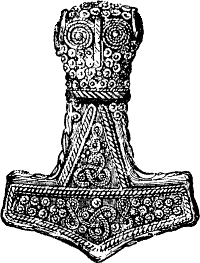
The realm is principally associated with dwarves—master metalworkers and stoneworkers in Norse lore. Many famous artifacts are ascribed to such craftsmen:
- Mjölnir, Thor’s hammer;
- Gungnir, Odin’s spear;
- Draupnir, Odin’s gold ring;
- Fine armaments and crafted treasures found in saga narratives.
In narrative terms Niðavellir functions as a source of supernatural technology and as a liminal space linking the visible world to hidden depths and ancient knowledge.
Distinctions and modern reception
Modern scholarship treats Niðavellir as part of a fluid mythic geography: sometimes synonymous with the realm of the svartálfar, sometimes a distinct subterranean field. In contemporary culture the name recurs in literature, games and art as shorthand for underground dwarven realms and ancestral craftsmanship.
Related articles
Author
AlegsaOnline.com Niðavellir: the dark fields of Norse myth Leandro Alegsa
URL: https://en.alegsaonline.com/art/69918