
Acherontia atropos — Death's‑head Hawkmoth
Acherontia atropos is a large hawkmoth notable for the skull-like thoracic mark, its honey‑robbing habit, strong flight and a prominent place in folklore, natural history and popular culture.
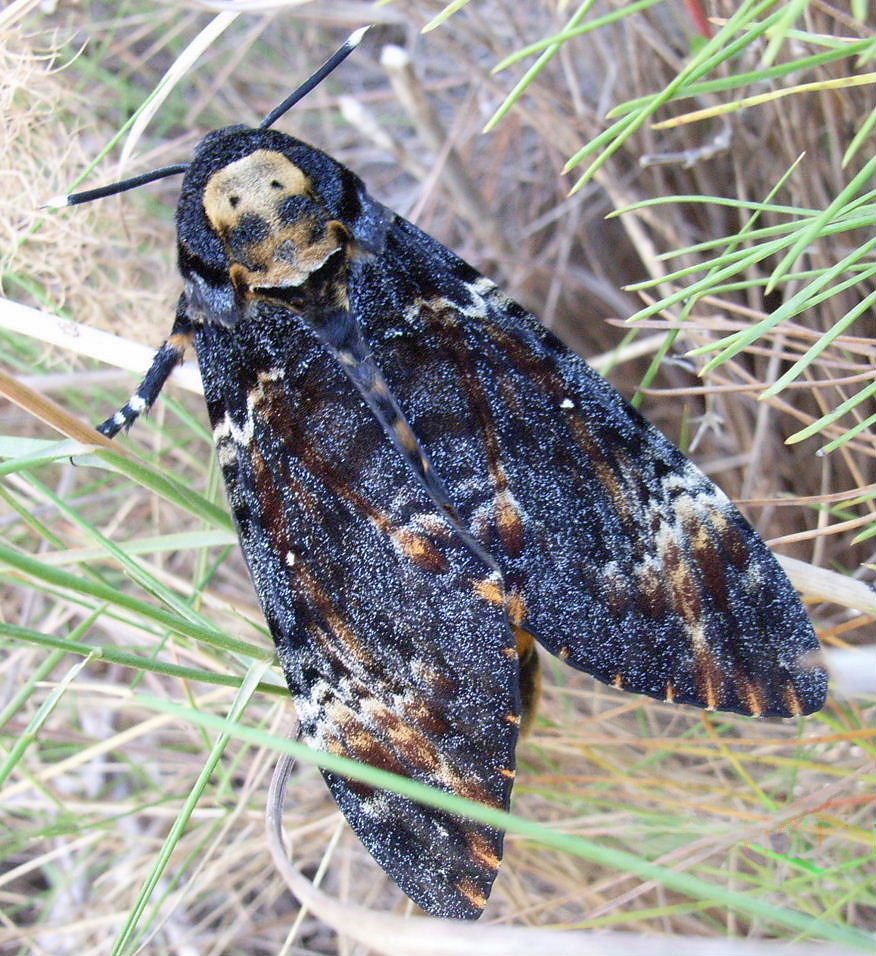
Acherontia atropos, commonly called the death's‑head hawkmoth, is a large, distinctive member of the hawkmoth family (Sphingidae). It is widely recognized for a pale, skull‑shaped pattern on the dorsal thorax, its robust body and bold banded abdomen. The species combines striking appearance with unusual behaviour and a long cultural history.
Image gallery
10 Images





Taxonomy and name
The genus name Acherontia evokes the classical river Acheron and the species name atropos refers to one of the three Fates, reflecting longstanding popular associations of the moth with death and the macabre. Three closely related species are placed in the genus; A. atropos is the best known in Europe, Africa and adjacent regions.
Appearance
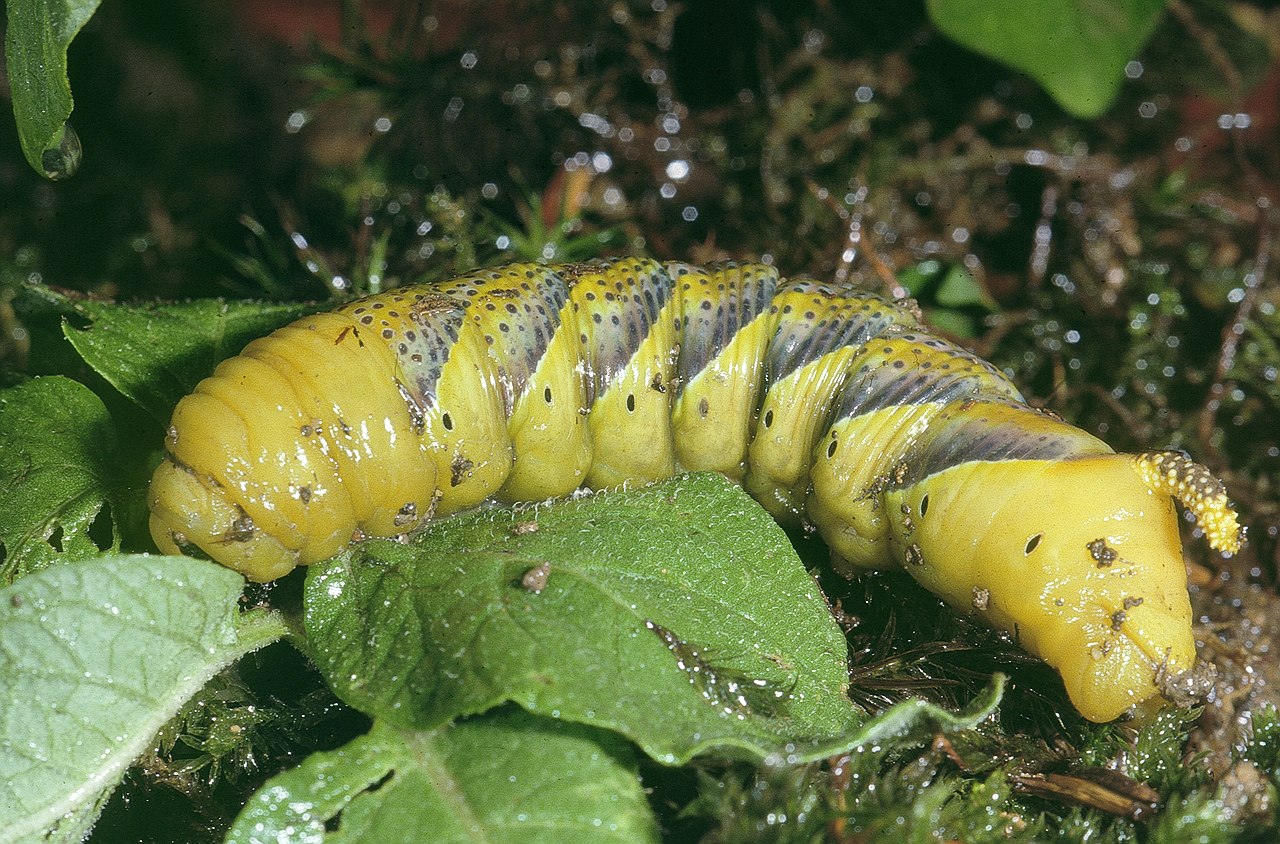
Adults are large for moths, with a stout, hairy thorax bearing the characteristic skull‑like mark and forewings patterned in brown and grey bands. The abdomen shows alternating dark and yellowish bands. Caterpillars occur in several colour forms (green, yellow, brown) and have the typical sphingid horn at the rear. The insect can produce a short squeak when alarmed by forcing air through specialised structures.
Distribution and habitat
A. atropos is common across much of Africa and the Mediterranean region and occurs in parts of the Middle East and southern Europe; strong flight ability enables seasonal dispersal and occasional vagrant records northwards. Habitats include gardens, farmland, hedgerows and places where larval host plants grow.
Life cycle and ecology
Females lay eggs on a range of broad‑leaved plants, notably members of the nightshade family (Solanaceae) such as potato and tomato, but caterpillars will feed on other cultivated and wild hosts. Pupation takes place in the soil. Adults feed on nectar and are famous for entering honeybee hives to take honey, a behaviour achieved with minimal destruction by using scent and behaviour to avoid strong bee aggression.
Human interactions and cultural role
Although larvae can occasionally damage crops, the species is not usually a major pest. Its striking appearance and evocative name have made it a symbol in folklore, art and modern media; it has also been studied by entomologists for its acoustic, chemical and behavioural interactions with other insects and for insights into moth migration and ecology.
Related articles
Author
AlegsaOnline.com Acherontia atropos — Death's‑head Hawkmoth Leandro Alegsa
URL: https://en.alegsaonline.com/art/689
Sources
- books.google.com : The natural history of British moths, sphinxes, &c
- tpittaway.tripod.com : "Acherontia atropos (Linnaeus, 1758)"
- commons.wikimedia.org : Acherontia atropos