
Muzaffarabad: Capital of Azad Kashmir and Himalayan Gateway
Muzaffarabad is the capital of Azad Kashmir, Pakistan-administered region. Located at the Jhelum and Neelum rivers' confluence, it is mountainous with a history, diverse culture, and important administrative and tourism roles.
Overview
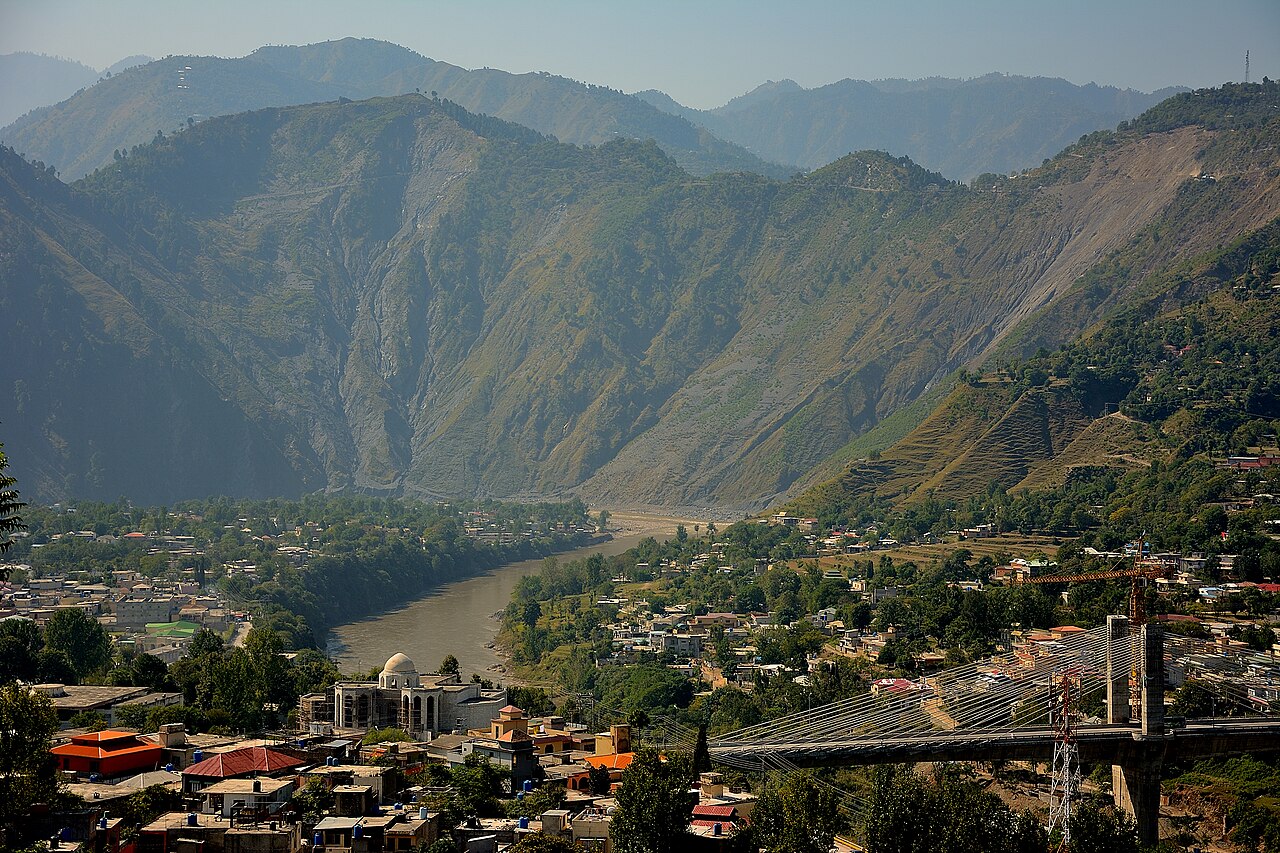
Muzaffarabad serves as the administrative capital of Azad Kashmir. The city lies where the Jhelum and Neelum rivers meet and occupies a narrow, steep-sided valley surrounded by the lower Himalaya. Its position makes it a regional center for government services, commerce and access to nearby mountain communities.
Image gallery
7 Images




Geography and environment
The urban area is compact and built on terraces climbing from the riverbanks into rugged hills. The landscape is heavily influenced by river valleys, steep slopes and frequent elevation changes, which affect land use, transport and settlement patterns. The broader administrative area is known as Muzaffarabad District and borders several other districts and provinces.
Muzaffarabad's climate is generally temperate for the latitude, with warm summers and cool winters in the city and colder conditions at higher elevations. Vegetation ranges from riverine trees to pine and mixed forests on the surrounding hills. The region is also seismically active and experienced a major earthquake in 2005 that caused extensive damage and a long period of reconstruction and recovery.
People, language and administration
The city's population is predominantly Muslim and follows Islam in its religious life. Local speech includes Hindko and other Kashmiri-related dialects; Hindko is widely used as an everyday language alongside Urdu for official matters. Muzaffarabad functions as the seat of regional government institutions and host to schools, hospitals and cultural facilities serving Azad Kashmir.
Connections, economy and tourism
Transport to and from Muzaffarabad relies mainly on roads linking the city with Pakistan's plains and neighbouring highland districts. The economy combines public administration, services, retail trade and small-scale industry. The area's natural scenery draws visitors to nearby valleys and hill stations; popular excursions head into the Neelum valley, and local peaks and shrines provide seasonal tourism opportunities.
- Notable nearby areas and landmarks include the Neelum valley and mountain viewpoints such as Pir Chinasi.
- Muzaffarabad's strategic position places it adjacent to Khyber Pakhtunkhwa to the west and close to districts across the Line of Control to the east.
- To the north lies the Neelum District, an area of steep valleys and tributary streams.
Administratively the district neighbours parts of Indian-administered Jammu and Kashmir, including areas historically known as Kupwara and Baramulla. That proximity shapes both local politics and cross-border sensitivities. Muzaffarabad remains a focal point for regional governance, reconstruction efforts from past natural disasters, and as a gateway for visitors exploring the western Himalaya foothills.
Related articles
Author
AlegsaOnline.com Muzaffarabad: Capital of Azad Kashmir and Himalayan Gateway Leandro Alegsa
URL: https://en.alegsaonline.com/art/67861