
Music sequencer: functions, types, history, and uses
A music sequencer records, edits and plays musical event data and audio; it ranges from step hardware and modular CV/Gate units to DAW-based piano rolls and MIDI/OSC controllers.
Overview
A music sequencer is a tool—either a standalone hardware device or software application—that records, edits and plays back musical events and timelines. Sequencers handle rhythmic and melodic information as well as performance parameters: they work with various data formats and timing systems to control instruments, synthesizers and audio tracks. In broad terms a sequencer moves musical ideas from human input into timed, repeatable musical output, and can be used to arrange full compositions or to drive live performance setups. See a basic description at sequencer overview.
Image gallery
10 Images



Key functions and data types
Sequencers typically manage several classes of information. At the simplest level they store note events (pitch, duration, velocity) and timing. Many also record continuous controllers such as modulation, expression and pitch bend. Common data and interfaces include:
- MIDI messages for note and controller communication with electronic instruments.
- CV/Gate signals for analog modular synthesizers and older hardware.
- OSC (Open Sound Control) for networked or high-resolution parameter control.
- Audio clips, sample playback and automation lanes inside digital audio workstations.
Sequencers thus link discrete note information and continuous performance changes; one way to think about this is as a timeline that can contain both note and performance data as well as tempo and synchronization events.
History and development
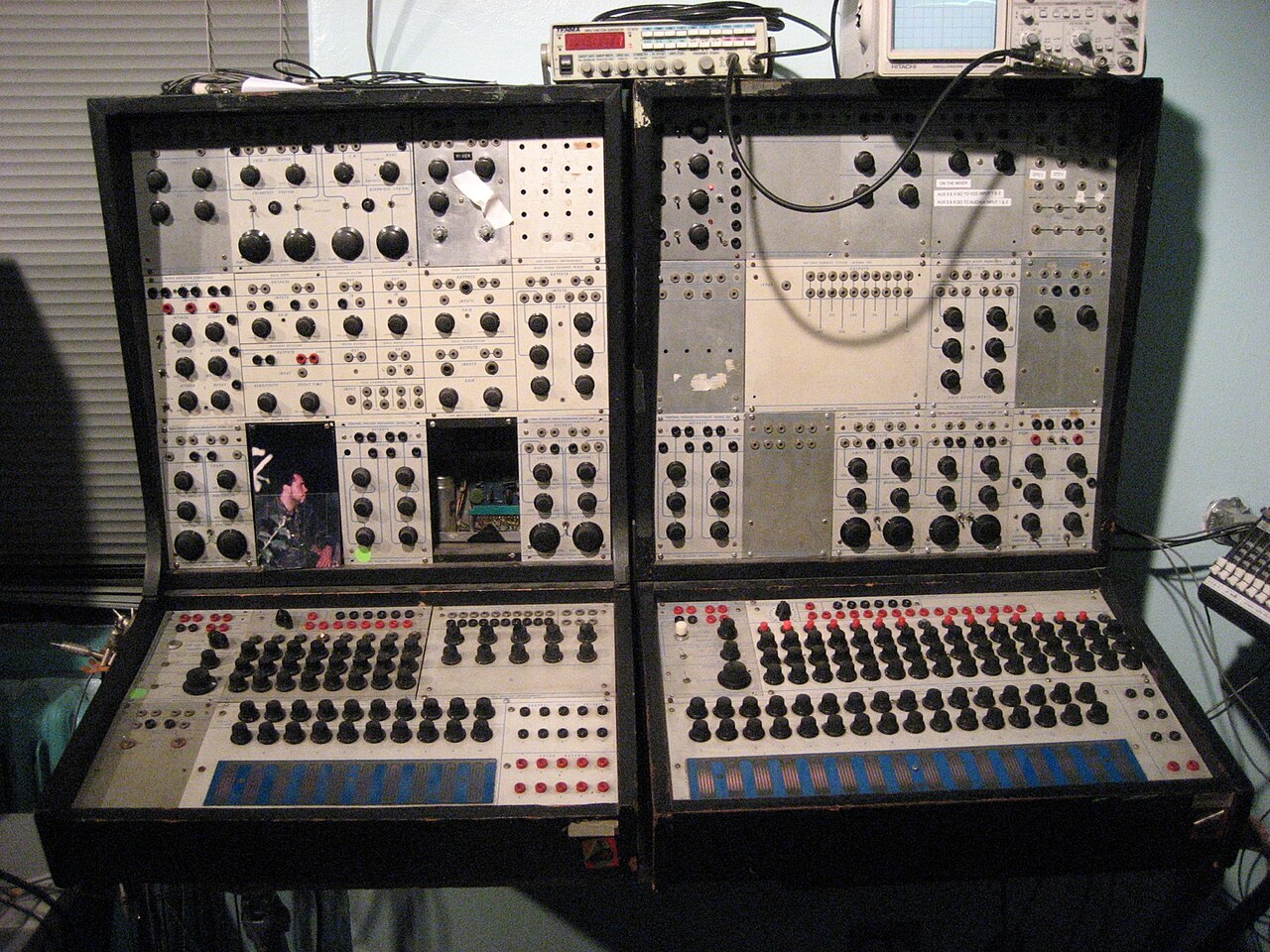
Early sequencers appeared in analog form with modular synths and dedicated step units that cycled voltages to generate repeating patterns. The introduction of standardized digital protocols broadened sequencing possibilities: MIDI enabled affordable hardware and software sequencing on personal computers, and later network protocols such as OSC extended control options. Modern digital audio workstations integrated piano-roll editors, pattern-based loops and track automation into comprehensive production environments.
Common types and workflows
Sequencers vary by interface and workflow. Typical categories include:
- Step sequencers: enter notes into fixed steps to build patterns.
- Linear sequencers / piano roll: draw or record events along a continuous timeline.
- Pattern-based and groovebox sequencers: create and chain patterns for live arrangement.
- Tracker-style sequencers: text-like rows for note and effect commands.
- Modular CV sequencers: voltage-based control for analog modules.
Uses, examples and notable distinctions
Sequencers are central to electronic music, sound design, film scoring and live performance. They enable precise timing, easy editing and complex parameter automation. Important user decisions include whether to record in real time or step-input, whether to quantize events or preserve human timing, and whether to sequence notes only or to include audio and plug-in automation. Distinct from simple arpeggiators or phrase generators, full sequencers provide editable timelines, pattern chaining and comprehensive control over performance data.
Because sequencers bridge instruments and time, they remain a fundamental element in both studio production and modular live rigs, adapting continually as new protocols and hybrid audio–MIDI environments evolve.
Related articles
Author
AlegsaOnline.com Music sequencer: functions, types, history, and uses Leandro Alegsa
URL: https://en.alegsaonline.com/art/67757