
Automation: concept, components, history, uses and societal impacts
Overview of automation: definition, typical components, historical development, principal uses, benefits and limitations, and notable distinctions in engineering and industry.
Automation is the use of control systems, software, and mechanical devices to perform tasks with reduced direct human intervention. In engineering contexts it typically means modifying a device or process so it can carry out its designed function autonomously or with minimal oversight. Automation ranges from simple mechanical regulators, such as governors, to complex modern systems that combine sensors, actuators, and decision logic.
Image gallery
10 Images


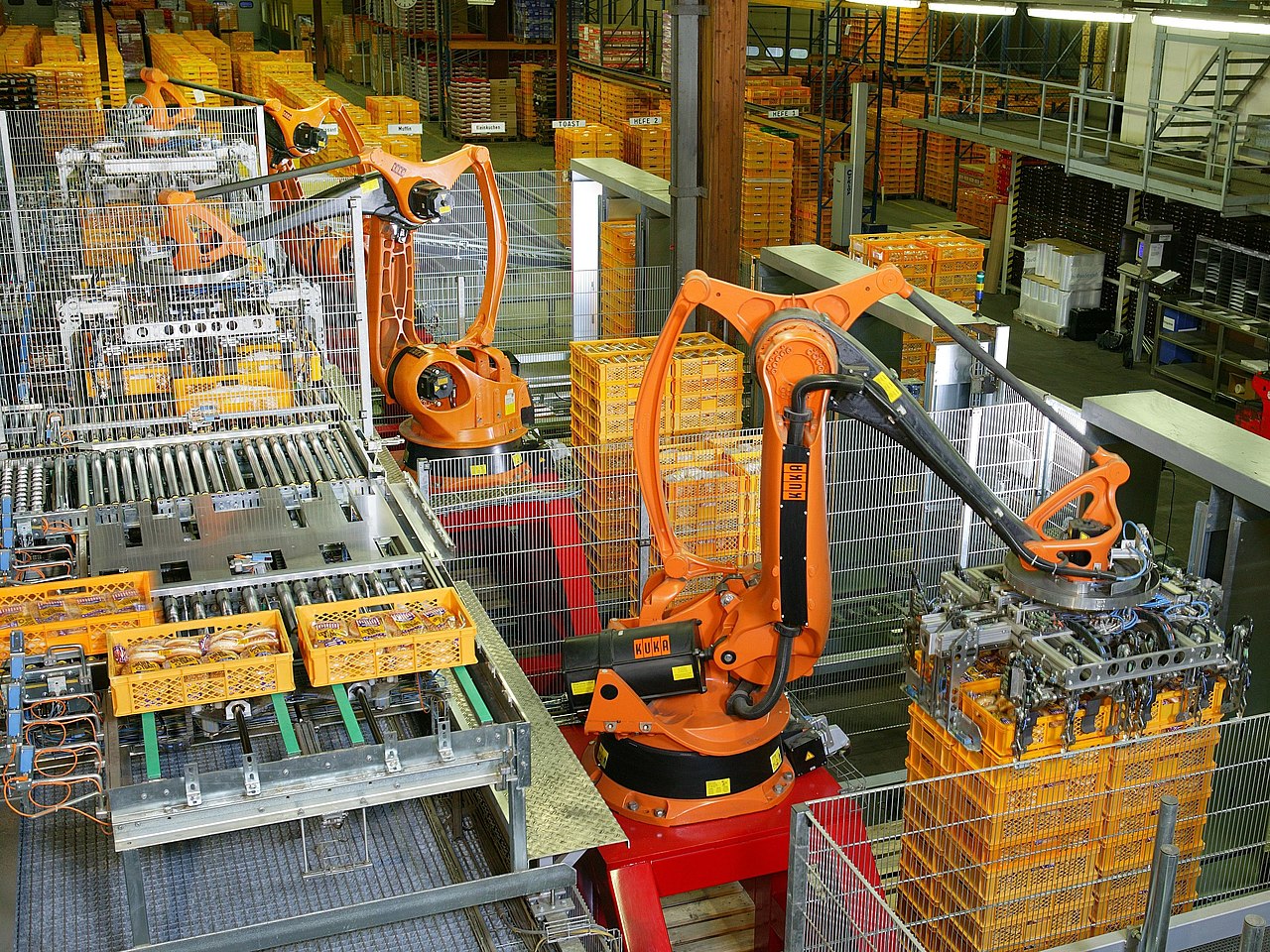


Key components and characteristics
Most automated systems share a few basic parts: sensing elements that gather information about the environment or process; a control unit that makes decisions based on that information; and actuators that produce physical actions. Control logic can be implemented with mechanical linkages, electronic circuitry, programmable logic controllers (PLCs), or software algorithms. Reliability, repeatability, and the ability to operate without continuous human control are common goals.
History and development
Automation has evolved incrementally. Early examples include simple feedback regulators and mechanical governors used to stabilize engine speed, illustrating how a device could self-correct without human adjustment — for example, a centrifugal governor applied to a steam engine. The twentieth century saw widespread electrification, the arrival of relay logic and PLCs, and later digital computers and networked control. Each stage expanded the range of tasks that could be automated, from manufacturing lines to data processing.
Common types and applications
- Industrial automation: production lines, robotics, and process control that improve consistency and throughput.
- Office and software automation: scripts, macros, and workflow engines that reduce repetitive administrative work.
- Consumer and building automation: thermostats, smart appliances, and lighting systems that manage comfort and energy use.
- Autonomous systems: vehicles and drones that perceive and act with limited human guidance.
Benefits and limitations
Automation can increase uniformity, raise product quality, reduce labor demands for repetitive or hazardous tasks, and cut operating costs. Typical benefits include improved safety, higher throughput, and predictable performance. However, automation may require significant upfront investment, ongoing maintenance, and skilled personnel for design and troubleshooting. It can also shift the nature of work, requiring different skills from those displaced and raising economic and ethical questions.
Societal impact and distinctions
Automation affects markets, workplaces, and regulation. Distinctions are often drawn between full automation, where human input is rarely needed, and partial or assisted automation, where human operators retain responsibility for oversight or complex decisions. Debates focus on job displacement, reskilling, equitable distribution of benefits, and safe integration of autonomous systems into public spaces. Practical deployment balances technical feasibility, cost, user acceptance, and regulatory constraints.
For further reading on technical design, deployment strategies, and safety considerations, consult engineering references and standards from professional bodies and industry groups. Related topics include control theory, robotics, human–machine interaction, and systems engineering. Many introductory resources and case studies are available online and through institutional libraries; for a technical starting point see materials linked under machine automation, workforce transition research at human factors, or historical treatments of mechanical governors and early engines at historical sources.
Questions and answers
Q: What is automation in the context of engineering?
A: Automation in engineering means to modify a machine or device in such a way that it can perform its assigned task without the need for any human intervention.
Q: What kind of machines are fitted with additional systems to take control of their functions?
A: Machines and devices that need to perform in a uniform and repetitive manner are fitted with additional systems that take control of their functions.
Q: What are the benefits of automation in engineering?
A: Automation in engineering results in a more uniform output of machines, and improves the quality of products.
Q: Why is human interaction needed in systems that are not fully automated?
A: Tasks involved in systems that are not fully automated are often repetitive and boring, thus requiring human interaction to perform those tasks.
Q: How are machines designed with automation in mind?
A: Machines are designed so that humans no longer need to lift heavy weights or perform dangerous tasks, and human intervention is limited or absent.
Q: What is an example of a device that controls a steam engine?
A: A centrifugal governor is an example of a device that controls a steam engine.
Q: What is the purpose of automation in engineering?
A: The purpose of automation in engineering is to reduce the need for human intervention, improve the output of machines, and improve the quality of products.
Related articles
Author
AlegsaOnline.com Automation: concept, components, history, uses and societal impacts Leandro Alegsa
URL: https://en.alegsaonline.com/art/7617