
Muromachi period: Japan under the Ashikaga shogunate (14th–16th centuries)
Japanese historical era dominated by the Ashikaga shogunate and rich cultural developments, commonly dated c.1336–1573 (sometimes from 1333). Marked by political decentralization, Zen-influenced arts, and the rise of daimyo.
The Muromachi period refers to a stretch of Japanese history dominated by the Ashikaga (or Muromachi) shogunate. Scholars commonly date the era to about 1336–1573, though a few histories extend its beginning to 1333. It follows the Kamakura period and precedes the Azuchi–Momoyama and early Tokugawa eras. The name comes from the Muromachi district of Kyoto where the Ashikaga shoguns established their offices and residence.
Image gallery
10 Images


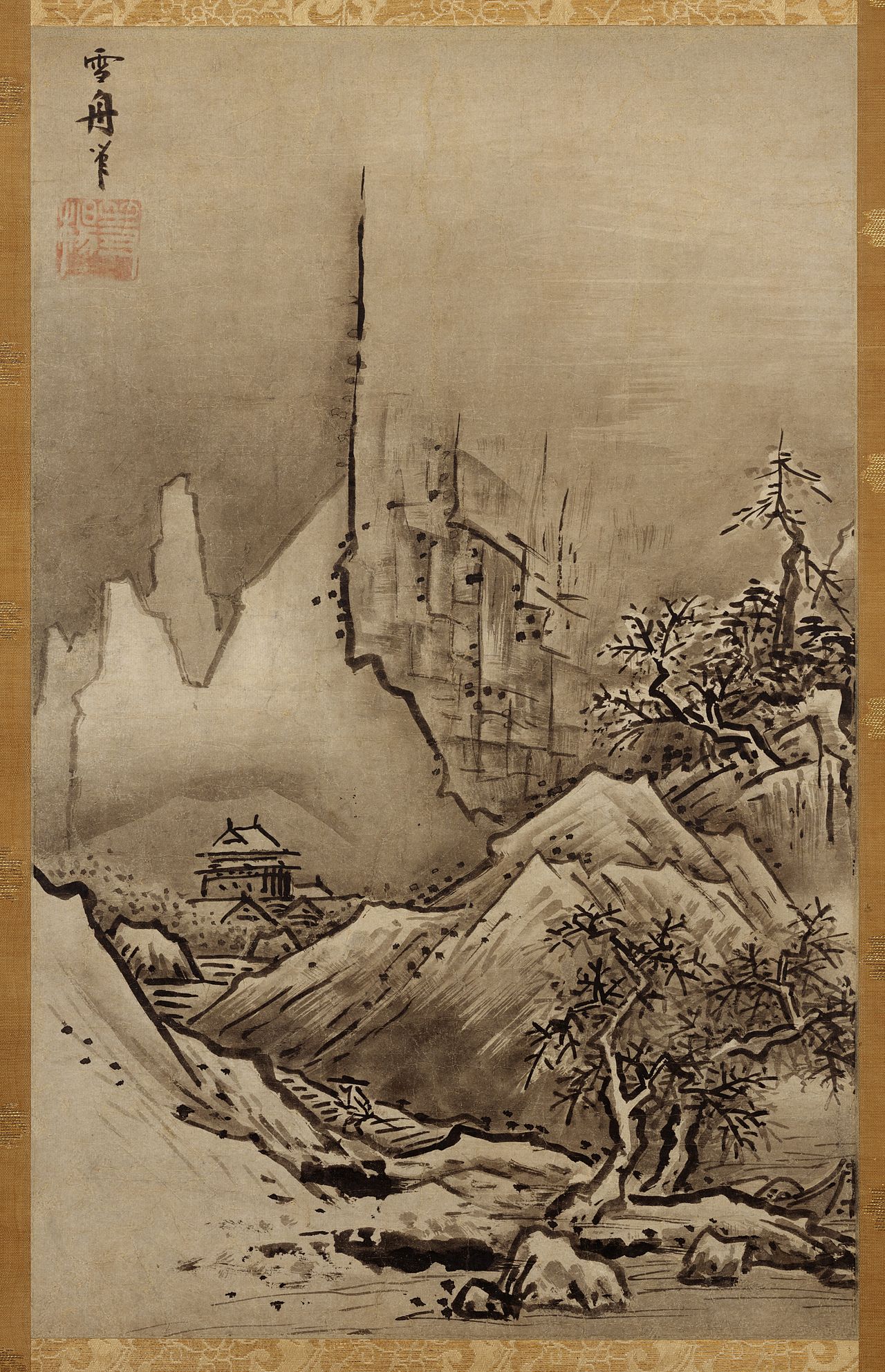


Political organization and major events
Power during the Muromachi period was exercised by the bakufu (military government) in Kyoto under the Ashikaga family, but real authority fluctuated. Early strong leaders such as Ashikaga Yoshimitsu consolidated influence, while later years saw weakening central control. The Ōnin War (1467–1477) devastated Kyoto and accelerated the breakdown of nationwide governance, ushering in a prolonged age of regional conflict often called the Sengoku (warring states) period.
Social structure and economy
Muromachi Japan featured a layered society of court nobles, warrior elites (samurai), provincial governors (shugo) and rising daimyo, as well as expanding urban merchant classes. Agricultural production, local markets and long-distance trade—especially the licensed “tally” trade with Ming China—contributed to economic growth. Increased commercialization, the growth of castle towns, and later contact with Europeans introduced new goods and technologies.
Culture, religion, and the arts
The period is notable for strong Zen Buddhist influence on aesthetics and the arts. Noh drama was refined by Kan'ami and Zeami, ink painting, sumi-e landscapes, rock gardens, and the tea ceremony matured into distinctive forms. Two cultural centers are often named: Kitayama culture under Ashikaga Yoshimitsu and Higashiyama culture associated with Yoshimasa. These developments left enduring monuments such as Kinkaku‑ji and Ginkaku‑ji.
Contacts with the outside world and technology
Maritime trade with China and Southeast Asia expanded, regulated by official tallies with Ming China in the 15th century. In the mid‑16th century Portuguese traders and missionaries arrived; firearms (introduced around 1543) and Christianity began to influence warfare and belief in some regions. These external contacts helped reshape military and economic patterns on the eve of national unification.
Legacy and distinctions
The Muromachi period is remembered for a contrast between cultural flowering and political fragmentation. It produced influential artistic styles and institutions that shaped later Japanese identity, while its political disintegration set the stage for the unification campaigns of the late 16th century. Key distinguishing features include the central role of the Ashikaga bakufu, the impact of Zen aesthetics, and the transition from court-centered rule toward regional daimyo power.
- Dates: commonly c.1336–1573 (sometimes from 1333).
- Also called: Ashikaga period, Muromachi era.
- Notable events: establishment of Ashikaga shogunate, Ōnin War, increased foreign contact.
Related articles
Author
AlegsaOnline.com Muromachi period: Japan under the Ashikaga shogunate (14th–16th centuries) Leandro Alegsa
URL: https://en.alegsaonline.com/art/67646
Sources
- books.google.com : Japan Encyclopedia
- books.google.com : Japan Encyclopedia
- books.google.com : Japan Encyclopedia
- books.google.com : Japan Encyclopedia
- books.google.com : Japan Encyclopedia
- books.google.com : Japan Encyclopedia
- orientalarchitecture.com : "Kinkaku-ji Temple - 金閣寺 (built 1398, destroyed 1950, reconstructed 1955) "
- books.google.com : Japan Encyclopedia
- orientalarchitecture.com : "Ginkaku-ji Temple - 銀閣寺 (built 1484-90 onward)"
- orientalarchitecture.com : "Ryōan-ji Temple - 竜安寺 (built 1488 onward)"
- www3.pref.kagoshima.jp : History of Kagoshima
- cbcj.catholic.jp : "An Overview of the History of the Catholic Church in Japan"
- books.google.com : Japan Encyclopedia
- miyajima.or.jp : "History of Miyajima"
- educators.mfa.org : The Great Battle at Miyajima (Miyajima ôgassen no zu), woodblock print, c. 1865