
Mulan (1998 film)
Disney's 1998 animated retelling of the Chinese legend of Hua Mulan: story, production, music, cast, reception, sequel and the later live-action remake.
Overview
Mulan is a 1998 American-Chinese animated feature produced by Walt Disney Feature Animation. Presented as part of the studio's classic animated canon, it adapts the traditional Chinese tale of Hua Mulan, a young woman who takes her ageing father's place in the army by disguising herself as a man. The film blends adventure and comedy with several musical numbers and a distinctive visual style inspired by East Asian art. The release followed Disney's pattern of high-profile animated releases in the 1990s and reached broad international audiences.
The film is often described as an animated musical adventure and appears in lists of Walt Disney's feature animation titles produced by Walt Disney Feature Animation. Many retrospectives note its place in the studio's sequence of works as an important late-20th-century entry (Disney Animated Classics).
Image gallery
8 Images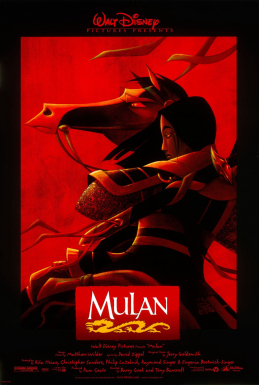


Plot and themes
At its center, the story follows Mulan's personal journey from dutiful daughter to recognized hero. Themes include filial piety and honor, gender roles and identity, duty versus self-discovery, and the balance between family and public life. The character of Mushu, a small guardian dragon added by the filmmakers as comic relief, contrasts with the film's more serious themes and helps create the movie's lighter tone.
Production, music and design
Production combined traditional hand-drawn animation with occasional computer-assisted elements and a design palette influenced by Chinese calligraphy and ink wash painting. The film's score was composed by Jerry Goldsmith, while the songs were written to support the narrative in a different way from some of Disney's earlier 'princess' musicals, placing emphasis on character and context rather than solely on romantic plots. The pop single "Reflection" reached wider audiences through a commercial recording by pop singer Christina Aguilera, while the character's singing voice in the film was performed by a trained musical theatre vocalist.
Principal cast
- Mulan (voice): Ming-Na Wen (speaking performance) with a separate singing performer credited in the soundtrack.
- Mushu (voice): Eddie Murphy, providing comic energy and fast-paced dialogue.
- Captain/General figure: BD Wong and other notable character actors round out the cast with distinctive supporting turns.
The ensemble approach mixes dramatic and comedic voices to create tonal variety across battle sequences, training montages and quieter family scenes.
Reception, sequel and remake
Mulan received positive notice for its heroine-centered narrative, lively supporting comic elements, and its effort to evoke aspects of Chinese visual culture within an American animated framework. A direct-to-video sequel titled Mulan II was produced in the early 2000s, aimed primarily at the home-video market and continuing the characters' adventures with a lighter tone.
In 2018 the studio announced a live-action reimagining; the new version premiered on the company's streaming service in 2020 with a number of changes to tone, characters and music. That remake sparked debate and criticism from some viewers who felt it departed from the original film's musical elements and from others who questioned aspects of historical and cultural representation. The remake featured an international cast and emphasized a more realistic martial approach rather than the comedic fantasy elements of the animated original.
Legacy and distinctions
Mulan is frequently cited as a notable Disney film for foregrounding a non-romantic coming-of-age arc and for offering a heroine who defines heroism on her own terms. The adaptation draws from the traditional Ballad of Mulan while introducing original characters and comic beats intended for family audiences. Educators and critics often point to the film as a gateway for discussions about adaptation, cultural representation in mainstream animation, and the ways popular media reshape folk narratives for contemporary audiences.
For further information and archival resources, consult studio materials and contemporary reviews that document the film's production and release history. Additional reading and primary sources can be accessed through linked production notes and official releases by the studio and soundtrack publishers.
Soundtrack details | Production notes | Sequel information | Live-action announcement | Streaming release
Related articles
Author
AlegsaOnline.com Mulan (1998 film) Leandro Alegsa
URL: https://en.alegsaonline.com/art/67409
Sources
- imdb.com : "Mulan"
- variety.com : "Disney Unveils First Look at Live-Action 'Mulan'"