
Muhammad Akram Khan (1869–1968)
Muslim scholar and religious-political leader in British India who supported the Pakistan Movement; representative of ulema involvement in nationalist politics during the transition to independence.
Overview
Molana Muhammad Akram Khan (1869–1968) was a Muslim religious scholar and public figure active during the late colonial period in South Asia. Operating in the era of British India, he is recorded as a supporter of the Pakistan Movement. His life and work exemplify how learned clergy engaged with questions of community organization, education and political identity as the subcontinent moved toward independence and partition.
Image gallery
1 Image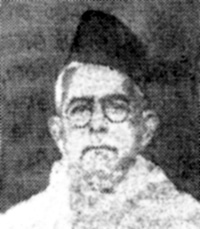
Religious life and role
Known by the honorific Molana (or Maulana), Akram Khan belonged to the class of ulema who provided religious instruction, legal guidance and moral leadership. Such figures typically directed study circles, issued counsel on personal law, and delivered sermons that connected scriptural teachings to everyday concerns. While detailed records of his specific teachings or written works are limited in broad reference sources, his title and reputation indicate formal training in Islamic sciences and a role as a community authority.
Political engagement
During the decades before 1947 many Muslim clerics navigated the shifting landscape of colonial politics. Muhammad Akram Khan supported the idea of a separate Muslim homeland and lent his voice to currents that favored the creation of Pakistan. Clerical support contributed to shaping public opinion, mobilizing local networks, and providing moral arguments that resonated with congregations and community leaders. His activity illustrates the broader phenomenon of religious leaders entering the political sphere in the twentieth century.
Social work and institutions
Religious scholars of Akram Khan’s standing commonly engaged in social welfare, education and dispute mediation. They were often involved with madrasas, charitable trusts and local councils that addressed poverty, health and schooling. Even when individual records are scarce, the observed patterns of clerical patronage and institution-building help explain how such leaders influenced social life beyond strictly theological matters.
Historical significance and legacy
Akram Khan’s long life spanned colonial reform movements, two world wars and the partition of the subcontinent. Figures like him are studied to understand the varied responses of the ulema to modern nationalism, the local bases of political mobilization, and the ways religious authority adapted to mass politics. For historians and students of South Asian religion and politics, his career serves as an entry point into debates about clerical influence, communal identity and the social dimensions of the Pakistan Movement.
Further research
Primary documentation on the life and writings of Muhammad Akram Khan may be limited in general reference works; researchers should consult regional archives, contemporary newspapers and institutional histories for deeper study. Comparative studies of other clerical figures of the period can also clarify common roles and distinct choices among ulema during the transition from colonial rule to independence.
Related articles
Author
AlegsaOnline.com Muhammad Akram Khan (1869–1968) Leandro Alegsa
URL: https://en.alegsaonline.com/art/67370