
Moroccan–American Treaty of Friendship (1786)
The 1786 treaty establishing diplomatic and commercial relations between Morocco and the United States, notable for early U.S. recognition and its long-standing legal status.
Overview
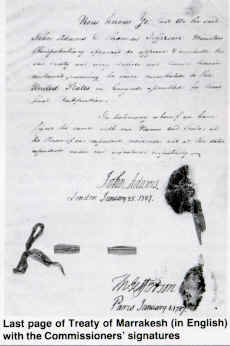
The Moroccan–American Treaty of Friendship, signed in 1786, is an early bilateral agreement between the North African sultanate and the newly independent United States. Initiated under Sultan Mohammed III, the treaty established formal diplomatic relations and set basic rules for peaceful commercial interaction, safe passage of ships, and legal treatment of subjects and residents. The full treaty text and related documents are available via primary-source collections and government archives: treaty text and documents.
Image gallery
4 Images


Key characteristics and provisions
Although the treaty language reflects 18th‑century legal forms, its practical aims were straightforward: to protect merchant shipping, reduce the risk of maritime incidents, and create a framework for trade and consular relations. Provisions included agreements about how nationals of each country should be treated when they entered the other's ports and assurances intended to prevent the seizure of ships and cargo during peacetime.
- Recognition and establishment of diplomatic relations between Morocco and the United States.
- Arrangements for the safety of merchants and their vessels in each other's waters.
- Clauses addressing the legal status and treatment of certain groups, including a specific statement about the freedom of free Moors from North Africa (see relevant clause).
Historical context and negotiation
The agreement came at a moment when the United States sought recognition, protection for its commerce, and reliable partners overseas. Morocco's decision to engage diplomatically with the new American republic reflected its longstanding maritime and commercial interests in the Mediterranean and Atlantic. The treaty was negotiated against a backdrop of shifting European and North African maritime politics and the early republic's need to secure trading routes and consular assistance abroad.
Importance and legacy
The Moroccan–American treaty is often cited in discussions of early U.S. foreign relations because it represents one of the first formal acknowledgements of the United States by a foreign sovereign power and because it contributed to a durable relationship between the two countries. Historians and legal scholars note its role in shaping subsequent diplomatic and commercial exchanges and its symbolic importance as an early example of cross-cultural negotiation.
Notable distinctions and facts
Two points commonly highlighted are: first, the treaty reflects Morocco's independent diplomatic initiative under Sultan Mohammed III to engage non‑European states; second, it contains provisions addressing the legal and social status of North African free persons in a period when racial and slavery issues were prominent in international law. Over time the agreement formed part of a longer pattern of treaties and interactions between Morocco and the United States, and it is frequently mentioned in surveys of the early American diplomatic record.
Related articles
Author
AlegsaOnline.com Moroccan–American Treaty of Friendship (1786) Leandro Alegsa
URL: https://en.alegsaonline.com/art/66727