
Monuments, Fine Arts, and Archives (MFAA) program
Allied military initiative begun in 1943 to protect cultural property during WWII, advise forces, and locate, preserve and restitute art and archives looted or endangered by the conflict.
Overview
The Monuments, Fine Arts, and Archives program (commonly abbreviated MFAA) was an Allied effort established during World War II to reduce harm to cultural heritage in war zones and to recover works of art and archival materials displaced or stolen during the conflict. Founded in 1943, the program brought together specialists who advised military commanders, inspected damage, and organized protection, salvage, and restitution activities across liberated territories.
Image gallery
4 Images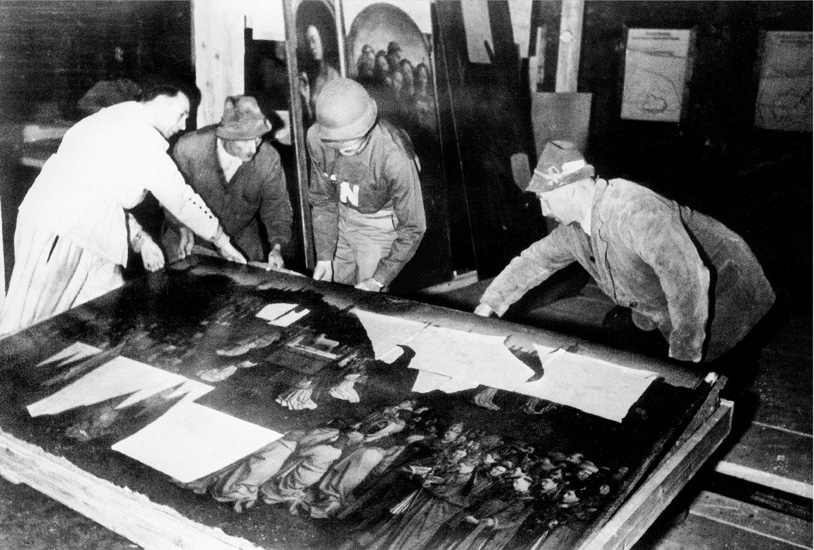


Composition and roles
MFAA units were composed of a mix of military personnel and civilian experts — museum curators, art historians, architects, conservators and archivists — who accompanied advancing armies. Their principal tasks included mapping and marking monuments to avoid unnecessary targeting, documenting destruction, stabilizing damaged buildings and objects, and arranging the safe removal or guarding of movable cultural property.
Operations and notable work
The team worked closely with commanders in the Civil Affairs and Military Government sections of the Allied armies. In liberated areas they inspected museums, churches, libraries and private collections, tracked locations where looted items were stored, and helped recover caches hidden in mines, castles and other repositories. Their field reports and inventories were essential to subsequent restitution efforts.
Legacy and significance
Beyond recovering numerous artworks and archival materials, the MFAA helped establish principles for the protection of cultural property in armed conflict. Their work influenced postwar restitution processes, national museum practices, and later international agreements on safeguarding cultural heritage. Many of the individuals who served have been remembered collectively as the "Monuments Men and Women."
Typical activities
- Surveying damage and preparing conservation or stabilization plans.
- Advising military units to avoid targeting culturally significant sites.
- Cataloguing and safeguarding recovered objects pending return to owners or institutions.
- Cooperating with local authorities and specialists to re-establish museum and archival operations.
The MFAA represents a distinctive wartime effort to balance military objectives with the preservation of cultural memory. Its procedures and moral imperative remain frequently cited in discussions about heritage protection during contemporary conflicts.
Related articles
Author
AlegsaOnline.com Monuments, Fine Arts, and Archives (MFAA) program Leandro Alegsa
URL: https://en.alegsaonline.com/art/66521
Sources
- thedailybeast.com : "Where the Nazis Hid Their Art: The Castle Behind 'Monuments Men'"