
Asiana Airlines Flight 214: 2013 San Francisco runway crash
Summary of Asiana Airlines Flight 214, the July 6, 2013 Boeing 777 crash-landing at San Francisco, its circumstances, casualties, investigation findings and safety lessons.
Overview
Asiana Airlines Flight 214 was a scheduled international passenger service from Incheon International Airport in South Korea to San Francisco International Airport in the United States. On July 6, 2013, the Boeing 777-200ER operating the flight crash-landed during final approach to San Francisco. There were 307 people on board: 291 passengers and 16 crew. Two passengers died as a direct result of the crash; a third later died under circumstances that were investigated separately. More than 180 people sustained injuries of varying severity.
Image gallery
10 Images




Aircraft and occupants
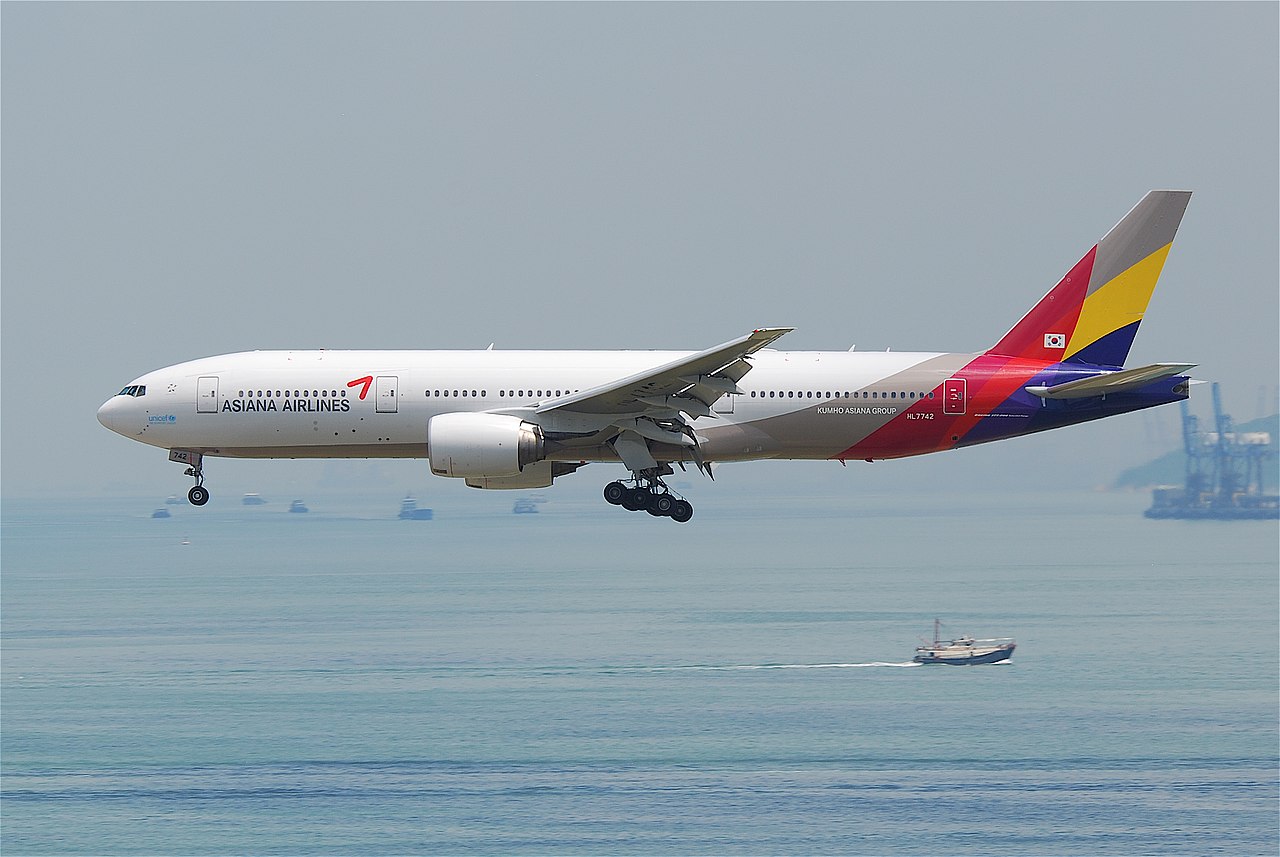
The airframe was a Boeing 777-200ER in service with Asiana Airlines. The 777 is a wide‑body, long‑range jet used widely on transpacific routes. On this flight the crew included two pilots in the flight deck and cabin crew responsible for passenger safety and evacuation. The cabin underwent a rapid evacuation after the aircraft came to rest off the paved runway area.
Accident sequence
During final approach the airplane descended below the standard glide path and was flying at a speed substantially lower than the normal target approach speed. Flight data indicated low engine thrust settings during the final moments before impact; the crew initiated a go‑around maneuver only about one to two seconds before the aircraft struck the seawall and the surface near the approach end of the runway. The airplane struck terrain short of the runway threshold, then slid onto the runway area. Heavy structural damage and post‑impact fire occurred in some parts of the airframe, and emergency slides were used for evacuation.
Investigation
The U.S. National Transportation Safety Board (NTSB), assisted by South Korean investigators and the aircraft manufacturer, conducted a detailed investigation. Investigators recovered and analyzed flight recorders, air traffic communications, cockpit voice recordings, crew training and qualifications, and automated flight data. The official findings attributed the accident principally to the flight crew's mismanagement of the approach, including inadequate monitoring and maintenance of airspeed and a delayed decision to perform a go‑around. Contributing factors noted in the reports included shortcomings in crew training, misinterpretation of automation behavior, and human factors that influenced cockpit decision‑making.
Aftermath and safety changes
Emergency responders, airport personnel and passengers assisted in the rapid evacuation and medical care that limited further loss of life. The accident prompted airlines and regulators to review training programs, emphasizing manual flying skills, stabilized approach criteria, clear guidance on when to abandon an unstable approach, and crew resource management. Manufacturers and operators also reviewed how automation modes and alerts are presented to crews to reduce confusion during critical phases of flight.
Significance and legacy
The accident was notable as the first instance of passenger fatalities aboard a Boeing 777 airliner. It renewed industry focus on approach stability, recognition of airspeed decay, and the importance of timely execution of go‑around procedures. The investigation produced safety recommendations aimed at improving pilot training, oversight, and procedures to help prevent similar accidents in the future.
Key points
- Route: transpacific flight from Incheon (South Korea) to San Francisco.
- Aircraft: Boeing 777-200ER operated by Asiana Airlines.
- Occupants: 307 people on board (291 passengers, 16 crew); two immediate passenger fatalities and many injuries; a third death occurred later under separate circumstances that was examined by investigators.
- Primary cause: loss of adequate airspeed on approach and delayed go‑around decision, with contributing training and human‑factors issues.
For technical details and the formal determination of probable cause, consult the published investigation reports and official safety recommendations issued after the accident.
Questions and answers
Q: What happened to the Asiana Airlines Flight 214?
A: The Asiana Airlines Flight 214 crash-landed at San Francisco International Airport on July 6, 2013.
Q: How many people were on the plane?
A: There were 307 people (291 passengers and 16 crew) aboard the plane.
Q: How many passengers were killed in the crash?
A: Two passengers were killed in the crash, and a third passenger possibly survived the crash but died later, after being run over by a fire truck.
Q: What kind of plane was Asiana Airlines Flight 214?
A: Asiana Airlines Flight 214 was a Boeing 777-200ER, and it had been used by Asiana Airlines since March 2006.
Q: What did the pilots try to do before the plane crashed?
A: The pilots tried a go-around 1.5 seconds before the plane crashed, but they were too late.
Q: Was the plane flying at an appropriate speed during landing?
A: No, when the plane was coming in to land, the engines were idle and the plane was flying much slower than it should have been.
Q: Was this the first time anyone ever died aboard a Boeing 777?
A: Yes, the crash was the first time anyone ever died aboard a Boeing 777.
Related articles
Author
AlegsaOnline.com Asiana Airlines Flight 214: 2013 San Francisco runway crash Leandro Alegsa
URL: https://en.alegsaonline.com/art/6621
Sources
- nbcbayarea.com : SF Fire Probes Whether Truck Ran Over Asiana Crash Victim
- latimes.com : "Boeing's 777 considered a safe passenger jet"
- reuters.com : "Asiana plane carried 291 passengers, 16 crew: airline"
- flyasiana.com : "Press Release for Incident Involving Asiana Flight OZ 214 - July 7, 2013"
- flightaware.com : "Asiana 777 (AAR214) crashes upon landing at SFO"
- youtube.com : NTSB press briefing on July 7, 2013
- courant.com : "Pratt & Whitney Engines Powered Asiana Airlines Plane"
- planespotters.net : "HL7742 Asiana Airlines Boeing 777-28E(ER) - cn 29171 / ln 553"
- news.sky.com : "Asiana Plane Crash Lands: 'No Engine Problems'"
- flightaware.com : "HL-7742 ✈ 06-Jul-2013 ✈ RKSI / ICN - KSFO ✈ FlightAware"
- avherald.com : "Accident: Asiana B772 at San Francisco on Jul 6th 2013, touched down short of the runway, broke up and burst into flames"
- usnews.nbcnews.com : "Boeing 777 crashes while landing at San Francisco airport"
- nytimes.com : "Plane Crashes on Landing in San Francisco"
- bbc.co.uk : "Boeing 777 plane crash-lands at San Francisco airport"