
Ashmolean Museum of Art and Archaeology
Oxford's Ashmolean is the world's first university museum, holding wide-ranging collections of art and antiquities, with long history, public programmes, research and recently modernised galleries.
Overview
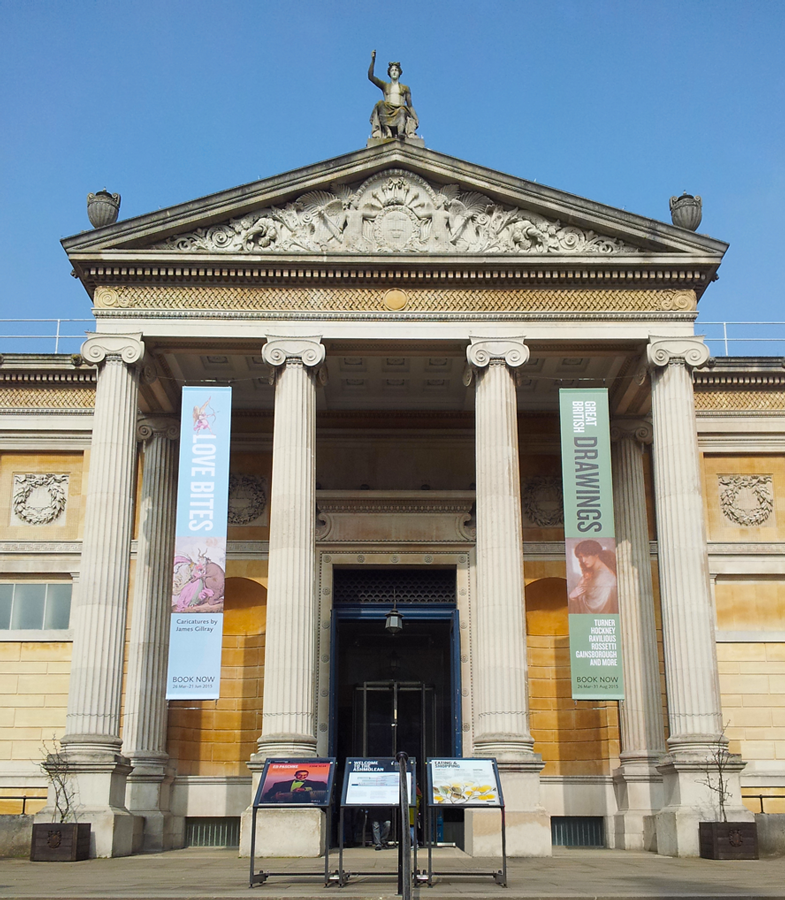
The Ashmolean Museum of Art and Archaeology in Oxford is widely recognised as the world’s first university museum. Located on Beaumont Street, the institution combines art, archaeology and material culture from around the globe and serves as both a public museum and a centre for scholarship. The museum traces its institutional origins to a seventeenth-century gift and has evolved through several buildings and modern redevelopments to become a major national and international collection.
Image gallery
10 Images


Collections and characteristics
The museum’s holdings span a broad chronological and geographical range, from ancient civilizations to modern works of art. Highlights include objects from ancient Egypt and Nubia, classical antiquities, material from the Near East and Mediterranean, European paintings and drawings, and extensive coin and medal collections. The Ashmolean also preserves a variety of archaeological finds, ceramics, sculpture, textiles and works on paper, many used in teaching and research.
- Ancient Egypt and Nubia galleries and archaeological artefacts
- Classical and Near Eastern antiquities
- European paintings, prints and drawings
- Numismatics and small finds used for research
History and development
The museum’s foundation is traditionally dated to the late 1670s when Elias Ashmole donated a cabinet of curiosities to the University of Oxford; that core collection incorporated items assembled earlier by travellers and collectors. The original institution opened to the public in 1683, with the naturalist Robert Plot appointed as its first keeper. The early collections were displayed in a building on Broad Street; the Ashmolean later moved into a larger, purpose-built structure in the nineteenth century and the original Broad Street premises became the Museum of the History of Science. In the early twenty-first century the Ashmolean underwent a substantial redevelopment and modernisation, with a rebuilding project completed in 2009 that expanded display space, added new conservation studios and created an education centre. New galleries dedicated to Egypt and Nubia were unveiled in 2011 to showcase the museum’s archaeological holdings.
Public role, research and education
Beyond exhibition, the Ashmolean functions as a teaching resource for the university and an active research institution. It offers guided displays, public programmes, temporary exhibitions, conservation laboratories and learning activities designed for schools and adult audiences. Staff work on provenance research, cataloguing and the scientific study of objects; the museum’s facilities support both curatorial practice and academic study. These activities help connect the collections with broader historical and cultural questions and make objects accessible to diverse audiences.
Notable facts and distinctions
The Ashmolean is often cited as the earliest university museum in continuous operation and stands out for the breadth of its multi-disciplinary collections. Its long history links early modern collecting practices with contemporary museum work. The museum attracts visitors for both its permanent holdings and changing exhibitions, and it maintains digital and outreach programmes to extend access to those who cannot visit in person. For practical information and visiting arrangements see the museum’s institutional pages: location and visitor information. The founding donation and early collections are described in historical accounts and archival resources: founding collection details. Information about the Egypt and Nubia galleries can be found on related pages: Egypt galleries and Nubia galleries. Biographical and keeper histories, including early staff such as Robert Plot, are documented in scholarly resources: keepers and early history.
Questions and answers
Q: What is the Ashmolean Museum?
A: The Ashmolean Museum is the world's first university museum that contains art and archaeological exhibits.
Q: Who donated the collection that the Ashmolean Museum is based on?
A: The collection that the Ashmolean Museum is based on was donated by Elias Ashmole to the University of Oxford.
Q: When was the first building of the Ashmolean Museum built?
A: The first building of the Ashmolean Museum was built from 1678 to 1683.
Q: Who was the first keeper of the Ashmolean Museum?
A: The first keeper of the Ashmolean Museum was Robert Plot, a naturalist.
Q: What is now housed in the original building of the Ashmolean Museum in Broad Street?
A: The original building of the Ashmolean Museum in Broad Street is now the Oxford Museum of the History of Science.
Q: When did the Ashmolean Museum reopen after a major redevelopment?
A: The Ashmolean Museum reopened after a major redevelopment in 2009.
Q: What were the new galleries unveiled in the Ashmolean Museum in November 2011?
A: In November 2011, new galleries focusing on Egypt and Nubia were unveiled in the Ashmolean Museum.
Related articles
Author
AlegsaOnline.com Ashmolean Museum of Art and Archaeology Leandro Alegsa
URL: https://en.alegsaonline.com/art/6583
Sources
- ashmolean.org : "Eating and Shopping- Ashmolean Museum"
- artsbeat.blogs.nytimes.com : Director of Ashmolean Museum at Oxford to Step Down