
Moghegno (Ticino)
Moghegno is a small Italian-speaking village in the Vallemaggia district of Ticino, Switzerland. Formerly an independent municipality, it merged into Maggia in 2004 and retains a historic mountain-village character.
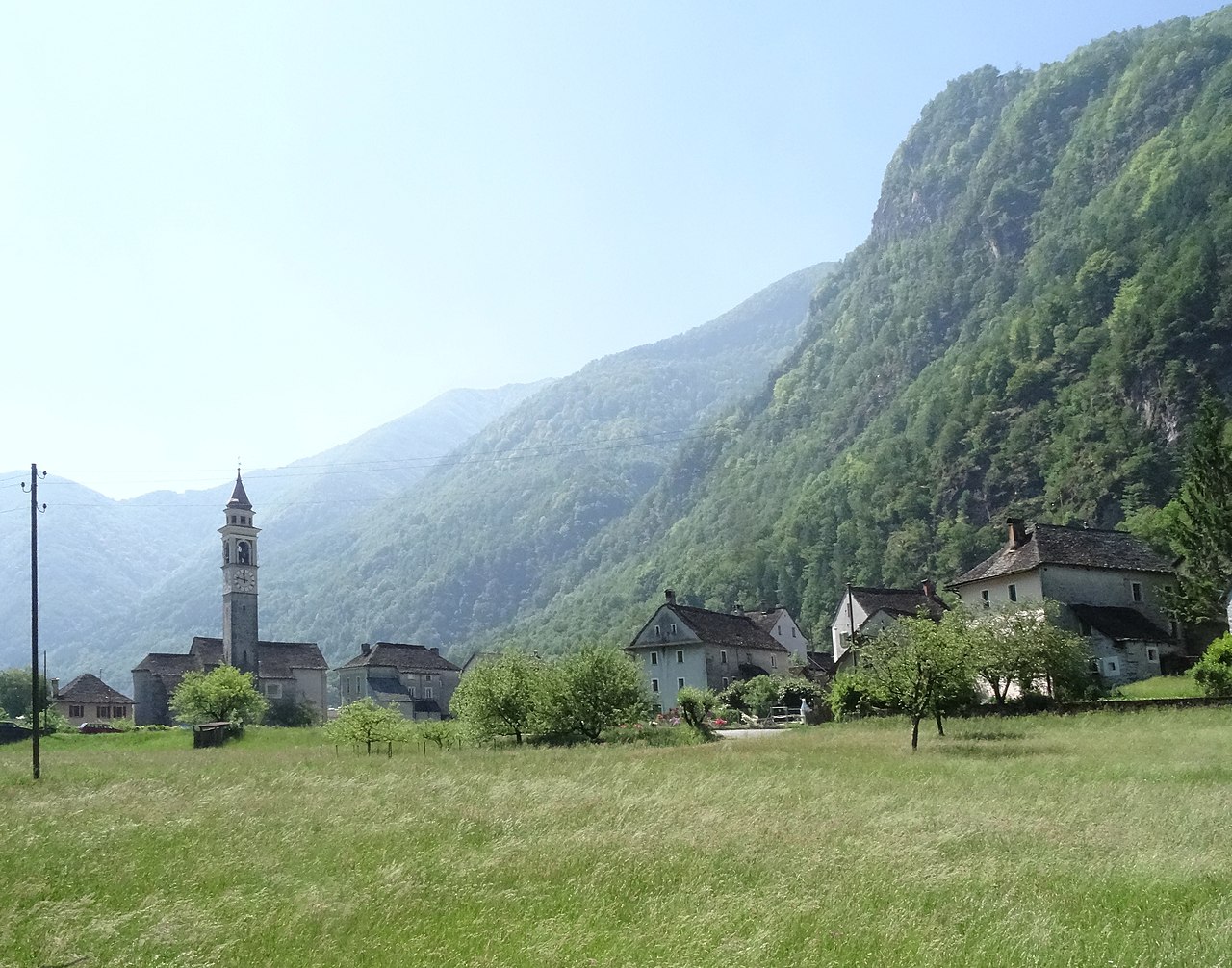
Moghegno is a village in the Vallemaggia valley of the canton of Ticino in southern Switzerland. Historically an independent municipality, it lies within the Italian-speaking region of Switzerland and has the compact layout and traditional stone-built houses typical of small Ticinese mountain settlements. Its coordinates are 46.233°N, 8.683°E, situating it in the lower Alpine foothills.
Image gallery
3 Images

Location and setting
The village sits in the district of Vallemaggia and forms part of the canton of Ticino (Tessin), within the Swiss Confederation Switzerland. The landscape around Moghegno is characterised by steep valley sides, chestnut and mixed woodland, and terraces carved for agriculture over centuries. The climate is influenced by its southerly position in Switzerland, with milder winters and warmer summers than the high Alps.
History and municipal change
For centuries Moghegno functioned as a small, autonomous municipality with local agricultural and pastoral activities. On 4 April 2004 it ceased to be an independent municipality when it joined a municipal merger that created the larger municipality of Maggia. The merger combined Moghegno with neighbouring localities, including Aurigeno, Coglio, Giumaglio, Lodano and Someo, pooling local administration and services under the municipality of Maggia.
Built environment and culture
Moghegno's built environment reflects traditional mountain-village architecture: narrow lanes, compact clusters of homes, and stonework that has endured regional weather. Small chapels, communal fountains and agricultural terraces are common features, and local cultural life has long been grounded in rural rhythms and Italian-language customs. In recent decades, seasonal tourism and second-home ownership have become more visible, as visitors seek the valley's scenery and hiking opportunities.
Economy and contemporary role
Historically based on small-scale farming, livestock and seasonal work, Moghegno today participates in a diversified rural economy. Residents often commute to larger centers for work, while local hospitality, artisanal activities and nature-based recreation contribute to the economy. The 2004 municipal consolidation aimed to improve public services, planning and infrastructure by bringing together resources and administration at the Maggia municipal level.
Additional information
Moghegno retains the character of a traditional Ticinese village while being administratively integrated into a larger municipality. For geographic reference its location is given as 46°14′N 8°41′E (46.233°N, 8.683°E). Further historic and administrative details are available from local canton and district sources.
Related articles
Author
AlegsaOnline.com Moghegno (Ticino) Leandro Alegsa
URL: https://en.alegsaonline.com/art/65755