
Mishik Kazaryan — Armenian-Russian Laser Physicist (1948–2020)
Mishik Kazaryan (1948–2020), Armenian-born Russian physicist known for pioneering high-intensity visible pulsed lasers, contributions to laser physics and optics, USSR State Prize laureate.
Overview
Mishik Ayrazatovich Kazaryan (born 28 February 1948) was an Armenian-born physicist who worked in Russia and became known for his research in laser physics and optical science. He combined experimental skill with applied theory to develop high-intensity pulsed lasers in the visible region of the spectrum. His career spanned several decades and earned him recognition including the USSR State Prize and membership of the Armenian National Academy of Sciences. For the Russian form of his name see Russian spelling.
Image gallery
2 Images
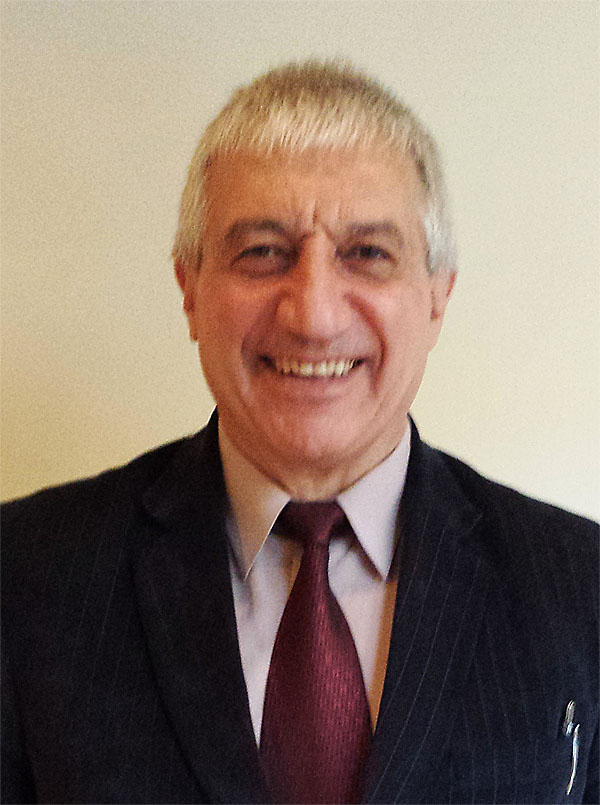
Life and career
Kazaryan was born in Hrazdan, then part of the Armenian SSR, and later worked in Russian research institutions and academic settings. He is often described as Armenian-born and as a Russian physicist in professional contexts. His primary field was physics, with a focus on laser physics and optics. He remained active in research and mentoring until late in his life, and served as a member of the Armenian National Academy of Sciences.
Contributions and importance
Kazaryan led work that produced one of the brightest repeatedly pulsed lasers in the visible spectral band. Such systems are important because they enable experiments in nonlinear optics, ultrafast spectroscopy, high-intensity light–matter interaction, and precision measurement. His innovations helped expand laboratory capabilities for producing short, intense light pulses with reproducible characteristics.
Awards and recognition
- Recipient of the USSR State Prize in science and technology, awarded for significant contributions to applied physical research.
- Member of the Armenian National Academy of Sciences, reflecting his standing in the scientific community.
Death and legacy
Kazaryan died on 7 April 2020 in Moscow during the period of the 2019–20 coronavirus pandemic. He left a legacy of experimental advances in visible pulsed lasers and trained collaborators who continued work in optics. His birthplace, Hrazdan, and institutions he worked with remain sources of historical and professional memory. Further reading on related technical topics can be found via general resources on laser physics and optics and biographical repositories about physicists.
Related articles
Author
AlegsaOnline.com Mishik Kazaryan — Armenian-Russian Laser Physicist (1948–2020) Leandro Alegsa
URL: https://en.alegsaonline.com/art/65433