
Missak Manouchian — French‑Armenian poet and leader in the Resistance
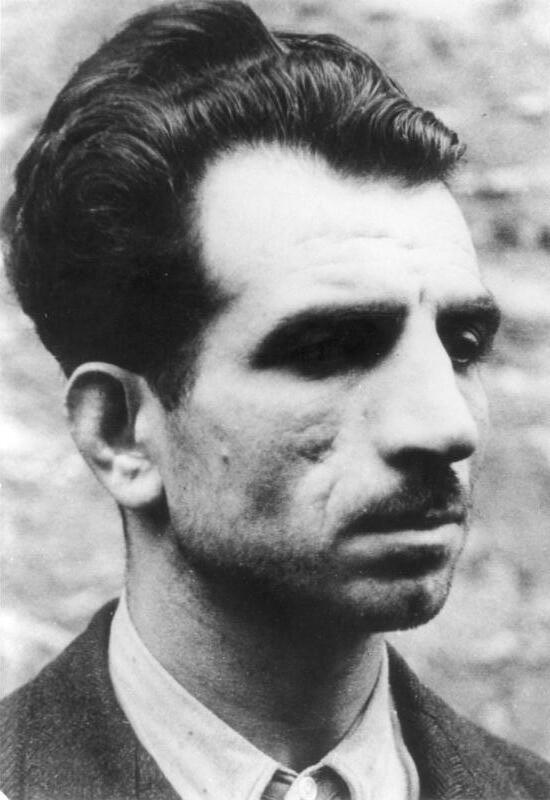
Missak Manouchian (1906–1944) was a French‑Armenian poet and a leader of the immigrant FTP‑MOI resistance network in occupied Paris. Arrested and executed by German authorities, he became a symbol of immigrant sacrifice.
Overview
Missak Manouchian (1 September 1906 – 21 February 1944) was a French‑Armenian intellectual, poet and militant leader active in the anti‑Nazi Resistance in occupied France. Widely remembered for guiding a group of immigrant fighters in the Paris region and for his writing, he was arrested by German occupation authorities and executed in 1944. His life and death later became emblematic of the contributions made by immigrants to the French Resistance.
Image gallery
8 Images


Background and literary work
Born into an Armenian family in the Ottoman Empire, Manouchian was among those who lived through the upheavals that affected Armenian communities in the early 20th century. In France he worked as a factory employee and became involved in leftist political circles. Alongside his political activity he wrote poetry and engaged with intellectual debates of his time, earning a reputation as an articulate and reflective figure rather than solely a military organizer.
Resistance activity and arrest
During World War II Manouchian took a leadership role in the MOI (Main‑d'oeuvre immigrée), the immigrant section of the French Communist resistance, which later operated under the FTP‑MOI (Francs‑tireurs et partisans — Main‑d'oeuvre immigrée). His group carried out sabotage, attacks on occupation forces and operations aimed at disrupting German control in and around Paris. In 1943–1944 the network was infiltrated and many members were captured by the Gestapo. Manouchian and a number of his comrades were tried, publicly vilified in German propaganda, and executed on 21 February 1944.
Affiche Rouge and public image
Following their arrest the occupiers published a propaganda poster, known as the "Affiche Rouge," that attempted to portray Manouchian and his group as foreign criminals. The poster backfired over time, and the image of the immigrant fighters became a potent symbol of courage and sacrifice after the Liberation. The story of Manouchian has been recalled by writers, filmmakers and historians as a reminder of the diverse origins of those who resisted Nazism in France.
Legacy and remembrance
Manouchian was posthumously honored in France and is commemorated in literature, film and public ceremonies. His dedication to both cultural life and armed resistance has been the subject of biographies and artistic works, including the 2009 film "The Army of Crime," which dramatizes his group's activities and fate. His memory remains important in discussions about immigration, citizenship and the many strands that contributed to the French Resistance.
Notable facts
- Manouchian combined intellectual and militant commitments: he was known both as a poet and as an active organizer.
- The FTP‑MOI he led brought together fighters of diverse national origins, including Armenians, Jews, Poles, Italians and Spaniards.
- The German "Affiche Rouge" intended to discredit the group but ultimately helped to fix their story in public memory as martyrs of occupation.
Related articles
Author
AlegsaOnline.com Missak Manouchian — French‑Armenian poet and leader in the Resistance Leandro Alegsa
URL: https://en.alegsaonline.com/art/65457
Sources
- armtown.com : ROBERT GETIKYAN: OPEN ARMENIA-TURKEY BORDER TO CREATE FAVORABLE CONDITIONS FOR ARMENIAN GENOCIDE RECOGNITION. ArmTown, 2009
- nytimes.com : STEPHEN HOLDEN, "Outsiders in French Society, Battling Occupiers and Collaborators"