
Mirpur, Azad Kashmir
Mirpur is a city in the southwestern part of Azad Kashmir, known for its role as a district headquarters, its Pahari‑Pothwari culture, proximity to Mangla Dam, and a large overseas diaspora.
Overview
Mirpur, officially New Mirpur City, is an urban centre in the southwestern part of Azad Kashmir administered by Pakistan. It serves as the administrative headquarters of Mirpur District and has longstanding regional links with neighbouring Punjab. The city combines urban services and market functions with ties to surrounding agricultural areas, and it is widely recognized for the large expatriate community originating from the district.
Image gallery
5 Images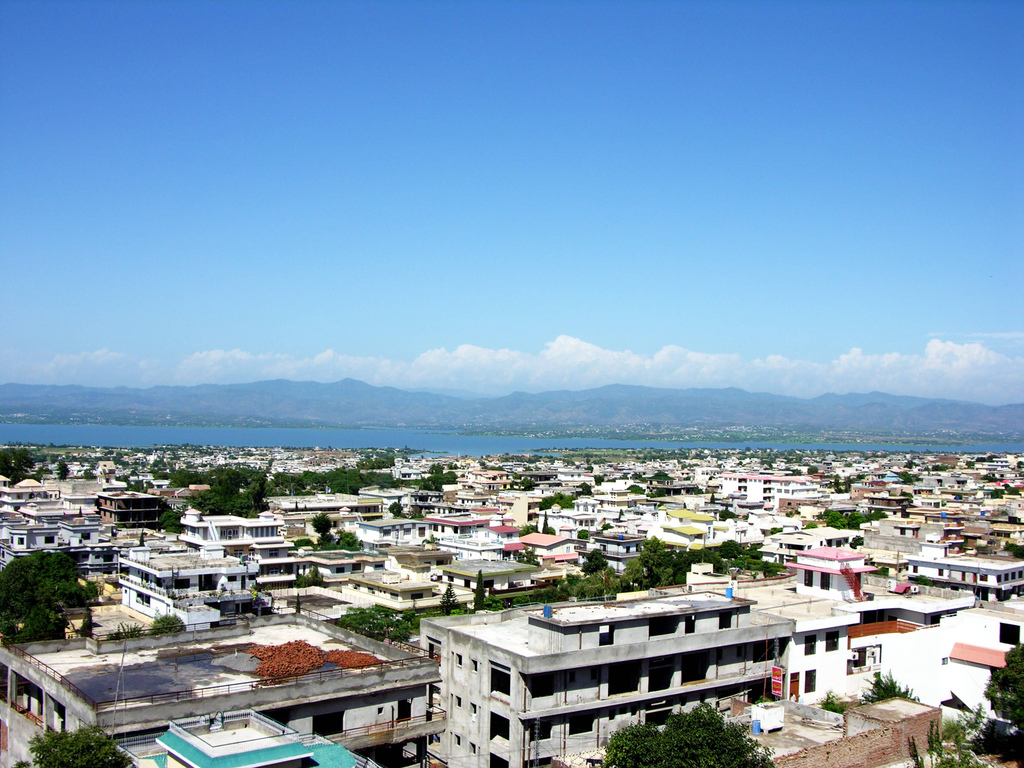


Geography and population
Situated at an elevation of about 459 metres, Mirpur lies near the boundary between the hill country of Kashmir and the plains of Pakistan. It is located not far from Islamgarh and within driving distance of regional capitals: roughly a few hundred kilometres from Srinagar and Muzaffarabad. The local population is mainly of Pahari background and speakers commonly use dialects often grouped under the Pothwari/Pahari linguistic continuum. The city’s population is predominantly Muslim, which shapes public life, observances and festivals.
History and development
Historically Mirpur belonged to the greater Punjab cultural region until the mid‑19th century changes in sovereignty following the Treaty of Amritsar (1846). In the 20th century its modern profile was transformed by large infrastructure projects and administrative reorganisation. The construction of Mangla Dam and the creation of the Mangla reservoir in the 1960s had particular significance: it altered local settlement patterns, led to relocation of some communities, and contributed to migration flows that produced a sizeable diaspora.
Economy and the diaspora connection
Mirpur’s economy combines small‑scale manufacturing, retail trade, public services and agriculture on the surrounding plains and terraces. A notable feature of the local economy is the scale of remittances and investments from Mirpuri communities abroad, especially in the United Kingdom. Overseas migration has influenced housing, local businesses and civic projects in the city. The city also plays a local administrative and commercial role for Mirpur District.
Culture, language and society
Everyday speech in Mirpur commonly reflects Pothwari and related Pahari dialects, with Urdu and English used in education and official contexts. Cultural life centres on family networks, religious observance and community events tied to the Islamic calendar. Traditional music, cuisine and dress show affinities with neighbouring Punjabi and Kashmiri practices while maintaining distinct local forms.
Quick facts and notable links
- Country: Pakistan.
- Administrative region: Azad Kashmir.
- District centre: Mirpur District.
- Historical ties with: Punjab.
- Commonly spoken language: Pothwari (Pahari varieties).
- Nearby town: Islamgarh.
- Distance to regional capitals: about 323 km from Srinagar and 295 km from Muzaffarabad (approximate).
- Religious majority: predominantly Muslim.
For readers seeking more detailed administrative, demographic or historical data, consult official district material and regional studies that treat Mirpur’s urban development and its international migrant connections in greater depth.
Related articles
Author
AlegsaOnline.com Mirpur, Azad Kashmir Leandro Alegsa
URL: https://en.alegsaonline.com/art/65395