
Reich Ministry for Public Enlightenment and Propaganda (Nazi Germany)
State ministry created in 1933 to control media, culture, and public opinion in Germany under Joseph Goebbels; a central instrument of Nazi censorship and mass persuasion until 1945.
Overview
The Reich Ministry for Public Enlightenment and Propaganda was a central organ of the German state after 1933 that sought to shape public opinion and cultural life. Its formal German title is linked here: Reichsministerium für Volksaufklärung und Propaganda. Established by the new government of Adolf Hitler on 13 March 1933, the ministry became the primary vehicle for enforcing the views of the Nazi Party and promoting its ideology.
Image gallery
4 Images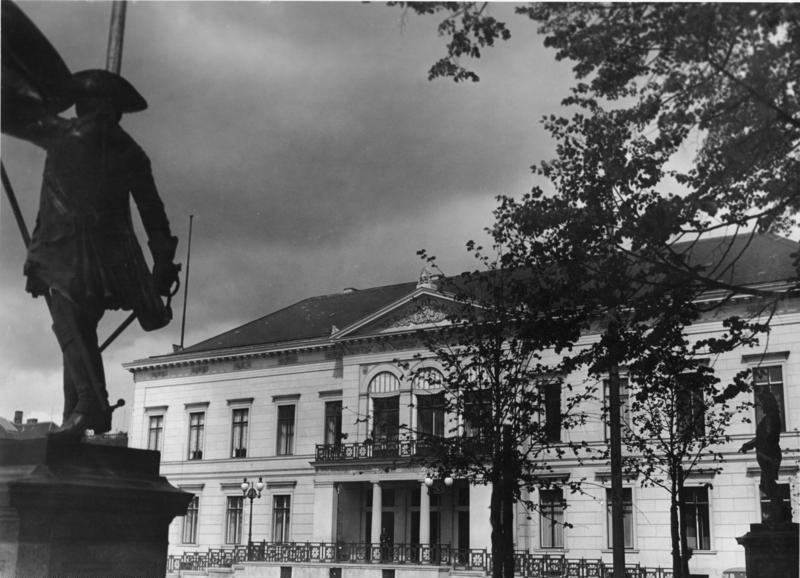



Organization and responsibilities
Headed from the start by Dr. Joseph Goebbels, the ministry coordinated censorship, licensing, and content across many cultural fields. It operated alongside institutions such as the Reich Chamber of Culture and sought to integrate administrative, professional and artistic bodies so that information and art aligned with state goals. The ministry functioned within the broader context of both Weimar and Nazi Germany, replacing earlier, less centralized arrangements.
Media, methods and tools
Its work covered multiple media and public arenas. Major areas of control included:
- Press and publishing — newspapers and books were censored and many journalists were removed.
- Radio and newsreels — broadcasting became a key channel for quick, nationwide messaging.
- Film and visual arts — cinema was promoted as mass entertainment and propaganda; some filmmakers cooperated, others were excluded.
- Theatre, music and literature — cultural expression was regulated to reflect approved themes and values.
Actions and notable campaigns
The ministry organized large public spectacles, coordinated exhibition and festival programs, and directed campaigns against groups it sought to marginalize. Book burnings and the exclusion of Jewish and political opponents from cultural life are among its best-known actions. It promoted a cult of leadership and national renewal through repeated motifs and symbols, while adapting methods to wartime conditions after 1939.
Legacy and distinctions
The ministry existed until the collapse of Nazi Germany in 1945 and is widely studied as an example of state-directed propaganda and cultural control. Scholars examine its techniques, the role of mass media in modern dictatorships, and the moral questions raised by artists' collaboration and resistance. Its activities affected German culture and society, leaving a contested historical legacy that continues to inform debates about media power and censorship.
For more contextual information about the institution and its personnel, see related entries on governmental ministries (ministry) and on the political movement that created it (Nazi Party).
Related articles
Author
AlegsaOnline.com Reich Ministry for Public Enlightenment and Propaganda (Nazi Germany) Leandro Alegsa
URL: https://en.alegsaonline.com/art/65248