
Minnesota Senate
The Minnesota Senate is the upper chamber of the Minnesota Legislature. It has 67 members representing single-member districts and meets in the Minnesota State Capitol in Saint Paul to draft, debate, and pass state law.
Overview
The Minnesota Senate is the upper house of the state legislature and one of two chambers that compose the Minnesota Legislature. It plays a central role in making state law, shaping budgets, and providing advice and consent on certain gubernatorial appointments. The body is composed of 67 senators, each elected from a single-member senatorial district; those districts are sometimes referred to as a senatorial district. On average each senator represents roughly 79,163 residents. By membership size it is the largest state upper chamber in the United States; this distinction is sometimes noted in comparisons of state legislative structures (membership comparison).
Image gallery
2 Images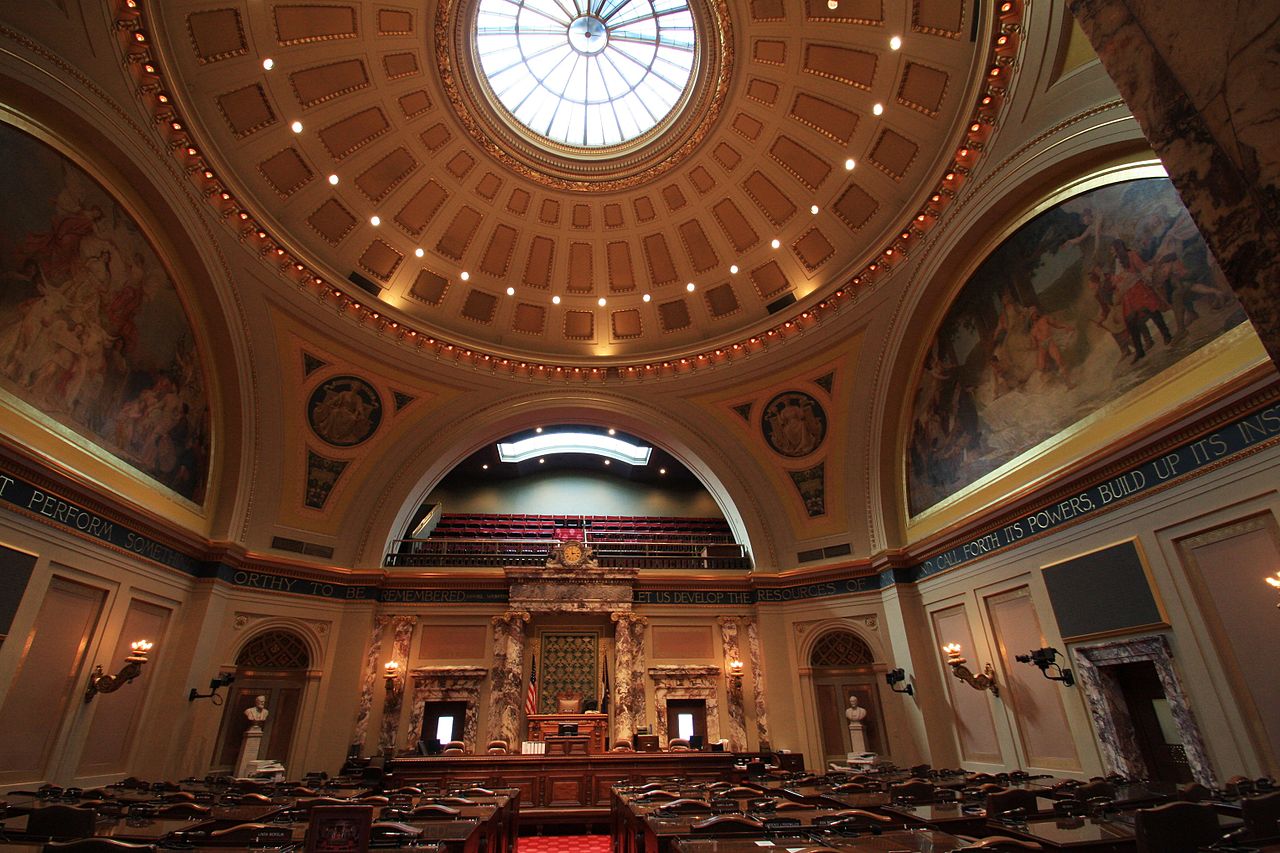

Composition and representation
Senators are elected from geographically defined districts across Minnesota. Elections are partisan and adhere to state election rules and schedules. The Senate organizes itself into a leadership team drawn from the majority and minority parties: these include the presiding officer and party leaders who coordinate floor business, committee assignments, and legislative strategy. The chamber’s work is distributed among standing and special committees that consider bills before they reach the full floor for debate.
Functions and procedures
The Senate shares responsibility with the lower house for originating and passing legislation, including statutes that govern state programs, taxes, and regulatory frameworks. It also conducts oversight of state government operations and frequently holds hearings where state officials and experts testify. The chamber performs confirmation and advice roles for many executive appointments, and it participates in the state budget process. Senate committees—regularly convened to review proposals—are integral to shaping and amending legislation prior to floor consideration (committee roles; meeting procedures).
Meeting place and facilities
Floor sessions of the Minnesota Senate take place in the west wing of the Minnesota State Capitol in Saint Paul. Offices for members of the majority party are located within the Capitol complex, while members of the minority party traditionally occupy space in the nearby State Office Building; the two buildings are connected by an underground tunnel. Committee hearings and other formal gatherings are generally scheduled in rooms inside the Capitol, and many public materials and schedules are made available to citizens who wish to follow the chamber’s work (Capitol offices).
History and notable features
The Senate’s structure and practices have evolved along with Minnesota’s political development. Like many state upper houses, it combines regional representation with institutional rules designed to manage deliberation and review. Its status as the largest state upper chamber by number of members shapes aspects of committee size, debate management, and constituent service. The chamber meets in regular legislative sessions established by state law and custom, and its calendars are coordinated with the lower house to produce biennial and annual legislative outputs.
Roles for the public and distinctions
- Legislative action: drafting and voting on bills that affect statewide policy.
- Oversight: holding hearings and requesting reports from state agencies.
- Representation: serving constituents in distinct senate districts.
- Confirmation: advising on certain gubernatorial appointments.
For readers seeking more specific procedural details, schedules, or how to contact a particular senator, official resources and legislative guides maintained by the state provide up-to-date information and public access to records (Senate homepage, Legislature portal). Additional context about the Capitol, committee calendars, and member offices can be found through the linked resources (state overview, district maps, comparative data, building information, city resources, office locations, campus connections, committee pages, meeting schedules).
Related articles
Author
AlegsaOnline.com Minnesota Senate Leandro Alegsa
URL: https://en.alegsaonline.com/art/65268
Sources
- commons.wikimedia.org : Minnesota Senate
- ballotpedia.org : "Minnesota State Senate"
- mn.gov : "Visiting the Minnesota State Capitol"