
Ministry of Justice (Spain)
Overview of Spain's Ministry of Justice: its role, organization, historical names, headquarters, and main functions in the Spanish legal and administrative system.
The Ministry of Justice of Spain (in Spanish Ministerio de Justicia) is a central department of the Spanish Government responsible for shaping and implementing state policy on legal and justice matters. It develops legislation, manages public legal services, and represents the executive branch in areas that touch on civil, criminal and procedural law while respecting the constitutional independence of the judiciary.
Image gallery
10 Images



Core responsibilities
- Drafting and proposing laws and reforms in civil, commercial, penal and procedural areas and coordinating their implementation.
- Managing and modernizing public legal services such as civil registries, notarial records and legal authentication of documents.
- Administering access to justice policies including legal aid and measures aimed at judicial efficiency and digital transformation of courts.
- Cooperating internationally on judicial matters, extradition and mutual legal assistance.
Although the ministry plays a central policy and administrative role, Spain's judges and magistrates operate with institutional independence under the constitution. The Ministry works with other justice actors, including prosecution services and the General Council of the Judiciary, on matters of coordination and resource planning while recognizing their separate institutional statuses.
History and former names
The ministry's roots go back to early ministerial structures that handled royal justice and legal administration; over time its responsibilities and formal title have changed to reflect broader government reorganizations. Historically it has been known by several names, including Ministerio de Gracia y Justicia and Ministerio de Justicia y Culto, and at times its portfolio was combined with other areas (for example Interior, Health or Labour) under composite ministries during certain periods of the 19th and 20th centuries.
Its current institutional form reflects modern state needs for a dedicated body to coordinate legal policy, court modernization and public registry services while preserving the separation between executive administration and judicial decision-making.
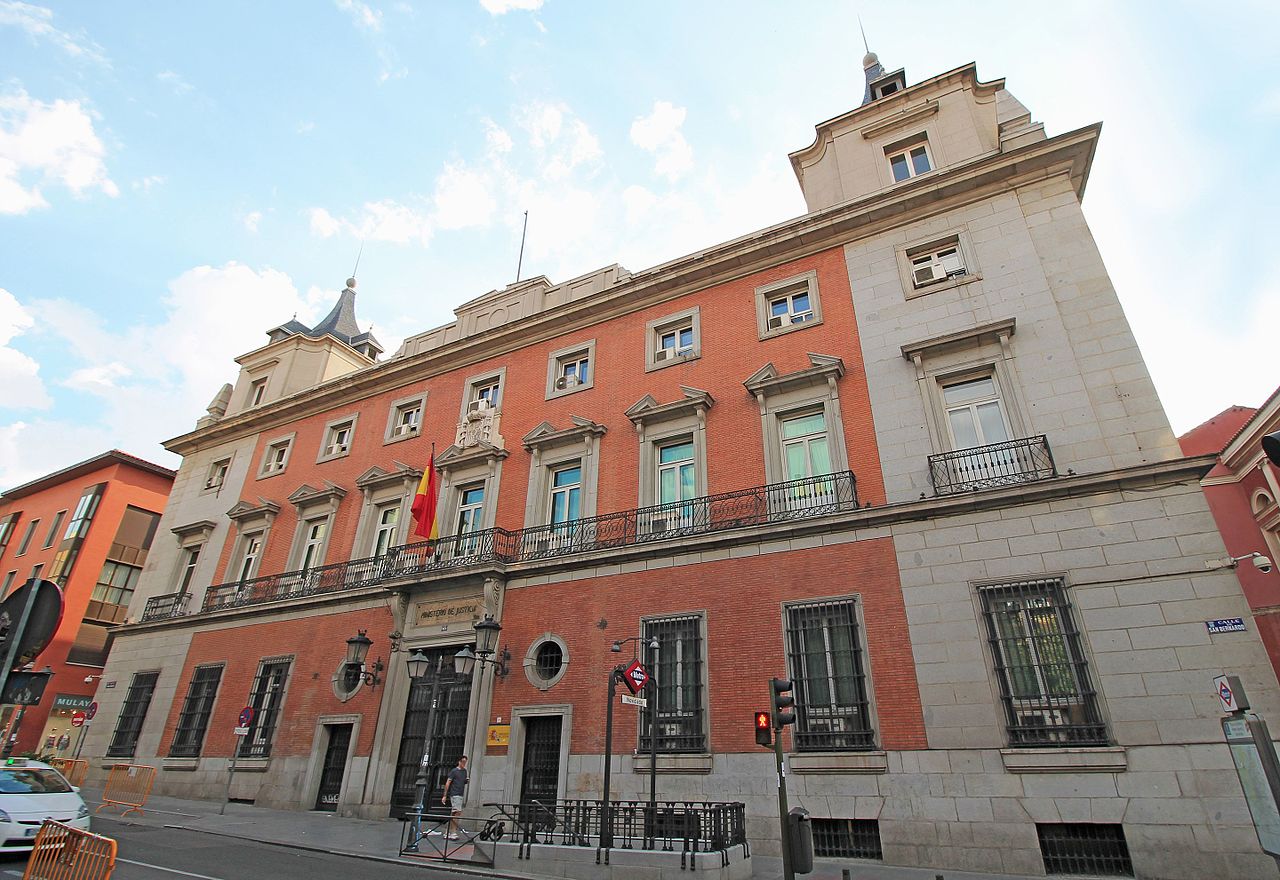
The ministry is based in Madrid at the historic Palacio de la Marquesa de la Sonora, which houses key offices and represents its public-facing presence in the capital. Beyond the capital, many of its services are delivered through regional judicial administrations and centralized directorates that manage registries, notaries and international cooperation.
Notable functions for everyday citizens include issuing official copies from civil registries, supervising notarial standards, administering legal aid schemes and promoting reforms that affect court procedures and access to justice. The ministry's work is therefore central both to high-level legal policy and to practical services used by individuals and businesses.
Related articles
Author
AlegsaOnline.com Ministry of Justice (Spain) Leandro Alegsa
URL: https://en.alegsaonline.com/art/65245